


Bay Harbor Islands occupies an unusual position in Miami’s luxury real estate market.
It isn’t trying to be Miami Beach.
It doesn’t have the soaring oceanfront towers of Sunny Isles Beach or the extreme scarcity and international prestige of neighboring Bal Harbour. Instead, Bay Harbor Islands has developed into one of Miami’s most interesting boutique residential markets — combining newer luxury condominiums, waterfront living, walkability and immediate access to some of South Florida’s most expensive communities.
For buyers who want newer construction without living in a 50- or 60-story tower, that distinction matters.
Bay Harbor Islands offers a fundamentally different version of Miami luxury: smaller buildings, quieter streets, Biscayne Bay and canal frontage, pedestrian-friendly living and proximity to Bal Harbour without necessarily paying Bal Harbour oceanfront pricing.
In 2026, that combination is positioning Bay Harbor Islands as an increasingly compelling alternative within Miami’s coastal luxury market.
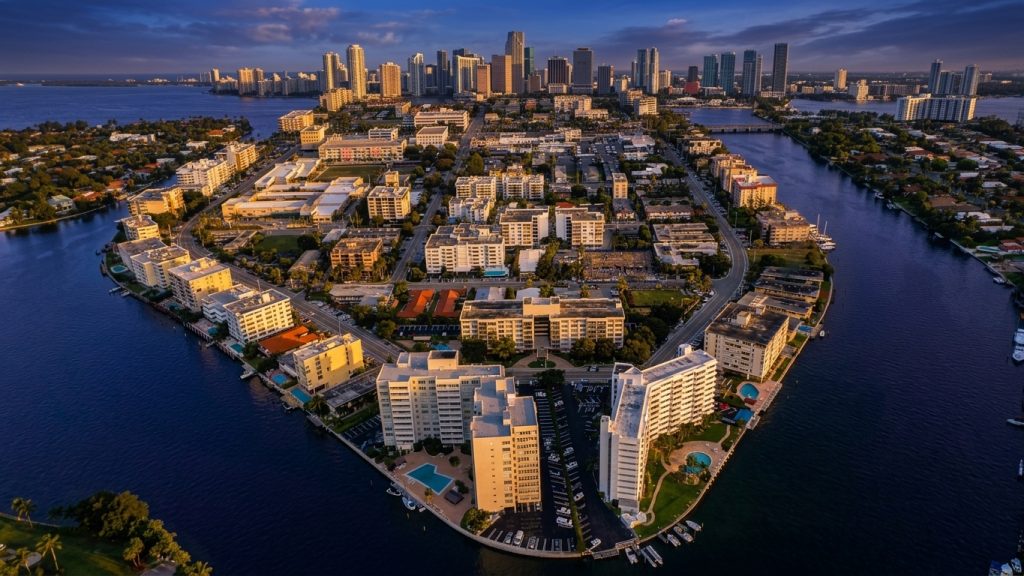
What Are the Bay Harbor Islands?
Buyers choose Bay Harbor Islands for boutique new construction, waterfront living, walkability and immediate proximity to Bal Harbour, Surfside and the Atlantic Ocean. Compared with Miami’s larger luxury towers, many Bay Harbor developments offer fewer residences and a more private residential experience while remaining close to beaches, dining and Bal Harbour Shops.
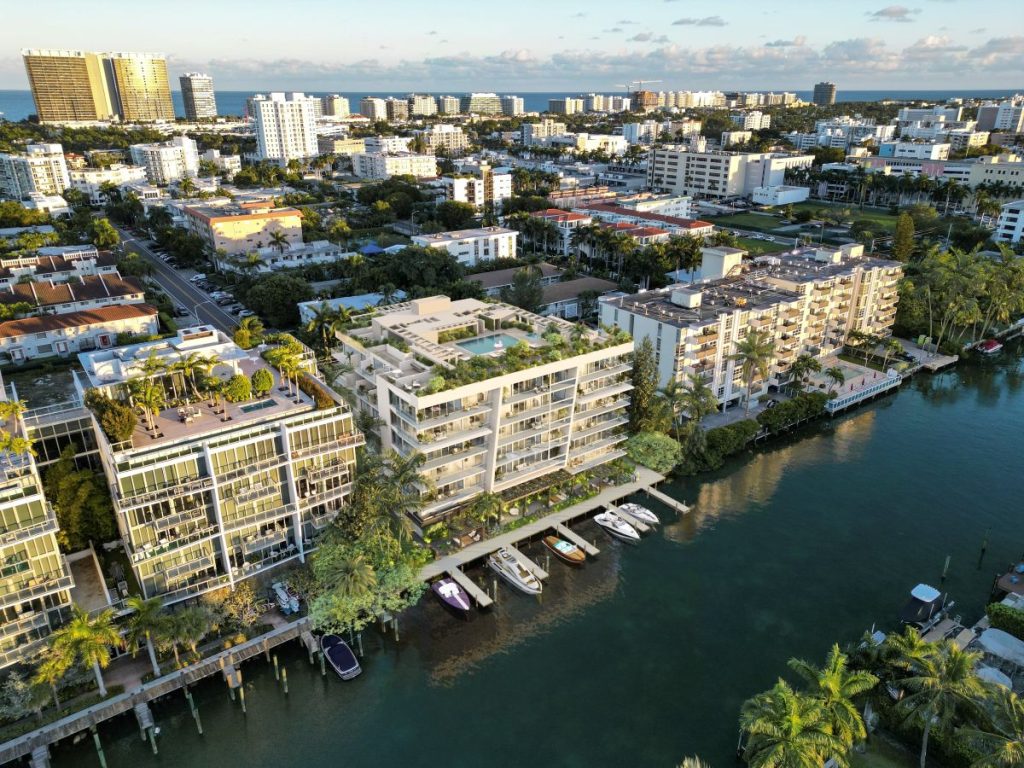
Bay Harbor Islands is an incorporated town consisting of two islands located in Biscayne Bay, immediately west of Bal Harbour and Surfside.
The two islands have distinctly different residential characters.
West Island is predominantly single-family residential, with waterfront estates positioned along the perimeter of the island.
East Island contains the majority of Bay Harbor Islands’ condominium and multifamily inventory, along with the town’s walkable commercial district centered around Kane Concourse.
This separation gives Bay Harbor Islands something relatively uncommon in Miami: a compact community where luxury condominiums, waterfront homes, restaurants, shops and everyday services coexist without the density of Miami Beach or Sunny Isles.
Cross the bridge east and you reach Bal Harbour and the Atlantic Ocean.
Cross west, and you connect quickly with Miami’s mainland communities.
That geography is a major component of the value proposition.
Why Bay Harbor Islands Is Getting More Attention
For decades, Bay Harbor Islands was primarily a quiet residential community known for mid-century condominium buildings and waterfront homes.
The land was valuable.
The location was exceptional.
But the residential product often lagged behind the location.
That has changed.
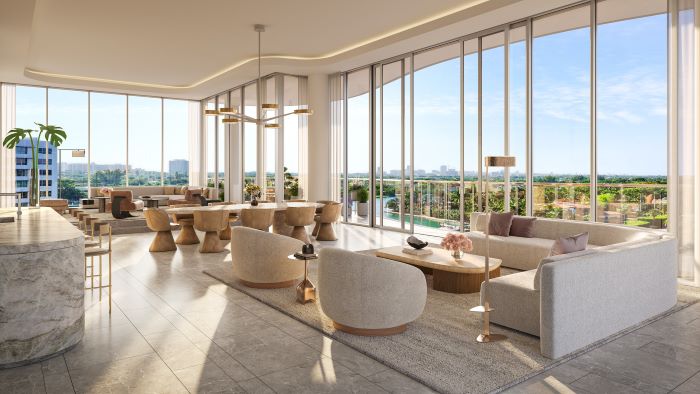
A wave of boutique redevelopment has gradually replaced older multifamily properties with smaller-scale luxury condominiums featuring contemporary architecture, larger residences, rooftop amenities and increasingly sophisticated wellness and hospitality concepts.
The result is a neighborhood undergoing product transformation without wholesale neighborhood transformation.
That’s important.
Edgewater’s investment story, for example, depends partly on the surrounding neighborhood continuing to mature. Bay Harbor Islands already has many of the characteristics buyers want: established residential streets, water on all sides, Bal Harbour next door, beaches nearby and a compact commercial center.
The newer development wave is upgrading the housing stock inside an already desirable location.
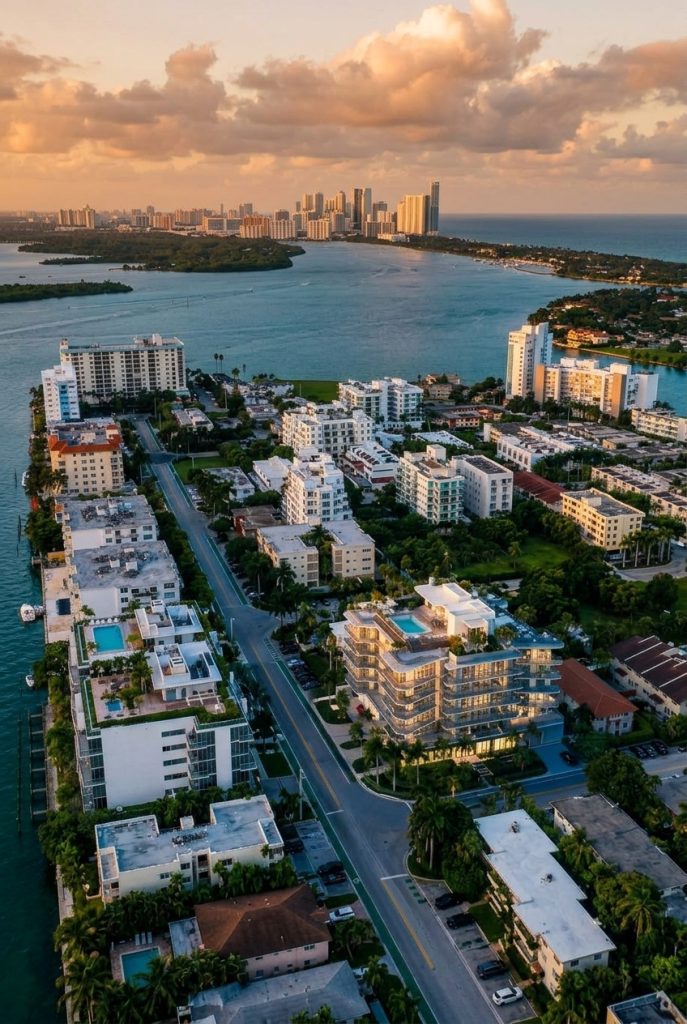
The Boutique Condo Advantage
The word “luxury” gets applied to almost every new Miami condominium.
The more meaningful distinction in Bay Harbor Islands is scale.
Many buyers simply don’t want to live with hundreds of other residents.
A boutique condominium may offer fewer residences, lower elevator traffic, more privacy and a residential atmosphere that feels closer to owning a home than living inside a resort tower.
That creates an interesting middle ground between two traditional Miami choices:
Single-family waterfront home: maximum privacy and land ownership, but significantly greater maintenance responsibility and often a much higher acquisition cost.
Large luxury condominium tower: extensive amenities and services, but hundreds of residences and a more vertical, resort-oriented lifestyle.
Bay Harbor boutique condominium: newer construction, condominium convenience and amenities, but within a substantially smaller residential environment.
For the right buyer, that middle ground is precisely the attraction.
The Well Bay Harbor Islands: Wellness Becomes the Brand
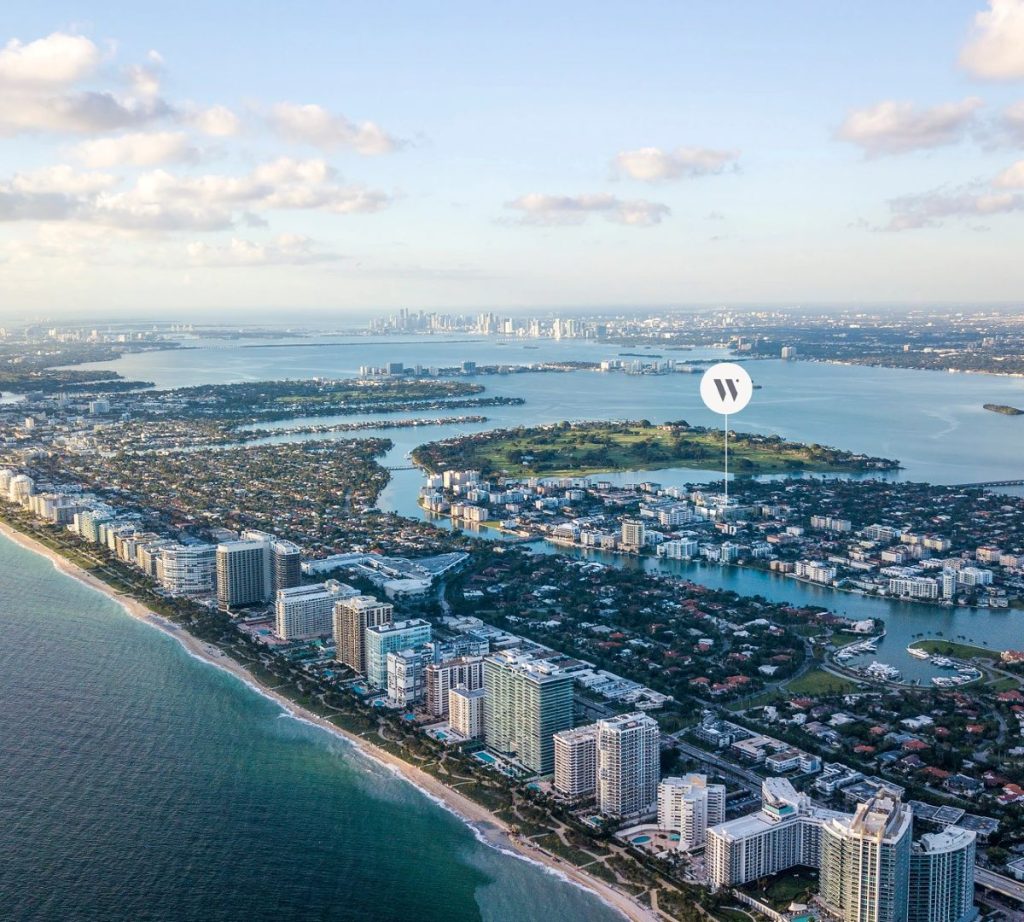
One of the projects most representative of Bay Harbor Islands’ evolution is The Well Bay Harbor Islands.
Rather than attaching an automotive, fashion, or hospitality name to the property, The Well approaches branded residential living through wellness.
The concept integrates residences with health, fitness, and wellness-focused amenities and services.
That positioning fits Bay Harbor Islands unusually well.
A massive branded tower would fundamentally change the neighborhood experience. A lower-scale wellness-oriented project is much more consistent with the quieter residential character that already attracts buyers here.
The significance extends beyond one development.
The Well demonstrates that Bay Harbor Islands can support a higher level of branded luxury while maintaining a boutique identity.
For buyers comparing new construction across Miami, that’s an important distinction.
Bay Harbor Islands vs. Bal Harbour
These two communities are neighbors, but buying in them represents very different decisions.
Bal Harbour
Bal Harbour is about scarcity, prestige and oceanfront positioning.
Its most significant condominiums occupy some of the most valuable beachfront land in South Florida. The community also offers immediate access to Bal Harbour Shops and has an internationally recognized luxury identity.
The premium reflects those characteristics.
Bay Harbor Islands
Bay Harbor Islands trades direct oceanfront positioning for Biscayne Bay and canal frontage, newer boutique development and a quieter neighborhood environment.
Yet Bal Harbour is immediately next door.
A Bay Harbor Islands resident can access many of the same restaurants, shops and beaches without necessarily purchasing inside an oceanfront Bal Harbour tower.
The decision isn’t simply which neighborhood is better.
It’s whether the buyer values oceanfront prestige and scarcity enough to pay the premium associated with it.
For some buyers, absolutely.
For others, Bay Harbor Islands represents the more rational purchase.
Bay Harbor Islands vs. Surfside
Surfside provides another useful comparison.
Surfside’s defining advantage is the Atlantic Ocean.
Its luxury condominium market includes some of Miami’s most prestigious beachfront residential properties, while Harding Avenue provides a walkable town center.
Bay Harbor Islands doesn’t duplicate that experience.
Instead, it offers more protected-water frontage, boutique-scale development and immediate proximity to both Surfside and Bal Harbour.
A buyer prioritizing direct beach access will generally have a stronger case for Surfside.
A buyer prioritizing a newer boutique residence, quieter island environment and value relative to direct oceanfront property should give Bay Harbor Islands serious consideration.
Bay Harbor Islands vs. Miami Beach
Miami Beach offers far more variety.
South of Fifth, Mid-Beach, North Beach, Sunset Harbour and the residential islands each provide very different lifestyles and property types.
But that variety also means Miami Beach is busier.
Bay Harbor Islands is geographically smaller and easier to understand. Its identity is overwhelmingly residential.
There is nightlife nearby, but it doesn’t define the community.
There are tourists nearby, but Bay Harbor Islands itself isn’t primarily a tourist destination.
For a buyer who wants to participate in the Miami Beach lifestyle without necessarily living inside its activity, Bay Harbor Islands can work extremely well.
The Waterfront Question: Bayfront Isn’t Oceanfront
This distinction should not be minimized.
A Biscayne Bay or canal view is not the same product as an unobstructed Atlantic Ocean view.
Oceanfront buyers often value sunrise views, direct beach access and the permanence of looking across open water toward the horizon.
Bay Harbor Islands offers something different.
Waterfront residences can overlook Biscayne Bay, Indian Creek and surrounding waterways, with views toward Bal Harbour, Surfside, Miami Beach or the mainland depending on orientation.
The water can feel more intimate.
Boating activity becomes part of the view. Sunsets can be spectacular from western exposures. Some properties also have boating or marina-related advantages that direct oceanfront condominiums cannot easily duplicate.
Neither is inherently superior.
They’re different waterfront experiences, and buyers should understand which one they’re actually paying for.
Walkability: One of Bay Harbor Islands’ Strongest Advantages
Kane Concourse gives the neighborhood a genuine commercial center.
Restaurants, cafés, professional services, and everyday conveniences are concentrated within a relatively small area.
Bal Harbour Shops is nearby, as are Surfside’s restaurants and retail along Harding Avenue.
The beach is also close enough that the Atlantic remains part of the lifestyle even though Bay Harbor Islands itself isn’t oceanfront.
That creates an appealing combination:
Island living without isolation.
For Miami, that’s valuable.
Who Should Buy in Bay Harbor Islands?
The Boutique-Luxury Buyer
This buyer likes new construction but dislikes enormous towers.
They want contemporary finishes, excellent amenities and perhaps private-elevator access, but don’t need a lobby bustling with hundreds of residents.
Bay Harbor Islands should be high on their list.
The Bal Harbour Value Buyer
This buyer wants the Bal Harbour/Surfside lifestyle but questions whether direct oceanfront positioning justifies the additional purchase price.
They may prefer putting the same budget toward a larger or newer residence immediately across the bridge.
The Wellness-Oriented Buyer
Projects such as The Well have made this buyer particularly relevant.
Wellness, fitness and health aren’t secondary amenities for this purchaser; they’re part of the residential decision.
The Downsizer
Someone leaving a larger waterfront home may still want privacy and generous interior space without maintaining a house, pool, seawall and grounds.
A boutique Bay Harbor condominium can provide a logical transition.
The Second-Home Buyer
The neighborhood works particularly well for buyers who want Miami access without feeling as though they’re living inside a resort destination every day.
Who Should NOT Buy in Bay Harbor Islands?
This is equally important.
The buyer who must wake up directly on the Atlantic Ocean: Look first at Bal Harbour, Surfside, Miami Beach or Sunny Isles Beach.
The buyer who wants a massive resort amenity package: A large oceanfront tower may be a better fit.
The buyer seeking Miami nightlife immediately outside the lobby: South Beach or Brickell will likely make more sense.
The trophy-address buyer: If owning a globally recognizable building or beachfront address is itself an important part of the purchase, Bay Harbor’s quieter identity may not deliver what that buyer wants.
Bay Harbor Islands works best when its smaller scale is viewed as an advantage rather than a compromise.
The New-Construction Question
New construction is one of the strongest reasons to investigate Bay Harbor Islands, but buyers need to evaluate more than renderings.
With boutique development, several questions become particularly important:
How many residences share the amenities?
A smaller building can create greater exclusivity, but owners also divide operating expenses among fewer units.
What will the association budget look like after turnover?
Initial developer projections should not automatically be treated as permanent operating costs.
Is the floor plan efficient?
A 2,500-square-foot residence with poorly allocated corridors and secondary spaces can live smaller than a thoughtfully designed 2,100-square-foot residence.
What can realistically be built nearby?
View protection matters enormously in a neighborhood experiencing redevelopment.
Is the brand worth the premium?
A branded project should deliver something tangible — services, design, wellness, hospitality or resale recognition — rather than merely a name.
These considerations often matter more than comparing price per square foot in isolation.
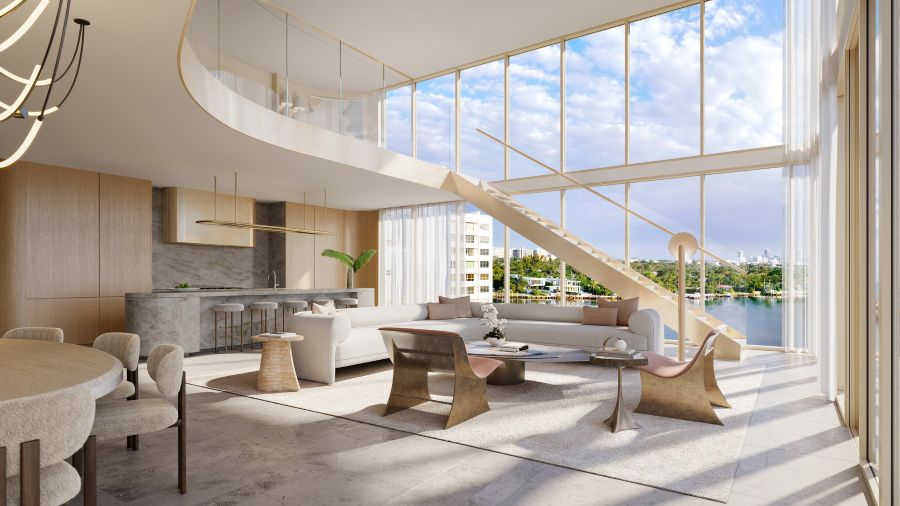
The Investment Thesis
The strongest Bay Harbor Islands investment argument isn’t that it will suddenly become another Bal Harbour.
It shouldn’t.
Its appeal comes from remaining different.
The more compelling thesis is that the quality of residential inventory is catching up with the quality of the location.
Bay Harbor Islands already benefits from proximity to:
- Bal Harbour
- Surfside
- Indian Creek
- Miami Beach
- Atlantic Ocean beaches
- Bal Harbour Shops
- Biscayne Bay
- Miami’s northern coastal communities
New construction adds modern residential product to that geography.
Bull Case
Boutique redevelopment continues, older housing stock is gradually replaced, and Bay Harbor Islands becomes increasingly recognized as the lower-density luxury alternative between Miami Beach and the northern coastal markets.
Base Case
The neighborhood remains desirable and increasingly expensive while continuing to trade at a meaningful distinction from direct oceanfront Bal Harbour and Surfside properties.
Risk Factors
More new supply can limit scarcity.
Boutique buildings can carry substantial association costs.
Not every new development will command the same resale premium.
And buyers paying oceanfront-level prices for non-oceanfront property need a compelling reason for doing so.
Those risks should be evaluated building by building.
What I Look for When Evaluating a Bay Harbor Islands Condo
I would prioritize the residence before the development’s marketing story.
In Bay Harbor Islands that means looking closely at:
Orientation and views: Water, city, neighboring buildings and potential future development.
Floor-plan efficiency: Particularly important at today’s luxury price points.
Outdoor space: Terraces can materially change how a residence lives.
Building scale: Twenty residences and 150 residences are very different ownership experiences.
Association economics: Especially important in boutique buildings.
Parking and storage: Easy to overlook during a glamorous sales presentation.
Waterfront positioning: Determine whether you’re paying for actual protected-water frontage or simply proximity to the water.
Resale differentiation: Ask what will make this particular residence more desirable than competing new units five years from now.
The best purchase isn’t necessarily the newest building.
It’s the residence with characteristics future buyers will have difficulty replicating.
Frequently Asked Questions
Is Bay Harbor Islands part of Miami Beach?
No. Bay Harbor Islands is its own incorporated municipality in Miami-Dade County. It sits immediately west of Bal Harbour and Surfside and is connected to the surrounding communities by bridges.
Does Bay Harbor Islands have a beach?
Bay Harbor Islands itself does not front the Atlantic Ocean. Residents have convenient access to nearby beaches through Bal Harbour and Surfside.
Is Bay Harbor Islands walkable?
Yes, particularly around East Island and Kane Concourse. Restaurants, cafés and services are concentrated within the community, with additional shopping and dining nearby in Bal Harbour and Surfside.
Is Bay Harbor Islands less expensive than Bal Harbour?
It can be, particularly when comparing Bay Harbor boutique condominiums with prime direct-oceanfront Bal Harbour residences. However, new construction pricing varies considerably by development, residence, view and size. Buyers should compare specific properties rather than assume Bay Harbor Islands is automatically the less expensive option.
Are there waterfront condos in Bay Harbor Islands?
Yes. Bay Harbor Islands contains numerous properties along Biscayne Bay, Indian Creek and surrounding waterways. Waterfront orientation varies considerably by building and residence.
Is Bay Harbor Islands good for new construction?
It has become one of Miami’s more interesting markets for boutique luxury development. The relatively small scale of many projects differentiates it from the high-rise construction found in Sunny Isles Beach, Brickell and Downtown Miami.
Should I buy in Bay Harbor Islands or Surfside?
Choose Surfside when direct Atlantic Ocean frontage and beach access are priorities. Consider Bay Harbor Islands when boutique scale, newer residences, protected-water views and a quieter island environment carry greater weight.
Should I buy in Bay Harbor Islands or Bal Harbour?
Bal Harbour generally makes the stronger case for buyers prioritizing internationally recognized prestige, direct oceanfront property and scarcity. Bay Harbor Islands can make more sense for buyers prioritizing newer boutique construction, residential scale and value relative to neighboring oceanfront properties.
Is The Well changing Bay Harbor Islands?
The Well represents an important evolution in the neighborhood because it introduces a recognizable wellness-focused residential concept while remaining compatible with Bay Harbor Islands’ boutique scale. Its longer-term influence on resale values and surrounding development should be evaluated as the market matures.
Ready to Explore Bay Harbor Islands?
Bay Harbor Islands isn’t trying to outdo Miami’s skyscrapers.
That’s precisely why it deserves attention.
The neighborhood offers something increasingly difficult to find along Miami’s coast: new luxury residential development at a human scale.
For buyers comparing Bay Harbor Islands with Bal Harbour, Surfside, Miami Beach or Sunny Isles Beach, the decision should extend well beyond price per square foot. Building scale, waterfront orientation, association economics, lifestyle and long-term resale differentiation all matter.
I specialize in luxury real estate throughout Miami-Dade and Broward’s coastal communities and can help compare Bay Harbor Islands properties with the surrounding markets — including new construction, existing luxury condominiums and off-market opportunities.
Contact me directly for current availability and a property-specific comparison.
📞 Call or text: 305.978.7704
📧 Email: AColeman@onesothebysrealty.com
🌐 Explore Bay Harbor Islands luxury residences
About Market Data
This neighborhood guide is intended as an evergreen overview rather than a statistical market report. Individual property pricing, inventory, closed sales, days on market and developer availability change continuously.
For a current Bay Harbor Islands market analysis, I can provide updated MLS inventory and recent comparable sales based on your specific price range, property type, and objectives.
Contact: 305.978.7704 · AColeman@onesothebysrealty.com
Information provided is for informational purposes only and subject to change without notice. Development plans, amenities, pricing and availability should be independently verified with the developer, condominium association and appropriate professional advisors before making a real estate or investment decision.





