


Coconut Grove is Miami’s oldest neighborhood — and in 2026, it is also its most discussed. Not because something new arrived, but because the people who do the most thorough research before buying anywhere in the world looked at the full picture of what Coconut Grove offers and concluded that it is, quietly, the most complete luxury residential address in Miami-Dade County.
Google co-founder Larry Page poured more than $188 million into the neighborhood. Hedge fund manager Ken Griffin acquired $106 million in adjoining bayfront properties on the same streets where “Millionaires’ Row” existed a century ago. The neighborhood Fox Business described as “Silicon Grove” in May 2026 is attracting a buyer who, according to one longtime Grove broker, “does their homework before purchasing anything” — and whose homework keeps arriving at the same conclusion: when you consider schools, parks, bayfront access, privacy, walkability, and architectural character simultaneously, Coconut Grove is the only Miami neighborhood that delivers all of them without compromise.
This is the guide to what Coconut Grove actually is, how it got here, and why the buyers who have looked most carefully at Miami keep choosing it.
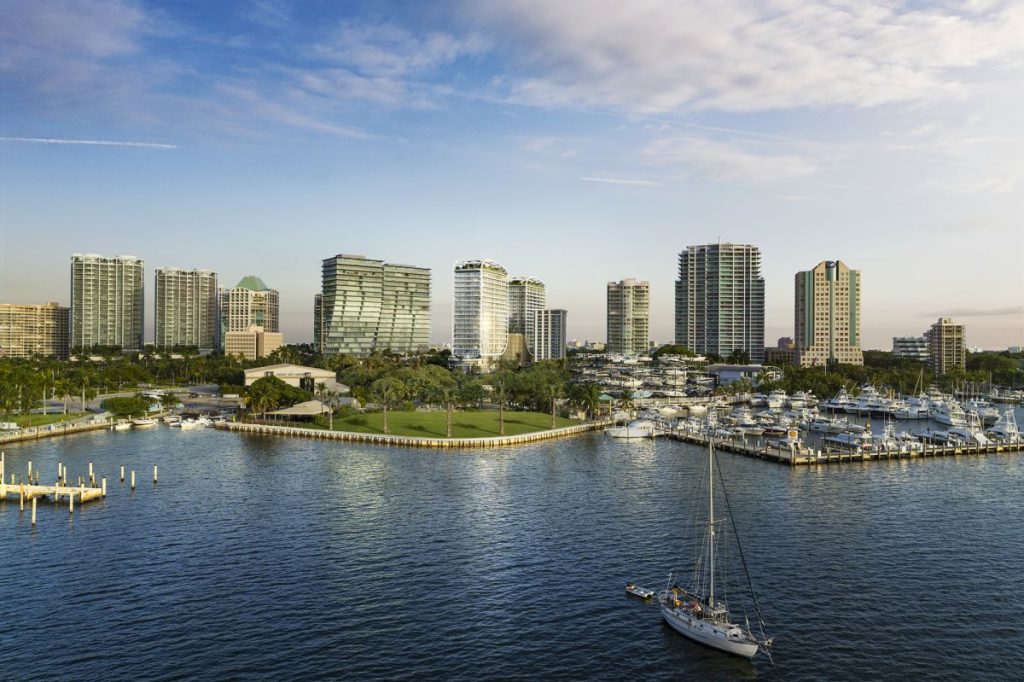
Miami’s Oldest Neighborhood: How the Grove Got Here
Coconut Grove’s history begins before Miami existed as a city. A post office opened on Biscayne Bay in 1873, making the Grove the first organized community in what would become Miami-Dade County. Bahamian immigrants arrived in the late 1880s, building homes and boats along the bay and establishing the maritime culture that still defines the neighborhood’s character. The Barnacle — Ralph Munroe’s 1891 home, now preserved as Miami-Dade County’s oldest standing structure and a Florida Historic State Park — is on the water where those early settlers built.
By the 1920s, Miami historian Iris Guzman Kolaya notes, “Millionaires’ Row” along today’s Main Highway was a hub of grand winter estates for American industrialists and cultural figures who, having their choice of the Florida coast, specifically chose the Grove over Palm Beach and Miami Beach. They chose it for the same reasons buyers are choosing it now: the tree canopy, the bay, the sense of an established community rather than a manufactured resort destination.
The Grove was annexed by the City of Miami in 1925. In the 1960s and 1970s, it became a haven for painters, musicians, and writers — a bohemian counterculture address in a city that didn’t otherwise have one. That creative heritage is still visible in the Coconut Grove Arts Festival every February, one of the largest outdoor art festivals in the United States, and in the Goombay Festival that celebrates the neighborhood’s Bahamian roots. The Coconut Grove Playhouse, a landmark performing arts venue, is being restored.
The current wave of ultra-high-net-worth buyers arriving in the Grove is not historically unprecedented. Miami historian Kolaya notes that the Grove’s wealthy influxes follow a pattern of peaks and lulls — what’s happening today mirrors what happened in the 1910s and 1920s, when, as she puts it, these individuals “could have picked any place to live, and they chose Coconut Grove.”
What Makes the Grove Different From Every Other Miami Neighborhood
In a guide series that has covered Brickell, Sunny Isles Beach, Bal Harbour, Edgewater, South of Fifth, Surfside, and Fisher Island, Coconut Grove’s distinguishing characteristics are clear precisely because of that comparison.
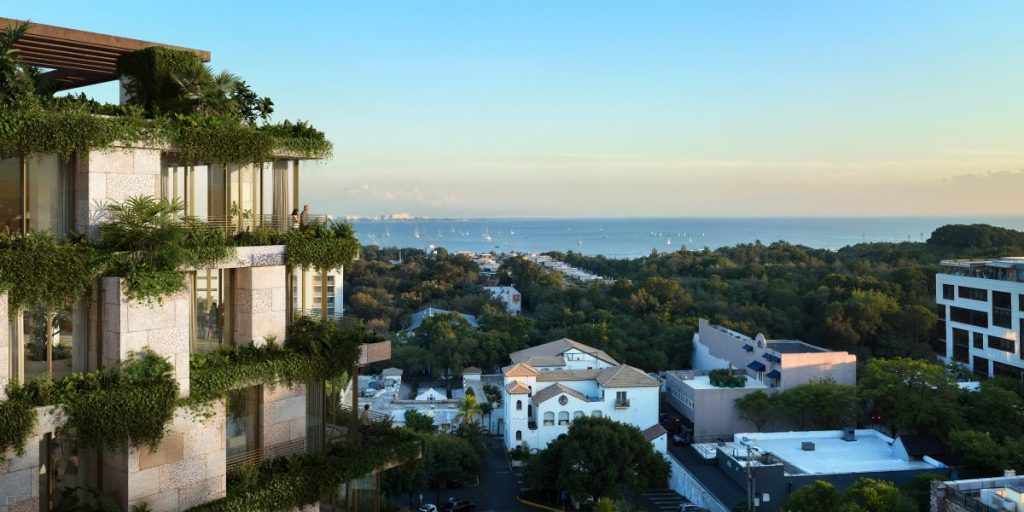
The tree canopy. Coconut Grove contains the most extensive mature tree canopy of any Miami-Dade neighborhood — banyans, live oaks, royal poincianas, and palms forming continuous overhead corridors along residential streets. This is not ornamental landscaping. It is a 150-year-old ecological infrastructure that took generations to establish and that cannot be replicated by any new development anywhere in the county. Every other Miami luxury neighborhood can be described by its skyline. Coconut Grove is described by its canopy.
The village core. CocoWalk, Main Highway, and Grand Avenue form a walkable, low-rise commercial center within a neighborhood of 21,000 residents — restaurants, cafés, independent retail, and the kind of neighborhood-serving daily infrastructure that makes car-free errands genuinely possible. This is the same walkability advantage that the Design District and Wynwood offer, but in a residential neighborhood rather than a commercial one, and with 150 years of continuity behind it rather than a decade of gentrification.
The maritime culture. Dinner Key Marina — Florida’s largest wet-slip marina — anchors a sailing and boating culture that is as old as the neighborhood itself. The Coconut Grove Sailing Club, the Coral Reef Yacht Club, the Biscayne Bay Yacht Club, and the US Olympic Sailing Center all operate within or immediately adjacent to the Grove. World-class regattas — Columbus Day Regatta, Miami Sailing Week — use the Grove’s waterfront as their home base. For buyers whose lifestyle includes sailing or boating, no other Miami neighborhood provides this concentration of maritime infrastructure.
The school ecosystem. Ransom Everglades School — a rigorous independent secondary school with Ivy League placement on a bayfront campus — and Carrollton School of the Sacred Heart are both within or adjacent to the Grove. Coconut Grove Elementary and George Washington Carver Middle School are among Miami-Dade’s stronger public options. The on-neighborhood school infrastructure, combined with the bayfront lifestyle and the canopy character, produces average holding periods in the Grove that are longer than in any other Miami luxury submarket covered in this guide series. Buyers who come for the schools tend to stay.
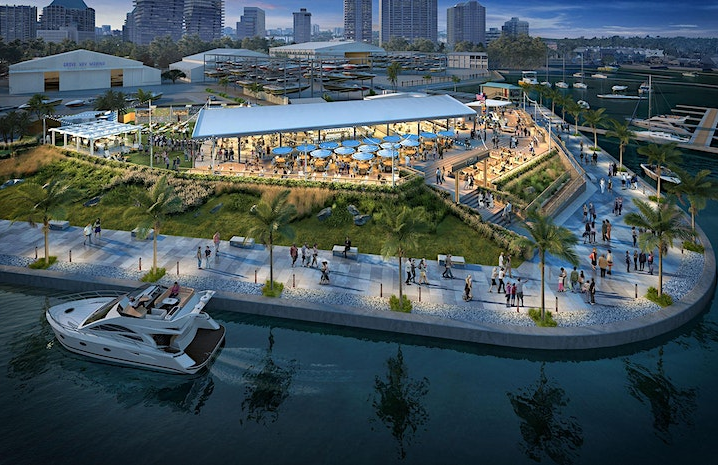
The Four Sub-Neighborhoods: Understanding the Grove’s Geography
Coconut Grove is not geographically uniform, and buyers who treat it as a single market miss the meaningful differences between its four distinct sub-areas.
North Grove (Camp Biscayne, The Moorings, Hughes Cove). The most exclusive residential enclave within the Grove, defined by gated communities along Biscayne Bay with private docks, deep-water access, and the largest estate lots in the neighborhood. This is where Larry Page assembled his $188 million compound and where Ken Griffin acquired $106 million in adjoining bayfront properties. Estate pricing in North Grove runs from $7 million to $25 million and above for significant bayfront parcels. The Moorings specifically — a gated, guard-staffed community of approximately 53 homes — trades infrequently enough that its market resembles Golden Beach more than it resembles the broader Grove.
South Bayshore Drive corridor. The primary luxury condominium address — Grove at Grand Bay, Park Grove, Grovenor House, and the Four Seasons Residences site all sit on or adjacent to S Bayshore Drive. This is the address for buyers who want Coconut Grove’s lifestyle in a full-service high-rise format rather than a single-family estate. The bayfront towers here deliver unobstructed Biscayne Bay views while placing residents within walking distance of the village core.
The village core (CocoWalk, Main Highway, Grand Avenue). The commercial and social heart of the neighborhood, where CocoWalk’s open-air dining, the independent boutiques of Main Highway, and the Coconut Grove Arts Festival infrastructure concentrate. Residential product in and immediately around the village core tends toward smaller condos and townhomes — Mr. C Residences and boutique mid-rise developments such as Ziggurat — at accessible price points. This sub-area is the most walkable and the most activating of the four, at the cost of some of the canopy and privacy that define the estate sections.
Village West (historical Bahamian community). The neighborhood’s oldest residential fabric, where the Bahamian immigrant community that built the original Grove established homes in the late 19th century. Village West is defined by small cottages, the Macedonia Missionary Baptist Church, and a residential character distinct from the luxury towers and bayfront estates of the Grove’s other sections. It is the Grove’s historical conscience — the part of the neighborhood that its current billionaire influx has been least able to absorb, and that its preservation advocates fight hardest to protect.
The Billionaire Influx: What It Means for the Market
The concentration of nine-figure acquisitions in Coconut Grove over the past two to three years has produced a market dynamic that deserves honest analysis rather than either breathless coverage or dismissal.
Larry Page has invested more than $188 million in the neighborhood. Ken Griffin assembled $106 million in adjacent bayfront parcels on the same streets where the original Millionaires’ Row existed in the 1920s. A pair of estates traded for a combined $173.4 million. These are not speculative purchases by buyers unfamiliar with the market — they are the result of precisely the kind of due diligence that confirms a neighborhood’s fundamentals rather than inflating them artificially.
The market impact is measurable. The Gap between current resale pricing in the broader Coconut Grove condo market and incoming new construction pricing — Four Seasons at approximately $4,000 per square foot — represents the widest value spread of any Miami luxury corridor covered in this guide series. In a recent snapshot, average days on market in Coconut Grove combined with Coral Gables was cited at 56 days versus 81 days for Miami overall — a faster absorption rate than the broader market, reflecting genuine demand rather than speculative listing behavior.
The tension this creates for the neighborhood’s character is real and documented — the Grove’s longtime advocates worry that the billionaire influx is erasing the offbeat, creative character that made it appealing to artists and free-thinkers for decades. That is an honest observation worth including in any guide that claims to give buyers a complete picture. The Grove of 2026 is meaningfully different from the Grove of 2006 — quieter, more guarded, wealthier, and in some ways less permeable. Whether that change represents the neighborhood fulfilling its potential or losing its soul is a question that Coconut Grove residents are actively debating, and buyers should understand the debate before they join the neighborhood.
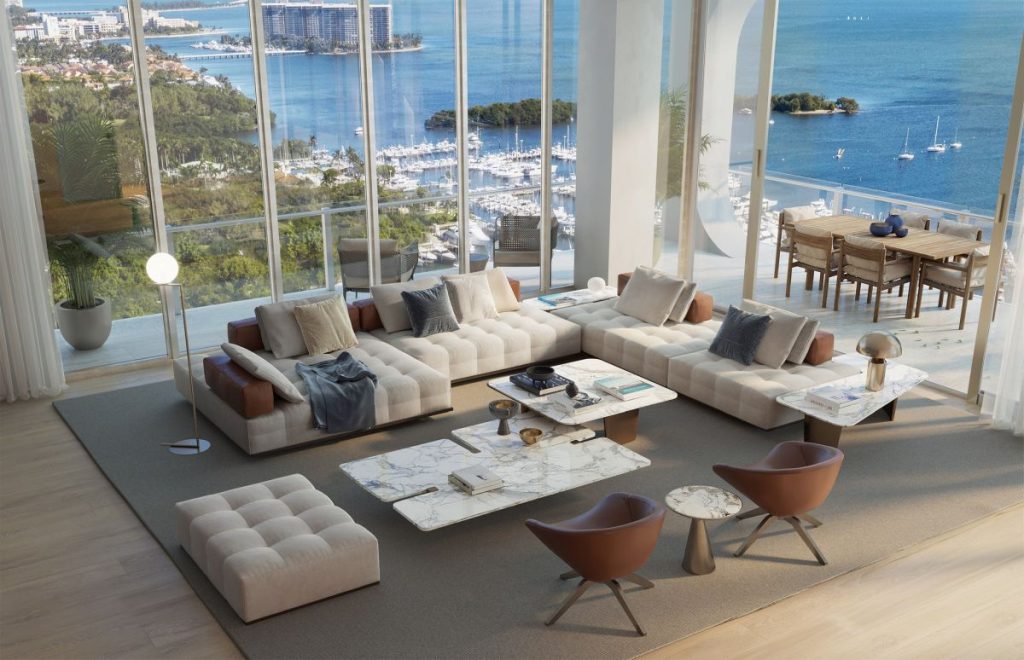
Daily Life in Coconut Grove
For a guide series that has covered buildings with 70,000-square-foot amenity podiums and helipad access, Coconut Grove’s daily-life infrastructure is deliberately more modest — and for buyers who have decided that’s what they want, it is exactly right.
Dining: Greenstreet Café on Main Highway is the Grove’s definitive institution — a sidewalk patio breakfast and brunch spot that has been the neighborhood’s social glue for decades. Monty’s Raw Bar on S Bayshore Drive delivers marina-side conch fritters and sunset views over the water. Lulu in the Grove offers upscale Mediterranean cuisine on a waterfront terrace. Ossobuco on Florida Avenue brings wood-fired plates to a candlelit dining room. The range runs from casual waterfront to refined village dining — never the scene-driven nightlife of South Beach or the expense-account formality of Brickell.
Retail: CocoWalk anchors the commercial center with national tenants alongside independent food and beverage. The stretch of Main Highway and Grand Avenue that runs through the village core has the independent bookshops, galleries, and boutiques that residents who moved from New York’s West Village or Boston’s Beacon Hill specifically recognize as the retail character they were looking for.
Recreation: Peacocks on the street — genuinely — alongside the sailing clubs, Biscayne Bay’s kayaking and paddleboarding, Dinner Key Marina’s boat ramp and yacht services, and Peacock Park’s green space along the water. Vizcaya Museum and Gardens — Charles Deering’s 1916 Italianate estate, now a public museum and Miami-Dade’s most significant historic property — is a fifteen-minute walk from the village core.
Farmers market: A weekly Saturday market in the village core, running year-round, reinforces the small-town rhythm that is the Grove’s deliberate contrast to the vertical, anonymous density of Brickell’s financial towers.
Schools: The Reason Families Stay
No other single factor explains Coconut Grove’s longer average holding period among luxury buyers as clearly as the school ecosystem.
Ransom Everglades School (grades 6–12) — a rigorous independent school on a 35-acre bayfront campus at 3575 Main Highway — is consistently ranked among Florida’s elite secondary institutions, with Ivy League and top-university placement rates that make it a primary decision driver for families relocating from New York, Boston, and Los Angeles. The school’s bayfront campus, directly on the Coconut Grove waterfront, is a facility that most urban private schools cannot match, regardless of academic reputation.
Carrollton School of the Sacred Heart (PK–12) — an all-girls Catholic school on a 17-acre campus in Coconut Grove — offers a PK–12 college preparatory program that draws families from across Miami-Dade who are not necessarily Grove residents. For buyers with daughters, Carrollton’s combination of academic rigor and the Sacred Heart network’s global alumnae connections is a genuine differentiator.
Saint Hugh Catholic School (PK–8) provides a parish-based K–8 program within the Grove itself. For families who want a shorter commute to school for younger children before transitioning to Ransom or Carrollton, Saint Hugh is the feeder option.
The University of Miami, in adjacent Coral Gables, is approximately five miles away — contributing to a Grove rental market that is meaningfully stronger than its comparable neighborhoods, sustained by university-affiliated tenants alongside the corporate relocation buyers who drive the for-sale market.
Coconut Grove vs. the Competition
Coconut Grove vs. Coral Gables: The most frequent comparison, and the one that most accurately reflects the lifestyle choice buyers are making between two established, architecturally significant neighborhoods west of the main Miami-Dade luxury corridor. Coral Gables offers the Miracle Mile commercial district, the Biltmore Hotel, and a slightly larger commercial infrastructure at a comparable price point for luxury single-family homes. Coconut Grove offers the bay, the marina culture, and a village character that Coral Gables’ more formal Mediterranean Revival streetscape does not replicate. The decision almost always comes down to whether the buyer’s lifestyle is organized around water access or around the Gables’ more formal, architecturally uniform character.
Coconut Grove vs. Key Biscayne: Both offer Biscayne Bay access, strong school infrastructure, and a deliberate distance from downtown Miami’s commercial intensity. Key Biscayne is an island — more isolated, more secure, slower to access — at generally higher price points. Coconut Grove offers the village commercial core that Key Biscayne’s island footprint cannot accommodate, and the school infrastructure that Key Biscayne residents generally access by crossing the Rickenbacker Causeway anyway. For buyers who want schools and sailing within the same neighborhood, Coconut Grove has a structural advantage.
Coconut Grove vs. Edgewater: A different buyer profile almost entirely. Edgewater offers bayfront tower living for buyers who specifically want Biscayne Bay views, Design District adjacency, and a newer building product. Coconut Grove offers canopy, estates, and a neighborhood identity built over 150 years. The buyers who choose between them have different primary lifestyle drivers — the Edgewater buyer’s day is organized around the Design District and Wynwood; the Coconut Grove buyer’s day is organized around the sailing club and the farmers market.
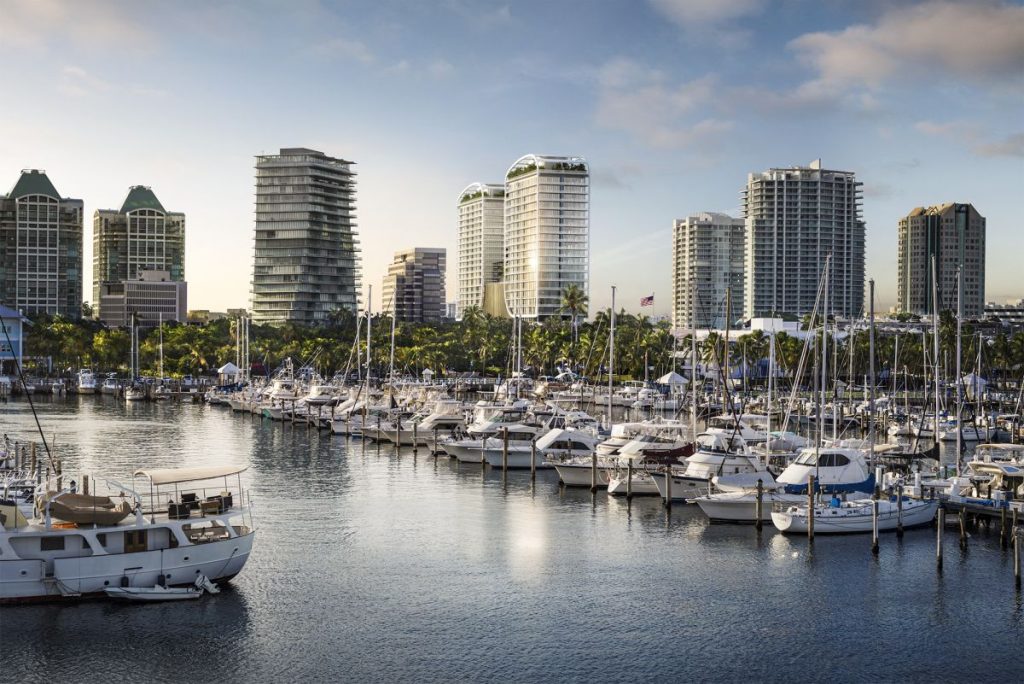
The Buildings: Your Coconut Grove Reading List
The Coconut Grove building market is covered in depth in two dedicated posts published earlier in this guide series. Rather than repeat those specs here, the links below are the next step for buyers who have read this neighborhood guide and are ready to evaluate specific buildings.
The complete building-by-building comparison — Ziggurat, Park Grove, Grove at Grand Bay, Mr. C Residences, Vita at Grove Isle, Grovenor House, The Mutiny, and Four Seasons Residences — is at the dedicated Coconut Grove luxury condo roundup post. For buyers specifically evaluating Ziggurat, ONE Sotheby’s exclusive pre-construction project, the investment case post covers the scarcity thesis in detail.
Frequently Asked Questions
Is Coconut Grove Miami’s oldest neighborhood?
Yes. A post office opened in Coconut Grove in 1873, before the City of Miami was incorporated. It is the oldest continuously inhabited neighborhood in Miami-Dade County, founded by Bahamian immigrants and Northeastern pioneers who settled along Biscayne Bay in the 1870s and 1880s.
What is Coconut Grove known for?
Coconut Grove is known for Miami-Dade’s most extensive mature tree canopy, its Biscayne Bay sailing and boating culture centered on Dinner Key Marina, its concentration of elite private schools including Ransom Everglades and Carrollton, its bohemian creative heritage from the 1960s and 1970s, and its current status as the destination of choice for ultra-high-net-worth buyers seeking privacy, canopy, and lifestyle authenticity over branded-tower density.
What schools are in Coconut Grove?
Ransom Everglades School (grades 6–12), Carrollton School of the Sacred Heart (PK–12), and Saint Hugh Catholic School (PK–8) are the primary private school options within or immediately adjacent to the Grove. Public options include Coconut Grove Elementary and George Washington Carver Middle School. The University of Miami in Coral Gables is approximately five miles away.
What is the price range for luxury real estate in Coconut Grove?
Single-family homes in non-waterfront locations run from approximately $2 million to $4 million for established or renovated product, with waterfront and gated estate properties reaching $7 million to $25 million and above. Luxury condos range from approximately $800,000 at the entry level to $10 million and above at Grove at Grand Bay and Park Grove’s upper floors, with Four Seasons Residences pricing at approximately $4,000 per square foot for its upcoming delivery. Pre-construction at Ziggurat runs from $3.5 million to $15 million.
Why are billionaires buying in Coconut Grove?
The Grove’s combination of finite land supply, no-overdevelopment zoning that has preserved its tree canopy and village scale, elite school proximity, direct Biscayne Bay access, and a neighborhood identity built over 150 years has proven compelling to UHNW buyers who have evaluated every other South Florida option. As one longtime Grove broker described it: when you need schools, parks, privacy, lifestyle, and waterfront access simultaneously, the Grove is the only address that delivers all of them.
What is the Barnacle Historic State Park?
The Barnacle is Ralph Munroe’s 1891 bayfront home at 3485 Main Highway — Miami-Dade County’s oldest standing structure, preserved as a Florida Historic State Park open to the public. It is one of the most significant pieces of physical evidence of Coconut Grove’s pre-Miami founding history.
Ready to Explore Coconut Grove?
Coconut Grove does not need a pitch. The buyers who find their way here have already done the research — the same research that led Larry Page to $188 million in acquisitions on the same streets where Miami’s original Millionaires’ Row existed a century ago. What they need is a guide who knows the specific buildings, the specific sub-neighborhoods, and the specific dynamics of a market that rewards preparation more than most.
I am Ashton Coleman, a Broker-Associate with ONE Sotheby’s International Realty, holding the Certified Luxury Home Marketing Specialist (CLHMS) Million Dollar Guild designation, Certified Negotiation Expert (CNE), Transnational Referral Certification (TRC), and Resort & Second-Home Property Specialist (RSPS) designations. ONE Sotheby’s International Realty is the sales team for Ziggurat Coconut Grove, the neighborhood’s most significant current pre-construction offering.
View all available Coconut Grove condos and penthouses at MiamiPenthousesandEstates.com, or contact me directly for a personalized building comparison and neighborhood orientation.
📞 Call or text: 305.978.7704
📧 Email: AColeman@onesothebysrealty.com
🌐 Search Coconut Grove luxury condos
🌐 Search Coconut Grove penthouses
Information provided is for informational purposes only and subject to change without notice. Market data and pricing ranges are based on publicly available MLS records and independent market analyses current as of Q3 2026. ONE Sotheby’s International Realty is the sales team for Ziggurat Coconut Grove; no other buildings or properties referenced in this guide are exclusively represented by ONE Sotheby’s International Realty. Verify all details with your legal and financial advisors prior to entering any transaction.





