


North of Brickell, east of I-95, and south of the causeway bridges, three Miami neighborhoods have quietly become the most dynamic luxury real estate story in the city — and the most frequently compared by buyers who have decided that waterfront branded towers are not what they want but are not yet sure which of these three distinct urban environments is the right fit.
Edgewater. Wynwood. The Design District.
Three neighborhoods within a ten-minute walk of each other. Three completely different answers to the question of what urban luxury living means in Miami in 2026. Three buyer profiles that overlap at the edges but diverge sharply at the core. And three markets with some of the most compelling appreciation data in all of South Florida — one of which has posted 73% price appreciation since 2015, one of which has seen 124% residential growth over the same period, and one of which is home to the most productive luxury retail corridor in North America outside of Madison Avenue.
I am Ashton Coleman, a luxury real estate specialist with One Sotheby’s International Realty. I represent buyers across all three neighborhoods. This is the comparison that design-forward, culture-oriented, and investment-minded buyers in Miami need before they commit.
At a Glance: The Three Neighborhoods Side by Side
| Edgewater | Wynwood | Design District | |
|---|---|---|---|
| Character | Bayfront luxury residential | Arts, culture, and creative energy | Ultra-luxury retail and design |
| Water access | Yes — direct Biscayne Bay | No | No |
| Walkability | Moderate | High | High |
| Primary property type | Condos (tower) | Condos (boutique) | Condos (boutique) and retail |
| Entry price (Q2 2026) | From ~$500K | From ~$600K | From ~$800K |
| Luxury tier pricing | $800–$1,100+ per sq ft | $850–$1,100 per sq ft | $1,000–$1,500+ per sq ft |
| Price appreciation (2015–2024) | 73% | Rapid — 124% residential growth | Elevated — premium above Wynwood |
| Population growth (2015–2024) | 47% | Strong | Moderate |
| Cultural infrastructure | Growing | Strong — Wynwood Walls, galleries | Strongest — ICA, Design District galleries |
| Luxury retail | Limited | Growing | Exceptional — Hermès, Louis Vuitton, Prada |
| Best for | Bayfront lifestyle buyers | Creative culture enthusiasts | Design-forward ultra-luxury buyers |
| New development pipeline | Deep — multiple active projects | Growing | Limited — curated |
Edgewater: The Bayfront Rising Star
Edgewater is the neighborhood whose transformation story is the most dramatic in Miami’s urban core — and the data makes that case without any embellishment. Since 2015, Edgewater has recorded 47% population growth and 73% price appreciation — both figures that outpace Miami-Dade County’s already strong average of 52% price appreciation over the same period.
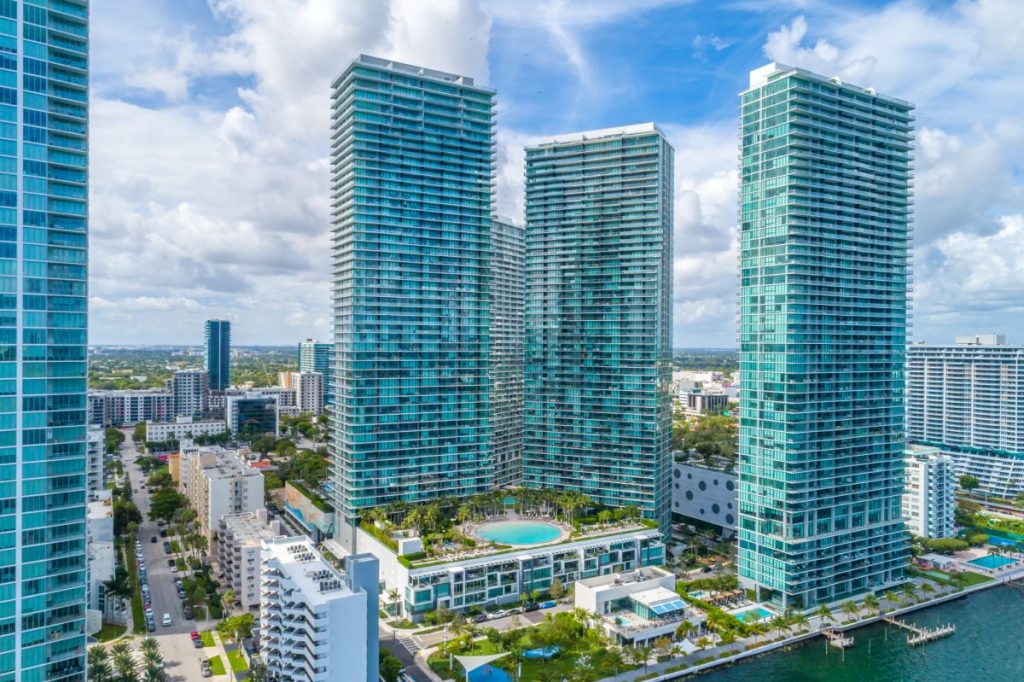
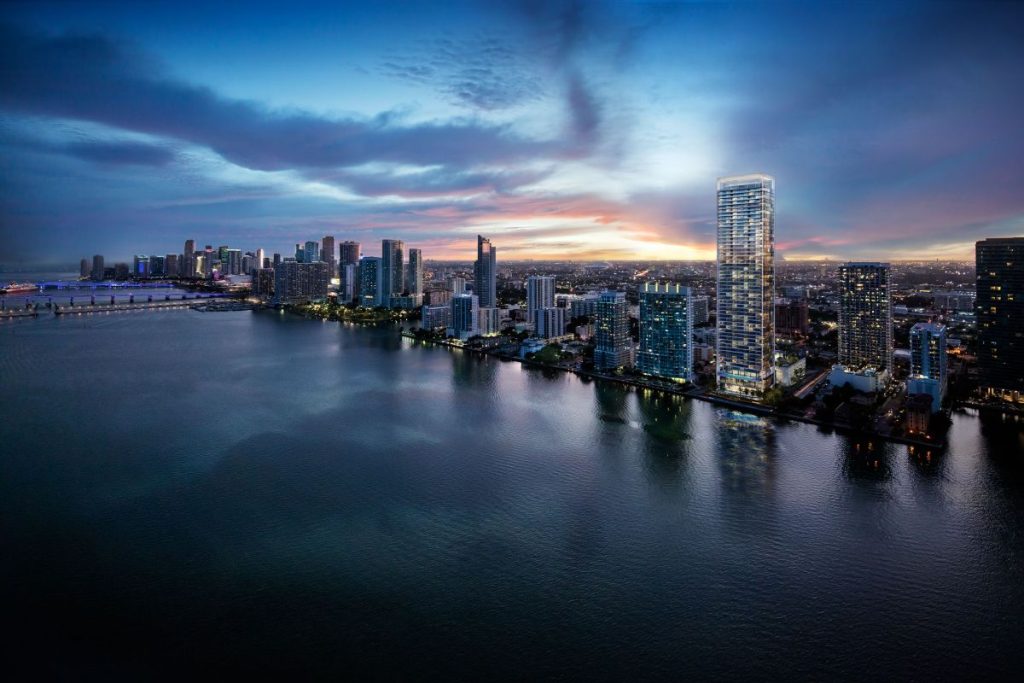
The driver of that transformation is straightforward: Edgewater has direct Biscayne Bay frontage and sits within minutes of Wynwood, the Design District, Downtown Miami, and a scenic causeway ride from South Beach. For buyers who want bayfront views and proximity to Miami’s cultural and lifestyle infrastructure without the intensity of Brickell or the resort density of Sunny Isles Beach, Edgewater has become the default answer — and prices have moved accordingly.
The neighborhood stretches from NE 17th Street in the south to I-195 in the north, bordered by Biscayne Bay to the east and NE 2nd Avenue to the west. It is compact — less than a square mile — and almost entirely residential in character, with a Publix on Biscayne Boulevard anchoring the practical retail and a growing collection of top-rated restaurants along its main corridors.
The Edgewater buyer is typically someone who has already evaluated Brickell and found it too dense, too corporate, or too financially driven in its daily character. They want bayfront views, they want to be close to Wynwood’s cultural energy and the Design District’s retail, and they want a neighborhood that feels residential rather than commercial. Edgewater delivers all three — and at a price per square foot that still sits below Brickell’s branded tower averages.
The active development pipeline in Edgewater is the deepest of the three neighborhoods. The Cove Residences launched sales and broke ground simultaneously in March 2026 — a rare dual event signaling developer confidence in Edgewater’s absorption velocity. ELLE Residences at 3618 NE 5th Avenue — the world’s first ELLE Fashion Magazine-branded residential address — is targeting a 2028 completion, adding fashion-branded product to a neighborhood that has previously been anchored by Missoni Baia, Aria Reserve, and Elysee. A 49-story project near 500 NE 24th Street is expected to begin sales in 2026, extending the pipeline through the end of the decade.
Wynwood: Culture, Energy, and the Most Surprising Luxury Story in Miami
If Edgewater is the neighborhood where the luxury story is about water and views, Wynwood is the neighborhood where the luxury story is about culture, density, and the most dramatic residential transformation of any neighborhood in Miami’s history. Since 2015, Wynwood has seen 124% residential growth — a figure that reflects the conversion of a warehouse arts district into a genuine high-density residential neighborhood in the span of a decade.
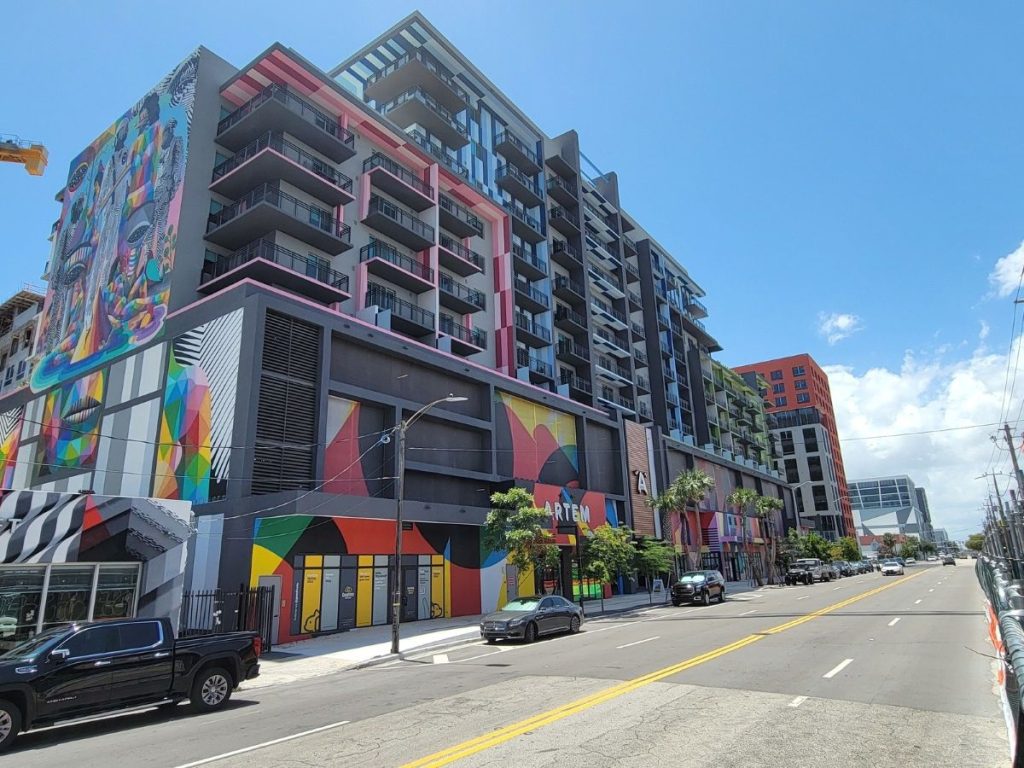
Wynwood began as Miami’s graffiti and street art district — home to the Wynwood Walls, the outdoor mural installation that brought international art world attention to a formerly industrial Miami neighborhood in the early 2010s. That cultural attention attracted galleries, restaurants, bars, and eventually residential development. The neighborhood is now a genuine live-work-play destination, with boutique luxury residential towers rising alongside established art institutions, independent restaurants, cocktail bars, and the kind of independent retail that attracts the demographic that drives Wynwood’s continued transformation.
New-build pricing in Wynwood has settled in the $850 to $1,100 per square foot range — positioned below Brickell and Miami Beach equivalents but above the neighborhood’s historical pricing, reflecting both the new construction premium and the genuine lifestyle value the neighborhood delivers for buyers who specifically want cultural energy in their daily environment.
The Wynwood buyer is distinctly different from the Edgewater buyer. These are designers, creative professionals, entrepreneurs, marketers, and buyers who specifically do not want to live in a glass tower facing Biscayne Bay. They want walkable streets, they want murals outside their building, they want to eat at a new restaurant within five minutes of their front door, and they want to live in a neighborhood that feels alive and evolving rather than finished and polished. The demographic is younger and more creatively oriented than the buyer profile of any other Miami luxury submarket — and Wynwood’s retail, dining, and nightlife infrastructure serves that demographic specifically.
The Institute of Contemporary Art — the ICA Miami — recently acquired part of the de la Cruz Collection and is planning a significant expansion of its exhibition space and public programming for 2026, signaling a new chapter in Wynwood’s cultural evolution. For buyers who value proximity to contemporary art institutions as a lifestyle consideration, the ICA expansion is the kind of infrastructure investment that compounds neighborhood desirability over time.
For investors, Wynwood’s 124% residential growth over the past decade is the most compelling appreciation data point in the comparison — but it comes with the caveat that the neighborhood is still in its transformation, and some of the specific character that makes it appealing today is itself changing as more luxury development arrives. Buyers who enter Wynwood now are entering a neighborhood that is mid-evolution, not one that has fully settled into its identity.
The Design District: Ultra-Luxury Retail as a Lifestyle Foundation
The Design District is the smallest and most specifically positioned of the three neighborhoods, and for the buyer whose lifestyle is organized around design, fashion, art, and the most sophisticated luxury retail experience in the Western Hemisphere outside New York or Beverly Hills, it is the only neighborhood in Miami that makes sense.
The Design District’s luxury retail concentration is genuinely exceptional. Hermès, Louis Vuitton, Prada, Dior, Valentino, Balenciaga, Rick Owens, Bottega Veneta, Chrome Hearts, and dozens of other global luxury fashion and design brands are within walking distance of the residential buildings in the district. The Moore Building — a landmark Beaux-Arts venue hosting Miami Art Week programming — sits at the neighborhood’s heart. The ICA Miami is steps away. Architecture by Aranda/Lasch, Leong Leong, and Sou Fujimoto shapes the district’s public spaces in ways that make walking through it a design experience in itself.
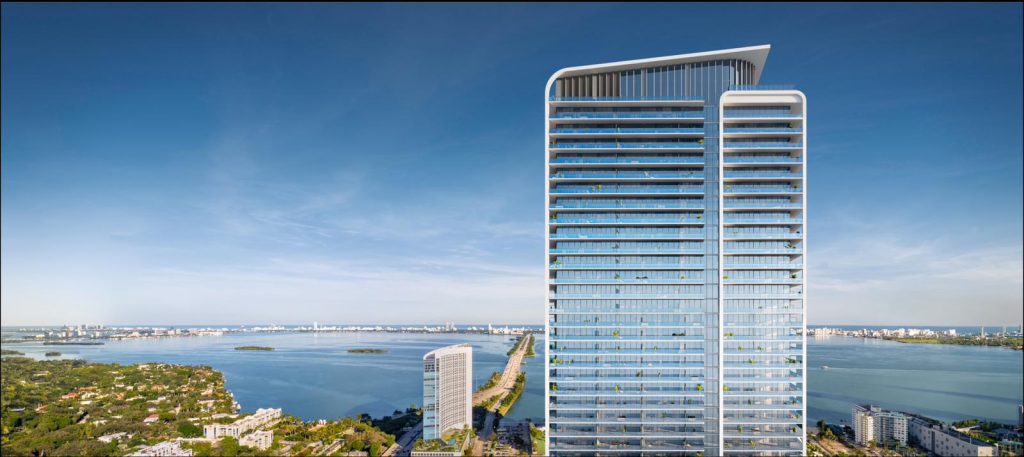
The residential product in the Design District reflects its retail and cultural positioning — boutique-scale, curated, and positioned at the top of the per-square-foot range for the urban core. Pricing for luxury residential product in the Design District starts from approximately $800,000 and reaches $1,500 per square foot and above for the premium tier, reflecting the retail adjacency premium and the genuinely limited supply of residential space in a neighborhood that is primarily commercial. The most talked about new development project in the Design District today is Jean-Georges Miami Tropic Residences.
The Design District buyer is the most specific profile in this comparison. They are buyers for whom the Hermès store being a five-minute walk from their front door is a primary lifestyle criterion — not a secondary consideration. They are design professionals, art collectors, and fashion industry buyers whose daily lives are organized around the cultural and retail infrastructure that no other Miami neighborhood concentrates in the same way. They are typically not waterfront buyers — the Design District has no bay access — and they are typically not concerned with the bayfront premium that drives Edgewater and Brickell pricing.
The neighborhood’s limited residential pipeline — constrained by the commercial retail concentration that defines it — means that new residential supply is deliberately restricted, which creates scarcity dynamics that support pricing stability for the existing residential stock.
The Pricing Reality: Where Each Neighborhood Sits in Q2 2026
The three neighborhoods occupy adjacent but distinct positions in Miami’s urban luxury pricing hierarchy — and understanding those positions precisely is essential for buyers evaluating entry points and investment theses.
Edgewater has pulled ahead of both Wynwood and the Design District on the highest-end new construction pricing — the Elysee tower on Edgewater’s bayfront has set pricing records for the neighborhood at above $2,000 per square foot for upper floors with direct bay views. The neighborhood’s luxury pricing range for new construction runs $800 to $1,100 per square foot across the broader range of active projects, with premium bayfront towers commanding significant premiums above that band. Average days on market in Edgewater recorded the shortest of any Greater Downtown Miami luxury segment — 65 days in the most recent data — reflecting both the strength of buyer demand and the relative scarcity of premium bayfront inventory.
Wynwood is pricing new construction at $850 to $1,100 per square foot — slightly above Edgewater’s broad range on a like-for-like basis but without the bayfront premium that Edgewater commands for its best positions. The pricing band makes Wynwood the most accessible entry point into the creative luxury neighborhood tier for buyers who are motivated by lifestyle and appreciation upside rather than waterfront views.
The Design District commands the highest average per-square-foot pricing of the three neighborhoods for premium residential product — $1,000 to $1,500 and above — reflecting the retail adjacency premium and the scarcity of residential supply in a primarily commercial neighborhood. Entry-level units start from approximately $800,000 for smaller configurations.
The investment comparison: Edgewater has the clearest appreciation track record — 73% over nine years — with the strongest current buyer demand metrics. Wynwood has the most dramatic transformation upside — 124% residential growth creating a neighborhood that did not exist as a luxury residential address ten years ago. The Design District has the strongest pricing stability from retail adjacency scarcity — but the most limited supply and the narrowest buyer profile.
Lifestyle Comparison: What Daily Life Actually Looks Like
Edgewater’s daily life is organized around the bay. Morning runs along the Baywalk — the connected waterfront path that runs along Biscayne Bay from Downtown through Edgewater and toward Midtown — sets the neighborhood’s daily rhythm. Residents of Missoni Baia, Elysee, and Aria Reserve step out into a neighborhood that is primarily residential, where the dominant daily experience is the water and the relative quiet of a neighborhood that feels calmer than Brickell’s financial intensity. Wynwood and the Design District are seven to ten minutes by car or scooter — close enough to access regularly, far enough away that they do not define the daily experience.
The limitation is that Edgewater’s retail and dining infrastructure, while growing, is still primarily oriented toward daily convenience rather than destination experiences. For buyers who want their evening restaurant to be within a two-minute walk, Edgewater requires either a short drive to the neighborhoods immediately adjacent or patience as the neighborhood’s ground-floor retail continues to develop.
Wynwood’s daily life is the most activating of the three. Stepping out of a Wynwood residence onto streets lined with murals, into a neighborhood where a new restaurant opens roughly every other week and where the foot traffic is a mix of art-world visitors, creative professionals, and tourists, creates a daily energy that is impossible to replicate in either Edgewater or the Design District. For buyers who want their neighborhood to feel alive and surprising, Wynwood is the answer.
The limitation is noise and the transient nature of the visitor flow. Wynwood attracts significant weekend and evening foot traffic from across Miami — the Wynwood Walls alone draw millions of visitors annually. For buyers who want the neighborhood’s cultural energy without the practical implications of living adjacent to one of Miami’s most visited tourist attractions, the specific building and block selection within Wynwood matters significantly.
Design District daily life is the quietest of the three, despite its retail intensity, because the district’s primary daytime population is shoppers and gallery visitors rather than residents. For buyers who want to walk to a gallery opening or pick up a piece at Hermès on a Thursday afternoon and then return to a relatively quiet residential environment in the evening, the Design District’s commercial daytime character and residential evening character create a functional daily rhythm that neither Edgewater nor Wynwood replicates.
The limitation is that the Design District is not self-sufficient in the way that Edgewater or Key Biscayne are. There is no grocery store, no school, and limited practical daily retail. The luxury fashion infrastructure is exceptional; the practical daily infrastructure requires a short drive or car service.
Who Should Buy Where: The Direct Answer
Buy in Edgewater if:
- Biscayne Bay views and waterfront access are primary lifestyle criteria
- You want to be close to Wynwood and the Design District’s cultural energy without living in their commercial intensity
- The 73% appreciation track record over nine years and the shortest days-on-market in the Greater Downtown Miami luxury segment create the investment thesis that fits your hold horizon
- Bayfront tower living — high-rise condos with direct water views — is the residential format you want
- You are comfortable with a neighborhood that is still developing its ground-floor retail and dining infrastructure
Buy in Wynwood if:
- Cultural energy, walkable streets, murals, and a neighborhood that feels alive are your primary daily lifestyle criteria
- The creative professional and design industry buyer profile — the community you want to live among — defines your choice more than water views or retail adjacency
- The 124% residential growth story and the neighborhood’s continuing evolution create the appreciation upside that fits your investment thesis
- Boutique-scale residential buildings — smaller towers and mid-rise developments — are more appealing than the high-rise towers of Edgewater and Brickell
- You accept the tradeoff of weekend tourist traffic in exchange for a neighborhood that is genuinely energized and evolving
Buy in the Design District if:
- Luxury fashion retail, contemporary art institutions, and design architecture as your daily environment are the primary lifestyle drivers for your Miami residence
- The ICA Miami, the Moore Building, and direct access to Hermès, Louis Vuitton, and Prada within a five-minute walk are features you will use regularly, not occasionally
- You want the most boutique, curated residential product in the urban core — limited supply, premium pricing, and a buyer community defined by design sophistication
- Your budget is $800,000 and above for entry-level and $1,500+ per square foot for premium positions
- You are not a waterfront buyer, and you do not require practical daily retail within walking distance
The buyers for whom this choice is genuinely difficult: Creative professionals and design-forward buyers with a $1.5 million to $3 million budget who value both water access and cultural proximity equally. This profile often resolves by choosing Edgewater for its bayfront position while accessing Wynwood and the Design District as lifestyle destinations — getting the best of both without compromising on either the water view or the cultural adjacency.
Frequently Asked Questions
Which Miami neighborhood has appreciated the most — Edgewater, Wynwood, or the Design District?
Edgewater has posted 73% price appreciation since 2015, outpacing Miami-Dade County’s average of 52%. Wynwood has seen 124% residential growth over the same period — the most dramatic transformation of any neighborhood — though that figure reflects the creation of a residential market from scratch rather than appreciation of an established base. The Design District commands the highest per-square-foot pricing but has the most limited residential supply.
Does Edgewater have water access?
Yes. Edgewater has direct Biscayne Bay frontage along its eastern edge, with bayfront towers including Missoni Baia, Elysee, and Aria Reserve delivering direct bay views and access to the connected Baywalk waterfront path. Neither Wynwood nor the Design District has water access.
What is the price per square foot in Edgewater, Wynwood, and the Design District?
As of Q2 2026, Edgewater’s new construction luxury pricing runs $1,000 to $2,100 per square foot across the broader range, with premium bayfront positions above that band. Wynwood is priced at $850 to $1,500 per square foot. The Design District commands $1,000 to $1,500 per square foot and above for premium residential product.
Which neighborhood has the best luxury retail — Edgewater, Wynwood, or the Design District?
The Design District is unambiguously the answer — Hermès, Louis Vuitton, Prada, Dior, Valentino, Balenciaga, and dozens of other global luxury brands within walking distance of its residential buildings. Wynwood’s retail is growing and independent-focused. Edgewater’s retail is primarily practical daily convenience.
Which neighborhood is best for art and culture?
Wynwood has the most accessible and street-level cultural experience — the Wynwood Walls, multiple galleries, and a neighborhood built around creative energy. The Design District has the most institutional cultural infrastructure — the ICA Miami, the Moore Building, and the gallery concentration associated with Miami Art Week. Edgewater is developing its cultural offering, but is primarily a residential rather than a cultural address.
Is Wynwood a good investment in 2026?
For buyers who accept that Wynwood is still mid-transformation and who have a five to ten-year hold horizon, the neighborhood’s 124% residential growth trajectory and continued development pipeline create a compelling appreciation thesis. The risks are the neighborhood’s evolving character and the practical implications of tourist foot traffic. Buyers who are specific about building and block selection within Wynwood are better positioned than buyers who treat the neighborhood as homogeneous.
Can I walk between Edgewater, Wynwood, and the Design District?
The three neighborhoods are all within approximately a ten to fifteen-minute walk of each other. The Design District borders Wynwood to the north. Edgewater borders the Arts and Entertainment District to the south of Wynwood. In practice, most residents drive or use scooters between them, but the pedestrian connections exist, and the proximity is the defining lifestyle advantage of buying in any of the three.
Ready to Explore Miami’s Creative Luxury Neighborhoods?
Edgewater, Wynwood, and the Design District represent three distinct answers to the same question that defines this buyer profile: how do you get the best of Miami’s cultural energy, design sophistication, and investment upside without the branded tower density of Brickell or the resort intensity of Sunny Isles Beach? The right answer depends entirely on whether your daily life is organized around the water, around culture, or around design — and that is a conversation worth having before you start looking at floor plans.
I am Ashton Coleman, a luxury real estate specialist with One Sotheby’s International Realty, holding the Certified Luxury Home Marketing Specialist (CLHMS) Million Dollar Guild designation, Certified Negotiation Expert (CNE), Transnational Referral Certification (TRC), and Resort & Second-Home Property Specialist (RSPS) designations. I represent buyers across all three neighborhoods and across Miami’s full luxury portfolio.
View all available luxury condos in Edgewater, Wynwood, and the Design District at MiamiPenthousesAndEstates.com, or contact me directly for a personalized neighborhood comparison and building shortlist tailored to your lifestyle and investment objectives.
📞 Call or text: 305.978.7704 📧 Email: AColeman@onesothebysrealty.com 🌐 Search all Miami luxury condos at MiamiPenthousesandEstates.com
Information provided is for informational purposes only and subject to change without notice. Pricing and market data are current as of Q2 2026. Verify all details with your legal and financial advisors prior to entering any transaction.





