


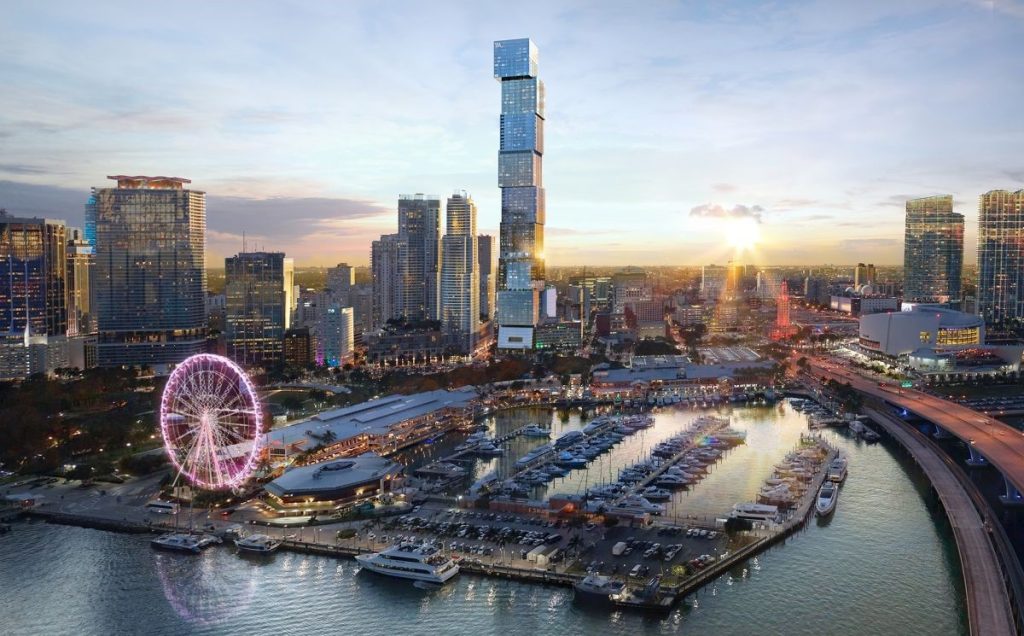
Miami is the number one US market for foreign home buyers — and has been for over a decade. International buyers accounted for approximately 15% of total residential dollar volume in South Florida in 2025, far exceeding the national average, and international buyers now make up over half of new construction condo, pre-construction, and luxury tower sales in the market.
If you are reading this from São Paulo, London, Mexico City, Bogotá, Dubai, or anywhere else in the world where Miami has appeared on your radar as a real estate destination, this guide is written for you.
I am Ashton Coleman, a luxury real estate specialist with One Sotheby’s International Realty. I work with international buyers regularly across Miami’s most exclusive buildings and neighborhoods. This guide covers everything you need to know before making an inquiry, making an offer, or wiring a deposit — including the legal, tax, and financial details that most guides gloss over.
Why International Buyers Choose Miami in 2026
The reasons Miami attracts global capital are structural, not cyclical. They have compounded over time, and they are not reversing.
Florida’s tax environment is the single most powerful draw for high-net-worth international buyers who are also evaluating US residency. Florida has no state income tax — a distinction that means a buyer earning $10 million annually saves over $1 million per year compared to living in New York. Florida also has no estate tax, no inheritance tax, and no intangibles tax. For wealth preservation and intergenerational capital transfer, Florida’s tax structure is uniquely advantageous among US states.
Asset protection. If you establish Florida residency and homestead your primary residence, creditors generally cannot force the sale of your home to satisfy debts. For international buyers concerned about political or legal risk in their home countries, Florida’s homestead protection offers a meaningful layer of security that few other jurisdictions provide.
Currency and capital preservation. A relatively weak US dollar, combined with stable property values in Miami’s luxury segment, makes US real estate an efficient store of value for buyers holding non-dollar currency or seeking to diversify away from emerging market exposure.
Lifestyle and global connectivity. Miami is a gateway city in every practical sense. Direct flights connect Miami to virtually every major city in Latin America, Europe, and increasingly the Middle East and Asia. Miami International Airport serves over 1,100 daily flights and 170+ destinations globally. The culture, climate, dining, and arts ecosystem has reached a level of sophistication that no longer requires apology against any global city comparison.
Political and economic stability. Buyers from Latin America, Europe, and beyond consistently cite Miami as a secure place to park capital — a perception that has been reinforced by years of stable appreciation and a regulatory environment that is well-established and predictable for foreign investors.
Can Foreigners Buy Property in Miami? The Direct Answer
Yes — with very limited exceptions. The United States imposes essentially no restrictions on foreign nationals purchasing residential real estate. You do not need a visa, a green card, or US citizenship to buy a condominium in Miami. You do not need to be present in the US to purchase. Transactions are completed regularly by international buyers who have never visited Miami before closing.

The one area requiring specific attention is Florida SB 264, which took effect in 2023 and restricts certain purchases by nationals of seven designated countries — China, Russia, Iran, North Korea, Cuba, Venezuela, and Syria. The restrictions apply to purchases of agricultural land and property within ten miles of military installations. For buyers from these countries purchasing luxury condos in Miami Beach, Brickell, Sunny Isles Beach, or Downtown Miami, the restrictions do not apply in the vast majority of cases — but buyers from any of the seven designated countries should consult a Florida real estate attorney before beginning the purchase process to confirm their specific situation.
The vast majority of international buyers — from Brazil, Colombia, Argentina, Mexico, the UK, France, Germany, Israel, Canada, the UAE, and dozens of other countries — are entirely unaffected by SB 264 and face no legal restrictions on purchasing Miami real estate.
The Miami Condo Advantage: Why Condos Are Ideal for International Buyers
One of the most important distinctions for international buyers coming from markets like New York, London, or Hong Kong is that Miami’s residential market is almost entirely condominiums — and that is an advantage, not a limitation.
Unlike New York, where a significant portion of the residential market consists of co-ops with boards that can reject buyers for any reason, Miami condos involve no board approval process for purchases. You sign a contract, fulfill the purchase requirements, and close. The developer or condo association does not interview you, review your personal relationships, or decide whether you are a suitable neighbor.
For pre-construction purchases directly from the developer — which is the most common entry point for international buyers in Miami’s luxury market — the process is even more streamlined. You are purchasing directly from the developer, which eliminates any resale board review entirely. The contract is signed, deposits are made per the construction milestone schedule, and you close when the building is delivered.
Understanding FIRPTA: The Most Important Tax Rule for International Buyers
FIRPTA — the Foreign Investment in Real Property Tax Act — is the single most important tax regulation for international buyers to understand before purchasing in the United States. It does not affect your purchase. It affects your eventual sale.
When a foreign person sells US real estate, the buyer is required to withhold 15% of the gross sale price and remit it to the IRS. This is a withholding mechanism, not a tax rate — it is held against your ultimate US tax liability on the gain. If your actual tax due is less than the withheld amount, you file a US tax return and receive a refund. If your tax due is more, you pay the difference.
The practical implication: as an international buyer, you should structure your purchase and hold period with the awareness that 15% of your eventual sale price will be withheld at closing and reconciled through a US tax return. This is manageable and routine — thousands of international buyers navigate FIRPTA every year — but it requires working with a US tax attorney and CPA who specialize in cross-border real estate transactions from the outset.
Entity Structuring: Should You Buy in Your Name or Through an LLC?
This is one of the most consequential decisions an international buyer makes — and the right answer depends on your specific tax residency, estate planning goals, and asset protection priorities. I will give you the framework; the final decision requires a qualified US tax attorney.
The estate tax issue. Foreign nationals face a potential 40% US estate tax with only a $60,000 exemption — compared to $15 million for US citizens in 2026. If you purchase a $5 million Miami condo in your personal name and pass away, your heirs could face a $2 million estate tax bill on the US property. This is the primary reason international buyers are advised to explore entity structuring before purchasing.
Common structures for international buyers:
A foreign corporation holding the US property is one approach — the property is owned by the corporation, and your estate passes corporate shares rather than US real property, which can avoid the US estate tax exposure depending on the treaty position between your country and the United States.
A US LLC is another common structure, offering liability protection and operational flexibility, but the estate tax treatment of LLC interests held by foreign nationals requires careful planning and varies by country of residence.
Life insurance structures — particularly private placement life insurance — are used by ultra-high-net-worth international buyers as a vehicle to hold US real estate in a tax-efficient manner.
The bottom line: before signing a purchase contract in Miami, engage a US tax attorney who specializes in cross-border real estate acquisitions. The structuring conversation should happen before contract execution, not after — because changing the purchasing entity after closing involves additional transfer costs.
Financing Options for International Buyers in Miami
International buyers are not required to finance, and the majority of luxury condo purchases at the $3 million and above tier are cash transactions. But financing is available and increasingly accessible for qualified foreign nationals.
Miami’s position as a global gateway city means its banking ecosystem is genuinely set up for international transactions. Banks in Miami routinely work with foreign nationals on mortgage applications, and there are specialist lenders who focus specifically on foreign national loans.
For international buyers seeking financing, here is what to expect:
Down payment requirements are higher for foreign nationals than for US citizens or permanent residents. Expect a minimum of 30% down for foreign national loans in most cases, with some lenders requiring 35 to 40% for buyers without US credit history.
Documentation requirements vary by lender but typically include two years of tax returns from your home country, bank statements covering three to six months, proof of income or business ownership, a valid passport, and a reference letter from your home country bank. Some lenders also require a US bank account to be established before closing.
Interest rates for foreign national loans typically carry a premium of 0.5 to 1.0 percentage points above comparable US citizen rates, reflecting the additional underwriting complexity.
Pre-construction financing works differently. Most luxury pre-construction projects in Miami require cash deposits paid in stages across construction milestones — typically 40 to 50% of the purchase price total. The mortgage, if any, is arranged to fund at closing upon building delivery. International buyers who plan to finance should engage a lender early in the pre-construction phase, not at the delivery stage.
For cash buyers, the process is significantly simpler. Proof of funds — typically a bank statement or letter from a private bank confirming available liquid assets — is sufficient to satisfy developer and seller requirements. Wire transfer from a foreign account is routine in Miami’s luxury market and title companies handle international wire documentation as standard procedure.
The Purchase Process: Step by Step
Here is the complete purchase process for an international buyer in Miami’s luxury condo market, from initial inquiry through keys in hand.
Step 1 — Define your objective and budget. Are you purchasing a primary residence, a second home, a pied-à-terre for periodic personal use, or an investment property? Your objective determines your neighborhood, building type, price range, and entity structure. A buyer seeking rental income needs different buildings and governance documents than a buyer seeking a private lock-and-leave second home.
Step 2 — Engage a buyer’s agent. In Florida, buyer’s agent commissions are paid by the seller or developer — not by you as the buyer. There is no cost to working with an experienced buyer’s agent, and the value is significant: building-specific knowledge, access to off-market inventory, negotiation expertise, and guidance through the legal and financial process. Critically, choose an agent who represents buyers specifically, not one who primarily represents the developer.
Step 3 — Select your structure. Before signing any contract, consult a US tax attorney and decide whether to purchase in your personal name or through an entity. This decision needs to be made before the contract is signed in the name of the purchasing party.
Step 4 — Sign the contract and pay the initial deposit. For pre-construction purchases, the contract is signed directly with the developer, and the initial deposit — typically 20% — is wired to a Florida escrow account. Florida law requires pre-construction deposits to be held in escrow, providing significant protection for buyers. For resale purchases, the contract is signed with the seller and the deposit — typically 10% — goes into escrow with the title company.
Step 5 — Due diligence period. Florida law provides a statutory inspection and due diligence period after contract execution. For resale condos, this typically runs 10 to 15 days and includes a physical inspection, review of the condominium documents — the declaration, bylaws, rules and regulations, financials, reserve study, and meeting minutes — and any applicable milestone inspection report required under Florida’s post-Surfside structural integrity legislation. For pre-construction, the due diligence period typically runs 15 days from delivery of the condominium documents package.
Step 6 — Title search and title insurance. A title company conducts a search of the public records to confirm the property’s ownership history and identify any liens, encumbrances, or title defects. Title insurance is standard practice in Florida and protects the buyer against any title issues that arise post-closing. International buyers should always purchase owner’s title insurance — it is relatively inexpensive and provides permanent protection.
Step 7 — Closing. For cash transactions, closing can occur in as little as 30 days after contract execution on a resale purchase. International buyers do not need to be physically present at closing — a power of attorney can be executed in your home country and notarized per Florida requirements, allowing your attorney to sign closing documents on your behalf. The purchase price and closing costs are wired from your bank account to the title company’s escrow account on or before the closing date. The deed is recorded in the public records, and you receive title to the property.
Step 8 — Post-closing setup. For buyers who are not full-time Miami residents, post-closing management includes establishing a homeowners association account with the building, setting up utility accounts, arranging property insurance, and — if desired — engaging a property management company to oversee the unit during periods of non-occupancy.
Closing Costs: What to Budget
International buyers should budget approximately 2 to 5% of the purchase price in closing costs for a resale transaction. For pre-construction, the developer typically covers the majority of closing costs in the developer’s contract — but buyers should verify this in their specific contract.
Standard closing costs in a Miami condo purchase include:
- Documentary stamp tax on the deed: 0.70% of the purchase price, paid by the buyer in most transactions
- Title insurance: approximately 0.5 to 0.75% of the purchase price
- Title company closing fee: $500 to $1,500, depending on transaction complexity
- HOA transfer fee and move-in deposit: varies by building, typically $500 to $2,500
- Attorney fees: $1,500 to $5,000, depending on transaction complexity and entity structuring requirements
- Recording fees: nominal, typically under $200
Property taxes in Florida are assessed annually based on the assessed value of the property. For non-homestead properties — investment condos or second homes where the buyer is not a Florida resident claiming homestead exemption — the annual property tax rate in Miami-Dade County is approximately 1.8 to 2.2% of the assessed value. The assessed value is typically reset to the purchase price in the year following acquisition.
Ongoing Carrying Costs: What to Budget After Closing
Owning a Miami luxury condo as an international buyer involves ongoing carrying costs that should be factored into your acquisition analysis from the outset.
HOA fees at full-service luxury buildings typically range from $1.50 to $4.00 per square foot per month. For a 3,000-square-foot residence in a branded tower, that translates to $4,500 to $12,000 per month — a significant cost that directly funds the building’s services, amenities, insurance, and reserve contributions.
Property insurance in Florida has been affected by well-documented market disruptions over the past several years. Rates have stabilized in 2025 and 2026 following HB 913’s passage and more carriers returning to the Florida market. For a luxury condo, annual property insurance typically runs $2,000 to $8,000, depending on the building, floor, and coverage amount. Buildings typically carry master policies covering the structure; individual condo owners insure interior contents and liability.
Property management for non-resident owners typically costs 8 to 12% of annual rental income if the property is leased, or a flat monthly fee of $200 to $500 for non-rental oversight services covering bill payment, vendor coordination, and periodic inspections.
Which Neighborhoods Should International Buyers Consider?
The right neighborhood for an international buyer depends entirely on lifestyle priorities, budget, and how you intend to use the property.
Sunny Isles Beach — the Florida Riviera — is the top choice for international buyers seeking oceanfront branded residence living. The concentration of Armani, Porsche Design, Ritz-Carlton, Bentley, and St. Regis towers on a single two-mile stretch of Collins Avenue is unmatched anywhere in the United States. Latin American buyers in particular have driven demand here for two decades, and the buyer base is the most internationally diverse of any Miami submarket. Explore the Bentley Buyer’s Guide for this new development.
Brickell is Miami’s financial district and the preferred address for buyers who want urban walkability, proximity to international banks and financial services, and a finance-centered lifestyle. St. Regis Residences Brickell, Cipriani Residences, and Baccarat Residences are the flagship buildings for international buyers in this neighborhood’s ultra-luxury tier. Explore the St Regis Miami Buyer’s Guide for this new development.
Downtown Miami offers the most architecturally ambitious new development in the market — Waldorf Astoria Residences, Aston Martin Residences, and One Thousand Museum — at price points that generally offer more square footage per dollar than Brickell or Sunny Isles Beach. The neighborhood is earlier in its transformation cycle, which means more upside for buyers with longer hold horizons. Explore the Waldorf Astoria Buyer’s Guide for this new development.
Miami Beach — particularly the South of Fifth neighborhood — offers a more intimate, pedestrian-scaled luxury environment than the high-rise corridors. Continuum South Beach and the Faena District are the landmark addresses here, attracting buyers who want the energy of Miami Beach in a more human-scaled setting.
Bal Harbour and Surfside appeal to buyers seeking quieter, more private oceanfront living north of the Miami Beach frenzy. Rivage Residences Bal Harbour — with its $67.5 million penthouse — is the most anticipated ultra-luxury project in this submarket.
Working With a Sotheby’s Agent as an International Buyer
The Sotheby’s International Realty network spans 83 countries and 1,075 offices globally. As an affiliate of that network, I can provide international buyers with a seamless experience from your home country through closing in Miami — including connections to Sotheby’s agents in your home market who can provide local introductions, referrals, and coordination.
The TRC — Transnational Referral Certification — that I hold is specifically designed for agents working with cross-border buyers and sellers. It reflects training in international real estate transaction mechanics, currency considerations, and cross-cultural client service.
For international buyers, the practical benefits of working with a Sotheby’s specialist include global listing exposure, access to the full South Florida inventory, including off-market and pre-market opportunities, relationships with developers across Miami’s new construction pipeline, and the ability to coordinate your purchase alongside trusted referrals for US tax attorneys, international banking contacts, and property management services.
Frequently Asked Questions
Can a foreign national buy a condo in Miami?
Yes. The United States imposes essentially no restrictions on foreign nationals purchasing residential real estate. You do not need a visa, a green card, or US citizenship. The only significant restriction — Florida SB 264 — applies narrowly to nationals of seven designated countries purchasing agricultural land or property near military installations. Most luxury condo purchases in Miami are unaffected.
Do I need to be present in Miami to buy a condo?
No. International buyers regularly complete Miami condo purchases without ever visiting in person. A power of attorney executed and notarized in your home country allows your attorney to sign closing documents on your behalf.
What is FIRPTA and how does it affect international buyers?
FIRPTA requires the buyer to withhold 15% of the gross sale price when a foreign person sells US real estate. It does not affect your purchase — only your eventual sale. The withheld amount is reconciled against your actual US tax liability. Work with a US tax attorney from the outset to plan for this.
Should I buy in my personal name or through a company?
This decision has significant estate tax implications. Foreign nationals face a potential 40% US estate tax with only a $60,000 exemption. Many international buyers purchase through a foreign corporation or other entity structure to manage this exposure. Consult a US tax attorney before signing any contract.
How much cash do I need to buy a luxury condo in Miami?
For a cash purchase, you need the full purchase price plus approximately 2 to 5% for closing costs. For pre-construction purchases, you need the deposit amount — typically 40 to 50% of the purchase price — paid across construction milestones, with the balance due at closing. For financed purchases, international buyers typically need a minimum 30% down payment.
What ongoing costs should I budget for?
Budget annually for HOA fees — typically $1.50 to $4.00 per square foot per month in luxury buildings — plus property taxes at approximately 1.8 to 2.2% of assessed value, property insurance at $2,000 to $8,000 annually, and property management if desired.
How long does the purchase process take?
For resale cash purchases, closing can occur in 30 days after contract execution. For pre-construction, the timeline is the construction period — typically one to three years from contract signing to delivery.
Ready to Begin Your Miami Luxury Condo Search?
Whether you are making your first inquiry or ready to act on a specific building, the international buyer process in Miami is more straightforward than most buyers expect — particularly in the condo market, where there are no board approvals, no co-op restrictions, and no barriers between a qualified buyer and ownership of one of the world’s most compelling luxury addresses.
I work with international buyers from over 35 countries across Miami’s luxury condo market. If you would like a personalized consultation — covering neighborhood selection, building shortlist, current availability, and purchase process tailored to your specific country of residence and tax situation — I am happy to have that conversation.
View all available luxury condos at MiamiPenthousesandEstates.com, or contact me directly to begin.
📞 Call or text: 305.978.7704 📧 Email: AColeman@onesothebysrealty.com 🌐 MiamiPenthousesAndEstates.com
This guide is for informational purposes only and does not constitute legal, tax, or financial advice. Laws and regulations are subject to change. International buyers should consult qualified US legal and tax professionals before entering any real estate transaction. Information is current as of Q2 2026.





