


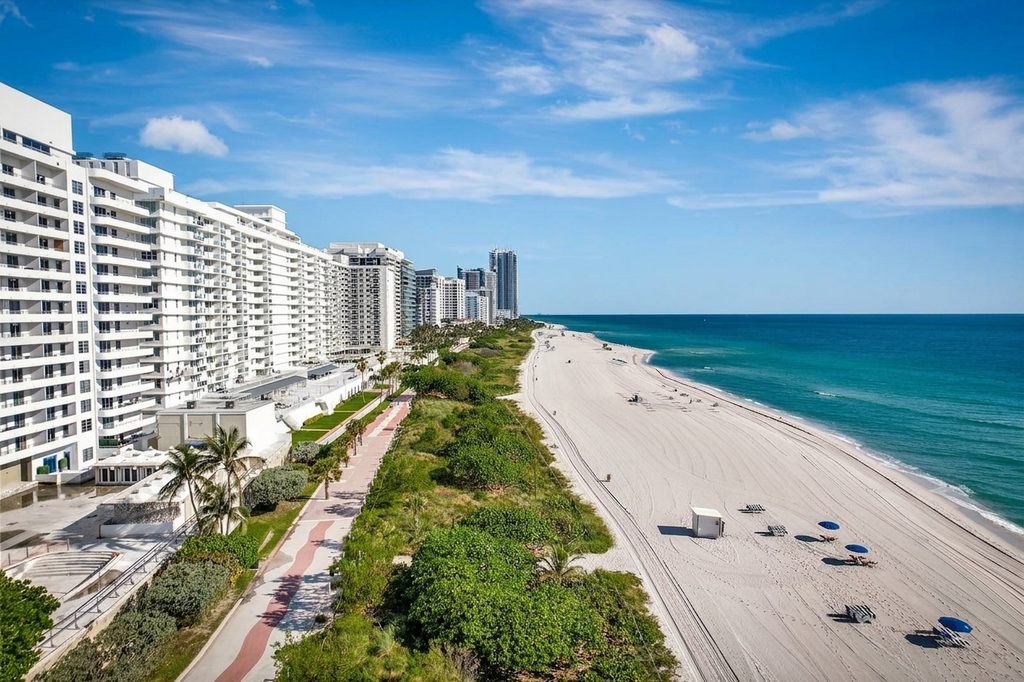
Collins Avenue presents one of the strangest pricing contrasts in Miami Beach real estate.
Along essentially the same coastal corridor, a buyer can find an older condominium for less than $500,000, or spend several million dollars for a residence in a newer building overlooking the same Atlantic Ocean.
The 2026 MLS data makes the divide difficult to ignore.
Among 321 closed Collins Avenue condominium sales in the supplied dataset, the median sold price per square foot was approximately:
| Building generation | Closings above $1M | Sold to list |
|---|---|---|
| Before 1996 | 41 | 92.2% |
| 1996 to 2014 | 57 | 94.1% |
| 2015 or newer | 8 | 94.7% |
For a broader view of Miami Beach neighborhoods, luxury buildings and resale options beyond Collins Avenue, see my Miami Beach & South Beach Luxury Condo Market Guide 2026.
The MLS search includes 968 Collins Avenue condo records in Miami Beach, combining active, active-with-contract, pending and closed properties, with closed sales beginning January 1, 2026.
At first glance, the conclusion seems obvious:
Buy the older condo.
Why pay $2,000 or $3,000 per square foot when a residence closer to $500 per square foot may still put you near, or directly on the same ocean?
Sometimes that can be an excellent decision.
But in Florida’s condominium market in 2026, the purchase price may be the easiest number to understand.
The harder questions involve the building.
Why Are Some Older Collins Avenue Condos So Much Less Expensive?
The discount is real.
But saying simply that buyers are “discounting old buildings” would be an oversimplification.
Collins Avenue contains radically different residential products.
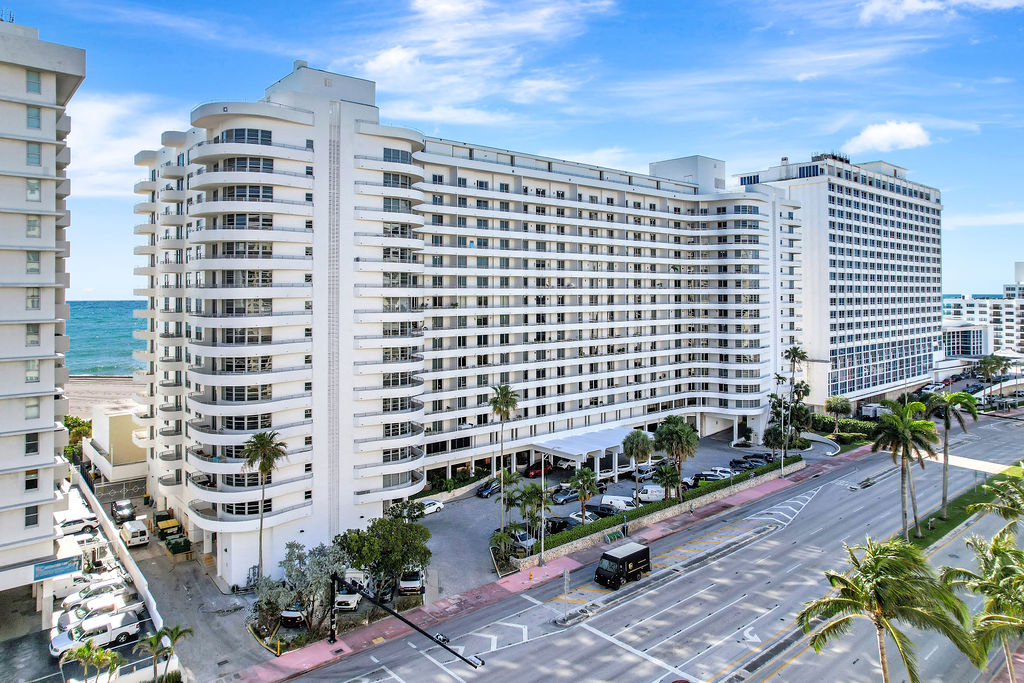
A 1960s condominium may have older mechanical systems, smaller amenity programs and significant upcoming capital needs.
A 2000s tower may have larger reserves but still face expensive modernization.
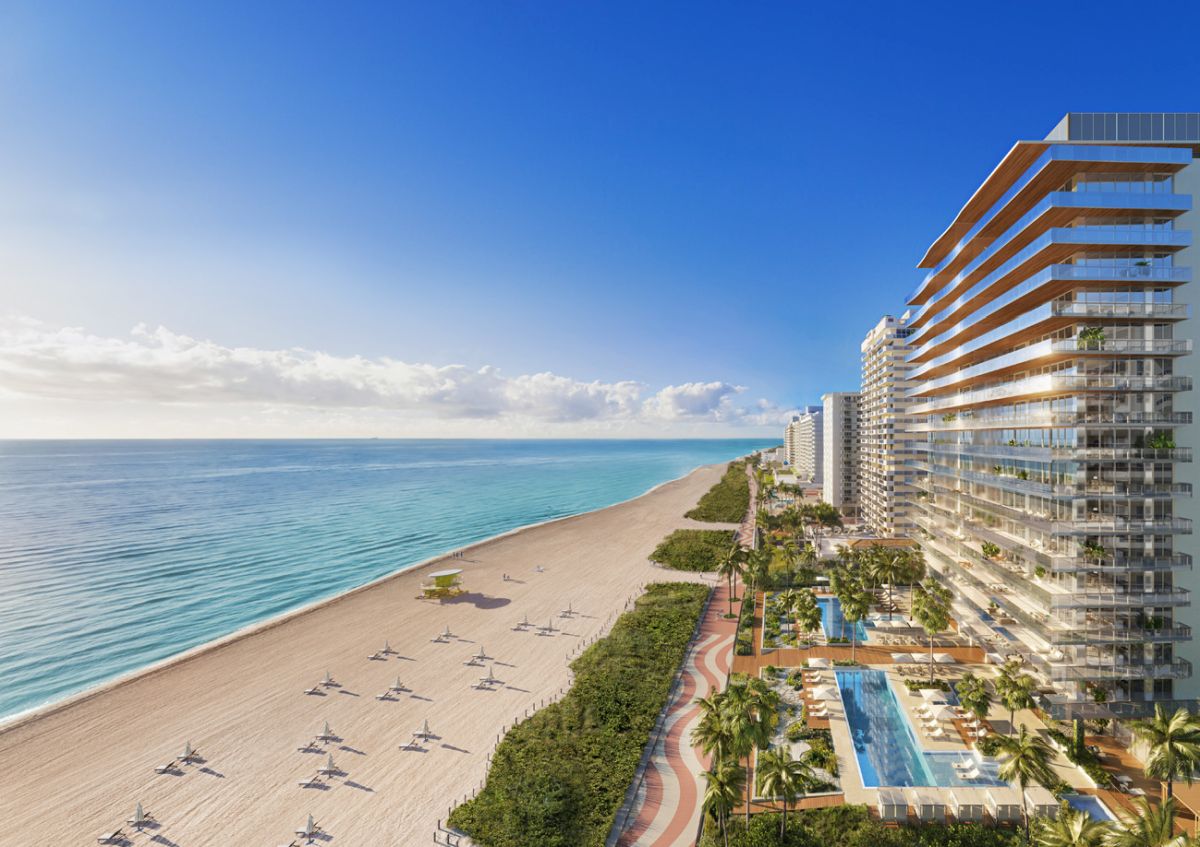
A newer ultra-luxury building may offer contemporary construction, private elevators, large terraces, resort services, architecture by an internationally known firm and dramatically different interior finishes.
The newer-building cohort in this dataset also contains properties such as Faena House and Eighty Seven Park. A 2026 Faena House closing reached approximately $20 million and $4,228/SF, while an Eighty Seven Park sale reached approximately $11.5 million and $4,662/SF.
So this data does not prove that building age itself causes a fourfold difference in price.
It proves something more useful:
Collins Avenue contains an enormous pricing divide between older and newer condominium inventory, and buyers need to understand what that discount is compensating them for.
The Sub-$1 Million Market Is Too Important to Ignore
This is where the analysis becomes particularly interesting.
Of the 219 pre-1996 Collins Avenue sales in the 2026 dataset:
| Pre-1996 Sale Price | Closed Sales | Median Sold $/SF |
|---|---|---|
| Under $500K | 103 | $447/SF |
| $500K–$999K | 77 | $553/SF |
| $1M+ | 39 | $936/SF |
More than 82% of the pre-1996 sales occurred below $1 million.
Had we analyzed only Miami Beach luxury condos above $1 million, we would have eliminated most of the older-building market from the study.
And this is exactly where buyers encounter some of Miami Beach’s most tempting apparent bargains.
The dataset includes examples such as an Oceanside Plaza residence from a 1967 building closing around $325,000 at $310/SF and a 1970 Burleigh House residence closing for $275,000.
Other older-building transactions include a Crystal House residence at approximately $635,000 and $383/SF and a Mirasol Ocean Towers residence around $630,000 and $562/SF.
Those prices get attention.
The next question should be:
What am I actually buying into?
The Purchase Price Is Only One Part of the Cost
Consider two hypothetical Miami Beach condos.
Condo A — Older Collins Avenue Building
Purchase price: $650,000
Monthly maintenance: $1,500
Potential special assessment: $100,000
Older mechanical and structural components
Major capital projects under consideration
Condo B — Newer Building
Purchase price: $1,000,000
Monthly maintenance: $1,700
Well-funded reserves
Recent building systems
No known major capital project immediately approaching
Which is cheaper?
The answer isn’t automatically Condo A.
The older property may still be the better purchase—perhaps dramatically better—but the analysis has to include the building’s financial condition, not merely the listing price.
That’s one of the biggest changes in how I believe buyers should evaluate Miami Beach condominiums today.
Current Inventory Shows the Same Divide
The supplied dataset contains 583 active Collins Avenue condos.
Here is the current inventory by building generation:
| Building Generation | Active Listings | Median Asking Price | Median Asking $/SF |
|---|---|---|---|
| Pre-1996 | 392 | $629,000 | $608/SF |
| 1996–2014 | 154 | $1.20M | $1,359/SF |
| 2015+ | 37 | $2.25M | $1,879/SF |
Older buildings aren’t a small niche.
They represent roughly two-thirds of the active Collins Avenue condo inventory in this dataset.
And many are priced in ranges that can appear remarkably inexpensive relative to newer Miami Beach property.
For example, current inventory includes older properties such as Imperial House and The Alexander in roughly the $500,000 range, while newer-generation Collins Avenue buildings can show similar headline prices for materially smaller residences.
That’s why building-level due diligence matters more than simply comparing list prices.
Older Does Not Mean Bad
This point deserves emphasis.
An older condominium is not automatically a risky condominium.
And a newer building is not automatically financially superior.
A well-managed 40- or 50-year-old building may have:
- completed major structural work
- replaced expensive building systems
- completed required inspections
- funded its reserves
- maintained appropriate insurance
- addressed concrete restoration
- replaced roofs
- updated elevators
- completed waterproofing
- maintained strong financial controls
Meanwhile, another building that is substantially younger could be approaching an expensive repair cycle without having adequately prepared for it.
The better distinction is not:
Old vs. New
It is:
Financially prepared vs. financially unprepared.
What Is a Milestone Inspection?
Florida’s milestone-inspection requirements are intended to evaluate structural condition in aging condominium and cooperative buildings.
DBPR describes a milestone inspection as a structural inspection used to determine whether substantial structural deterioration exists.
Qualifying residential condominium and cooperative buildings of three or more habitable stories generally require an initial milestone inspection at 30 years of age and every 10 years thereafter. A local enforcement agency can require the first inspection at 25 years when local circumstances justify the earlier inspection.
That distinction can be particularly relevant in coastal South Florida, where salt exposure and environmental conditions are important considerations.
But a milestone inspection answers primarily a structural question.
It doesn’t necessarily tell you whether the association has enough money saved to pay for everything the building will eventually need.
That’s where the next document becomes critical.
What Is a Structural Integrity Reserve Study — SIRS?
A Structural Integrity Reserve Study, commonly called a SIRS, deals with both building components and the financial planning required to maintain them.
Current Florida law generally requires residential condominium associations with buildings of at least three habitable stories to complete a SIRS at least every 10 years. Existing qualifying unit-owner-controlled associations generally had to complete the initial study by December 31, 2025, although associations whose milestone inspection is due on or before December 31, 2026 may coordinate the studies, subject to the statutory requirements.
A SIRS examines specified building components and estimates their remaining useful lives and expected replacement or deferred-maintenance costs. It must also provide a reserve funding plan or schedule designed to address those projected expenses.
That can include major items such as:
- roof
- structural systems
- fire protection
- plumbing
- electrical systems
- waterproofing and exterior painting
- windows and exterior doors
- other qualifying costly components affecting structural integrity
For a buyer, the practical question becomes:
What does the study say the building needs—and how is the association planning to pay for it?
Milestone Inspection vs. SIRS: They Are Not the Same Thing
This causes significant confusion among buyers.
Milestone Inspection
Think:
Is there substantial structural deterioration?
It is primarily a structural-safety inspection.
Structural Integrity Reserve Study
Think:
What major components need future repair or replacement, what will they cost, and how should the association financially prepare?
They overlap, but they answer different questions.
A building can successfully complete a structural inspection and still face significant future capital expenditures.
Likewise, a building can have substantial reserves and still need to complete required structural work.
Buyers should review both when applicable.
Reserve Funding Matters More Than It Used To
Florida condominium reserve requirements changed materially following the Surfside tragedy and subsequent legislative reforms.
For associations required to obtain a SIRS, the budget must generally maintain reserves for the specified structural components based on the association’s most recent study. Current law also restricts the ability of owners in qualifying associations to simply vote those structural reserves away or use them for unrelated purposes.
That has a significant economic consequence.
For years, some condominium associations kept monthly maintenance artificially low by funding reserves inadequately.
Owners benefited from lower monthly expenses.
Until a major project arrived.
Then the building could need a substantial special assessment.
The newer reserve framework makes some of those long-term costs more visible.
That’s painful for some current owners.
For future buyers, however, greater transparency and better funding can ultimately be healthy.
A High HOA Fee Is Not Automatically Bad
This may sound counterintuitive.
Buyers understandably dislike high condominium fees.
But the lowest HOA isn’t always the best HOA.
Imagine:
Building A
Maintenance: $900/month
Minimal reserves
Major concrete project approaching
Roof near end of useful life
Possible assessment ahead
Building B
Maintenance: $1,400/month
Substantial reserve contribution
Major structural work already completed
Well-funded capital plan
Which building is more expensive?
The monthly number alone cannot answer the question.
Sometimes buyers should be more concerned about an association fee that appears unrealistically low than one that is appropriately funding long-term building obligations.
A Special Assessment Is Not Automatically a Reason to Walk Away
This requires nuance.
A significant assessment can absolutely be a warning sign.
But the important questions are:
- Why was it assessed?
- How much work does it cover?
- Has the work begun?
- Has it been completed?
- How much remains unpaid?
- Who is responsible for the unpaid balance at closing?
- Does the work materially improve the building?
A building that has just completed a major concrete restoration, waterproofing, roof, and mechanical program may be more attractive after that work than a neighboring building that hasn’t yet confronted similar needs.
In other words:
A completed $100,000 assessment can sometimes be less concerning than a building that hasn’t yet determined whether it needs one.
The assessment itself isn’t enough information.
The underlying capital problem is what matters.
Why $/SF Can Mislead Buyers of Older Miami Beach Condos
A buyer sees:
Older building: $500/SF
versus
Newer building: $2,000/SF
and concludes that the older building is 75% cheaper.
Financially, that’s not necessarily what the comparison means.
The newer residence may include:
- contemporary floor plan
- newer windows and doors
- newer mechanical infrastructure
- deeper terraces
- newer elevators
- larger amenity package
- modern hurricane standards
- stronger service program
- more recent building systems
Meanwhile, the older residence might offer something the newer building cannot easily reproduce:
- substantially more interior square footage
- established oceanfront land
- larger setbacks
- broad terraces
- fewer residences
- mature landscaping
- exceptional views
- larger rooms
- a significantly lower acquisition price
Neither side automatically wins.
The right question is:
What am I receiving for the price difference—and what future obligations am I assuming?
There is a measurable version of this, and it is larger than most buyers expect. In a separate cut of the same market, 106 Collins Avenue closings in Miami Beach above $1 million across the first three quarters of 2026, price per square foot falls steadily as the residence gets larger. The figures below come from buildings completed before 1996 only, so the newer towers are excluded and age is held roughly constant.
| Interior size | Closings above $1M | Median closed $/SF | Median closed price | Median year built |
|---|---|---|---|---|
| 800 to 1,199 SF | 6 | $1,371 | $1,300,000 | 1926 |
| 1,200 to 1,699 SF | 13 | $917 | $1,510,000 | 1967 |
| 1,700 to 2,199 SF | 12 | $879 | $1,685,000 | 1983 |
| 2,200 to 2,999 SF | 10 | $549 | $1,300,000 | 1970 |
Read the first and last rows together. A residence of 800 to 1,199 square feet closed at $1,371 per square foot. A residence of 2,200 to 2,999 square feet closed at $549. That is a difference of 2.5 times, inside the same vintage cohort, on the same street. Both rows have a median closed price near $1.3 million. The larger residence is not more expensive. It is cheaper per foot because it is larger.
The year built column is the part that should settle the argument. It runs 1926, 1967, 1983, 1970. The size bands are not sorted by age. If age were driving price per square foot, that column would climb or fall with the rate. It does neither.
This is why two Collins Avenue residences in the same building, in the same condition, can show rates that look 40% apart. One is a one-bedroom and one is a three-bedroom. Nothing about the building changed. Before comparing a rate to anything, check that the two residences are within a few hundred square feet of each other. Sample sizes here are 6 to 13 closings per band, so treat these as the shape of the relationship rather than precise rates.
The Collins Avenue Data Also Shows That “Old = Cheap” Is Wrong
Some older Collins Avenue residences command substantial prices.
The pre-1996 cohort contains 39 sales above $1 million, with a median sold $/SF of approximately $936 within that higher-priced older segment.
Current inventory illustrates similar dispersion.
A 1975 Mirasol Ocean Towers penthouse is marketed around $1,332/SF, while a very large 1970 residence at 5660 Collins is listed at roughly $588/SF.
Same broad generation.
Very different property.
This reinforces a recurring lesson across Miami real estate:
Averages are useful for finding questions. They are rarely sufficient for answering what one specific residence is worth.
Closed sales make the same point more sharply than asking prices do. In the $1 million and above cut of Collins Avenue, 17 closings came from buildings completed before 1970. Ten of those 17 were in one building.
Pre-1970 Collins Avenue cohort Closings above $1M Median closed $/SF Median size Median closed price Median days on market Sold to list Roney Palace, 2301 Collins, completed 1926 10 $1,510 1,095 SF $1,662,500 156 92.5% All other pre-1970 Collins buildings 7 $602 2,010 SF $1,150,000 337 90.5% A 1926 building closed at 2.5 times the rate of buildings completed four decades later. The seven residences in the lower row sit in 5600, The Caribbean, Carriage Club South, Corinthian, Imperial House, Oceanside Plaza and The Ashley. Nothing in that comparison is about age. Roney Palace sits at 23rd Street in South Beach and operates a hotel and rental program. The other seven sit between 50th and 59th Streets in mid-beach, and they sell large residences to owner-occupiers.
Two cautions on this table. The upper row is one building, so it describes Roney Palace rather than the 1920s. The size difference, 1,095 against 2,010 square feet, accounts for part of the rate gap on its own, for the reason set out in the section above. What survives both cautions is the direction: within a single pre-1970 cohort on one street, closed rates ran from $474 to $2,229 per square foot, a spread of 4.7 times. Screening a building by its year built sorts on a field that carries almost none of that information.
What I Review Before a Buyer Purchases an Older Miami Beach Condo
This is where I would spend more time than reviewing the finishes inside the unit.
1. Milestone Inspection
Has one been required?
Has it been completed?
Was Phase Two necessary?
What work was identified?
2. Structural Integrity Reserve Study
Has the SIRS been completed?
What components were evaluated?
What does the funding schedule project?
3. Reserve Balances
How much cash is actually available?
More importantly:
How does that amount compare with the association’s projected obligations?
A $5 million reserve account can sound impressive until you discover $20 million of work approaching.
4. Special Assessments
Current.
Approved.
Proposed.
Recently completed.
Each matters.
5. Association Budget
Where is the money going?
Insurance?
Staffing?
Utilities?
Repairs?
Reserve contributions?
6. Insurance
What coverage does the association carry?
What are the deductibles?
How have premiums changed?
7. Major Capital Projects
Concrete restoration.
Roof.
Elevators.
Cooling systems.
Plumbing.
Electrical.
Windows.
Waterproofing.
Garage.
Pool deck.
Seawall where applicable.
8. Meeting Minutes
This is one of the most underappreciated sources of information.
Board and owner meeting minutes can reveal issues long before they show up in marketing materials.
9. Litigation
Pending litigation can affect both risk and financing.
The nature of the litigation matters.
10. Financing Eligibility
Some condominium conditions can make conventional financing more difficult.
A cash buyer may view that as an opportunity.
But that same financing issue can affect the future resale buyer pool.
11. The Unit Itself
The building can be financially strong while the residence requires a complete renovation.
Both costs belong in the acquisition analysis.
12. Total Cost Basis
This is ultimately the number I care about.
Purchase price + assessment exposure + renovation + carrying cost + likely near-term capital obligations.
That’s a much better comparison than list price alone.
When an Older Collins Avenue Condo Can Be an Excellent Buy
There are real opportunities in this market.
I become particularly interested when an older property combines:
Excellent Land
Direct oceanfront positioning remains difficult to reproduce.
Large Floor Plan
Some older buildings offer room sizes and overall square footage that would be extremely expensive to recreate today.
Major Work Already Completed
The building has confronted its expensive problems rather than postponed them.
Funded Reserves
Future obligations are being treated realistically.
Attractive Basis
The buyer’s total cost after renovation and known assessments remains materially below compelling newer alternatives.
Strong View
Oceanfront real estate is ultimately about the real estate.
An exceptional view in an older building doesn’t become less exceptional because the lobby was built in 1970.
When the “Bargain” Can Become Expensive
I become more cautious when:
The Price Is the Only Argument
“It’s cheap for Miami Beach” isn’t an investment thesis.
Reserves Are Weak
Especially when significant work is approaching.
Major Capital Work Has Been Deferred
Deferred maintenance eventually becomes current maintenance.
The Assessment Number Is Unknown
Uncertainty deserves a discount.
Financing Is Difficult
That can affect today’s buyer and tomorrow’s resale.
The Unit Requires Major Renovation
A low acquisition price plus major unit renovation plus building assessment can erase the apparent bargain quickly.
The Seller Is Pricing Against Newer Buildings
An older building doesn’t become a newer building because the seller installed marble.
Are Buyers Discounting Older Collins Avenue Buildings in 2026?
Clearly, yes at the aggregate level.
But we need to be precise about what the data proves.
The median sold $/SF in the supplied 2026 dataset is:
Pre-1996: ~$507/SF
1996–2014: ~$1,086/SF
2015+: ~$2,103/SF
The median sale price similarly rises from approximately $515,000 to $1.075 million to $6.375 million.
Those are enormous differences.
But this is not a controlled experiment.
The newer-building sample is only 13 closings and contains materially more expensive luxury product. Location within Collins Avenue, residence size, renovation, service, architecture, amenities, views and property type all contribute to pricing.
Therefore, the correct conclusion is:
The market places a very substantial aggregate discount on the older Collins Avenue inventory represented in this dataset, but MLS data alone cannot determine how much of that discount is attributable specifically to age, reserves, assessments or structural risk.
That analysis must occur building by building.
One measure is worth adding to the generation comparison, because it answers a different question from price. Sold to list shows how much of the asking price a seller actually collected, and it does not appear in the tables above. The figures below come from the separate Miami Beach cut described at the end of this guide, 106 closings above $1 million with Collins Avenue street numbers below 8500. They are not a restatement of the rates in the earlier tables.
| Building generation | Closings above $1M | Sold to list |
|---|---|---|
| Before 1996 | 41 | 92.2% |
| 1996 to 2014 | 57 | 94.1% |
| 2015 or newer | 8 | 94.7% |
Sellers in pre-1996 buildings gave up about two more points of asking price than sellers in newer ones. That is a real discount, and it is a small one. It is not the collapse that the headlines about older Florida condominiums would suggest. The 2015 and newer row rests on eight closings and should not be used as a benchmark.
Read that alongside the rate tables earlier in this guide. Older buildings are priced lower and still transact steadily, which means a buyer is being compensated for taking on an older structure. Whether the compensation is enough is a reserve study and assessment question, not a price per square foot question.
Taken with the rate figures, the picture is a market that prices older buildings lower and still transacts in them steadily. A buyer is being compensated for taking on an older structure. The question is whether the compensation is large enough for the specific building, and that is a reserve study and assessment question rather than a price per square foot question.
Who Should Consider an Older Collins Avenue Condo?
The Value-Oriented Oceanfront Buyer
Someone who prioritizes location and space over having the newest building.
The Renovation Buyer
A buyer comfortable improving the interior while purchasing the underlying real estate at a lower basis.
The Cash Buyer
Particularly when financing issues create less competition.
The Buyer With Patience
Older-building due diligence takes work.
The Buyer Who Understands Associations
Someone willing to review documents rather than simply tour the residence.
Sellers in pre-1996 buildings gave up about two more points of asking price than sellers in newer ones. That is a real discount, and it is a small one. It is not the collapse that the headlines about older Florida condominiums would suggest. The 2015 and newer row rests on eight closings and should not be used as a benchmark.
Read that alongside the rate tables earlier in this guide. Older buildings are priced lower and still transact steadily, which means a buyer is being compensated for taking on an older structure. Whether the compensation is enough is a reserve study and assessment question, not a price per square foot question.
Who Should NOT Buy an Older Miami Beach Condo?
The Buyer With No Cash Cushion
Unexpected building expenses are much harder to absorb when the purchase already stretches the budget.
The Buyer Who Wants Cost Certainty
Older buildings can involve more moving parts.
The Buyer Who Refuses to Read Association Documents
This is not the market for superficial due diligence.
The Buyer Who Thinks Oceanfront Automatically Equals Good Value
Oceanfront land is valuable.
That does not make every oceanfront condominium a good purchase.
The Buyer Choosing Solely by $/SF
The cheapest price per square foot can be expensive for a reason.
The Investment Case for Older Collins Avenue Condos
Bull Case
Older oceanfront buildings trade at substantial discounts to newer inventory, while many occupy valuable Collins Avenue sites that would be extremely difficult or expensive to recreate. Buildings that complete major capital work, strengthen reserves and modernize may become increasingly attractive relative-value opportunities.
Base Case
The market becomes increasingly building-specific.
Well-managed older condominiums with completed work and strong finances separate themselves from buildings facing unresolved capital requirements.
Risk Factors
Buyers should consider:
- special assessments
- reserve shortfalls
- insurance costs
- structural repairs
- aging mechanical systems
- financing restrictions
- extended market times
- renovation expenses
- HOA increases
- competing newer inventory
The opportunity is real.
So is the need for diligence.
Frequently Asked Questions About Older Miami Beach Condos
Are older Miami Beach condos cheaper than newer condos?
In the supplied 2026 Collins Avenue dataset, yes by a substantial margin at the aggregate level. Pre-1996 closed sales had a median sold price around $507/SF, compared with approximately $1,086/SF for 1996–2014 buildings and approximately $2,103/SF for the limited 2015+ sample.
Can I buy an oceanfront Miami Beach condo for under $500,000?
Yes, some older Collins Avenue properties trade below $500,000. The supplied 2026 data includes numerous older-building transactions in that price range. However, buyers should evaluate building finances, assessments, reserves, condition, HOA expenses and financing in addition to the purchase price.
What is a Florida condo milestone inspection?
A milestone inspection is a structural inspection used to determine whether substantial structural deterioration exists in qualifying aging condominium and cooperative buildings. Buildings of three or more habitable stories generally enter the milestone process at 30 years, or potentially 25 years when the local enforcement agency determines local conditions warrant an earlier inspection.
What is a SIRS?
A Structural Integrity Reserve Study evaluates specified major condominium components, estimates remaining useful lives and replacement or deferred-maintenance costs, and creates a reserve funding plan or schedule. Qualifying residential condominium associations generally must repeat the study at least every 10 years.
Is a special assessment always bad?
No. The reason for the assessment and the work it funds matter. An assessment financing completed structural improvements may actually reduce future uncertainty. An unresolved potential assessment can sometimes be more concerning.
Is a high HOA fee a red flag?
Not necessarily. A higher fee may reflect appropriate insurance, staffing, maintenance and reserve funding. Buyers should evaluate what the fee funds rather than judging it solely by its amount.
Are newer Miami Beach condos safer investments?
Not automatically. Newer buildings may have newer systems and fewer age-related capital needs, but purchase premiums can be substantial. Financial condition, quality, location, inventory and resale competition still matter.
What documents should I request before buying an older condo?
Depending on the property, important materials can include the condominium declaration and amendments, association budget, financial statements, reserve information, SIRS, milestone inspection reports, current and proposed assessments, insurance information, recent meeting minutes, litigation disclosures and other association records. Buyers should have appropriate legal and financial professionals review relevant documents.
Is an older oceanfront condo a good investment?
It can be. The strongest cases often combine exceptional land, desirable views, large floor plans, completed capital work and a total cost basis meaningfully below newer alternatives. The individual building is more important than its age category alone.
So, Is the Older Collins Avenue Condo the Bargain?
Sometimes the answer is absolutely yes.
There are older Miami Beach buildings occupying oceanfront land that would be extraordinarily expensive to recreate today.
Some offer large residences at a fraction of the price per square foot of newer construction.
And some associations have already spent significant money addressing structural, mechanical and financial obligations that less-prepared buildings still need to confront.
But there is another side.
A $500,000 condo with a major assessment, increasing HOA, substantial renovation requirement and weak association finances may not be the bargain suggested by the listing price.
That’s why I wouldn’t ask:
“Is this old building cheap?”
I’d ask:
“After I understand the building, what am I actually getting for the discount?”
That is a much better way to evaluate older Miami Beach real estate.
For a private comparison of Collins Avenue condominiums—including building history, recent comparable sales, current inventory and newer alternatives—contact me directly.
📞 Call or text: 305.978.7704
📧 Email: AColeman@OneSothebysRealty.com
Explore Miami Beach luxury condos
Compare newer alternatives: Miami Beach New Construction Condos 2026–2030
About the Market Data
This analysis uses the supplied 2026 SEFMLS Collins Avenue condominium dataset for Miami Beach only.
The search contains 968 total records. The source criteria include current Active, Active With Contract and Pending properties along with Closed transactions from January 1, 2026 forward. The dataset is limited to condominium-type property on streets matching Collins within Miami Beach.
For this analysis:
- 583 active listings were used for the active-inventory comparison.
- 321 closed transactions were used for the sold-market analysis.
- Building-age cohorts were defined as pre-1996, 1996–2014, and 2015+.
- Price-per-square-foot medians use reported MLS values where available.
- The age cohorts are not controlled samples and should not be interpreted as proving that building age causes the observed pricing differences.
The dataset includes substantial differences in building quality, neighborhood position, oceanfront orientation, residence size, renovation, amenities and luxury level. Individual properties should therefore be evaluated using building-specific and residence-specific comparable sales.
The MLS source states that its information is believed accurate but not guaranteed. Three tables on this page come from a second and separate MLS cut, and they are labeled where they appear. That cut covers 106 closed Collins Avenue condominium sales in Miami Beach above $1 million, with street numbers below 8500, during the first three quarters of 2026. It excludes sales below $1 million, which is a large share of the older Collins Avenue market, so its medians sit higher than the 321-sale dataset used elsewhere on this page. The two are not directly comparable and are not meant to be. Sold to list uses the list price on the closed record, which may be a reduced price rather than the original asking price. Days on market is cumulative days on market to contract. Year built is the MLS year-built field.
Important Florida Condominium Information
Florida condominium inspection and reserve requirements can change, and their application depends on the individual property.
Current DBPR guidance generally describes milestone inspections for qualifying condominium and cooperative buildings of three or more habitable stories beginning at 30 years, or potentially 25 years when required by the applicable local enforcement agency, and repeating every 10 years.
Florida’s current condominium statute also requires qualifying residential associations to obtain Structural Integrity Reserve Studies and establishes requirements governing reserve funding for specified structural components.
Buyers should confirm the requirements applicable to the specific condominium with the association, appropriate government agencies and qualified legal, engineering, inspection and financial professionals.
Information is provided for informational and real-estate market discussion purposes only and is subject to change without notice. MLS information, condominium documents, inspections, assessments, reserves and building conditions should be independently verified. Nothing contained herein constitutes legal, engineering, tax, financial or investment advice. Buyers and sellers should consult appropriate professional advisors before making real estate decisions.





