


I have this conversation regularly. A buyer arrives from New York — typically from Tribeca, the Upper East Side, or Hudson Yards — having done what they consider thorough research on Miami’s luxury market. They have a price point in mind. They have a neighborhood shortlist. They have expectations about what their budget buys, how negotiations work, how long transactions take, and what the lifestyle comparison actually looks like.
Most of those expectations are wrong. Not catastrophically — but wrong in ways that consistently produce frustration, missed opportunities, and occasionally a decision to overpay for the wrong property or walk away from the right one.
This is not a “why you should move to Miami” post. If you’re reading this, you’ve already made that decision, or you’re close to it. This is the corrective guide — the five things New York luxury buyers consistently get wrong about Miami real estate, and what the accurate version of each one looks like.
Mistake 1: Comparing Price Per Square Foot Without Comparing What You’re Actually Buying
The most common mistake New York luxury buyers make in Miami is the per-square-foot comparison — and it’s a mistake in both directions.
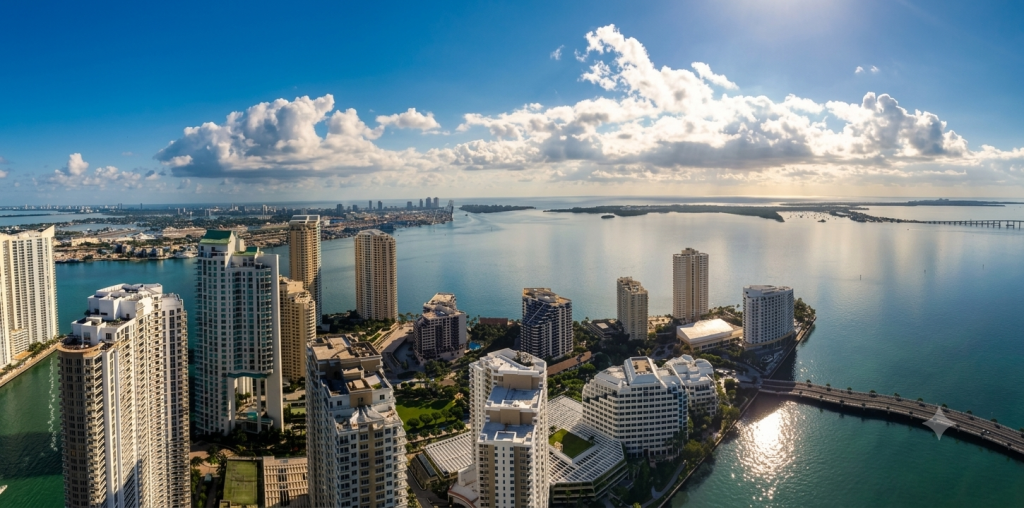
The first version: arriving in Miami and concluding that $1,500 per square foot in Brickell or Sunny Isles Beach is expensive because it’s “close to what I’d pay in Tribeca.” It is not close to what you’d pay in Tribeca. Manhattan luxury condos average approximately $3,000 per square foot as of 2026, with Tribeca running $2,500 to $4,500 per square foot and Billionaires’ Row trophy product reaching $4,000 to $7,500 and above. At $1,500 per square foot, you are buying into the lower-middle tier of Miami’s branded residence market — the tier where buildings like Baccarat Residences Brickell, St. Regis Residences Brickell, and Cipriani Residences are currently selling pre-construction. At comparable quality and brand positioning in Manhattan, you would be paying twice that figure.
The second version — equally wrong, and more expensive — is arriving in Miami and concluding that because per-square-foot pricing is lower, you’re getting more for your money on a like-for-like basis. You are not comparing like for like. A $3 million residence at One Thousand Museum in Downtown Miami and a $3 million residence in a standard 2010s-era Miami condominium are not comparable products. The per-square-foot figure is the same. The building, the architecture, the amenity infrastructure, the brand, and the long-term resale liquidity are entirely different. Miami’s luxury market bifurcates sharply between buildings that hold value and buildings that don’t — and per-square-foot alone doesn’t tell you which side of that line you’re on.
The honest comparison: Miami’s truly trophy branded tier — Surf Club Four Seasons at $4,420 median per square foot, Waldorf Astoria Residences at $1,500 to $2,000 pre-construction, Mandarin Oriental Residences at $49.9 million penthouse contracts — is priced at a genuine discount to comparable Manhattan trophy product. The gap is real, meaningful, and persistent. But it exists at the top of Miami’s market, not across the board.
Mistake 2: Treating the Tax Advantage as a Bonus Rather Than a Primary Calculation
New York buyers almost universally treat Florida’s tax advantages as a pleasant secondary benefit — a nice-to-have that sweetens a decision already made on lifestyle grounds. This is the wrong frame. The tax advantage is so large, for buyers at the price points most New York luxury buyers operate at, that it should be the first number in the spreadsheet, not the last.
The New York tax picture for a buyer at $5 million in annual income includes New York State income tax of up to 10.9%, New York City income tax of up to 3.876%, and a combined marginal rate that can exceed 14% on top of the federal rate. Florida has no state income tax and no city income tax. At $5 million in annual income, the annual tax saving from establishing Florida domicile is approximately $700,000 or more — every year, not as a one-time event. At $10 million in annual income, that figure roughly doubles.
The real estate transaction cost comparison is equally significant and more immediately concrete. On a $10 million Manhattan condominium purchase, transfer-side closing costs run roughly 4 to 5% of the purchase price — including the mansion tax, New York State transfer tax, New York City real property transfer tax, title insurance, and attorney fees. That’s $400,000 to $500,000 in transaction friction before you’ve owned the property for a day. In Florida, buyer closing costs on a comparable $10 million purchase run approximately 1.5 to 2.5% — substantially lower, with no mansion tax and no New York City real property transfer tax equivalent.
None of this is news to any sophisticated buyer. But the mistake is knowing the numbers and still treating them as a bonus rather than running them as a primary input. A buyer who decides on Miami primarily for lifestyle reasons and subsequently discovers the tax benefit has made a lifestyle decision that the economics happen to support. A buyer who runs the tax math first and then chooses Miami based on the combination of lifestyle and economics has made the right decision in the right order.
Mistake 3: Expecting Manhattan’s Transaction Pace and Structure
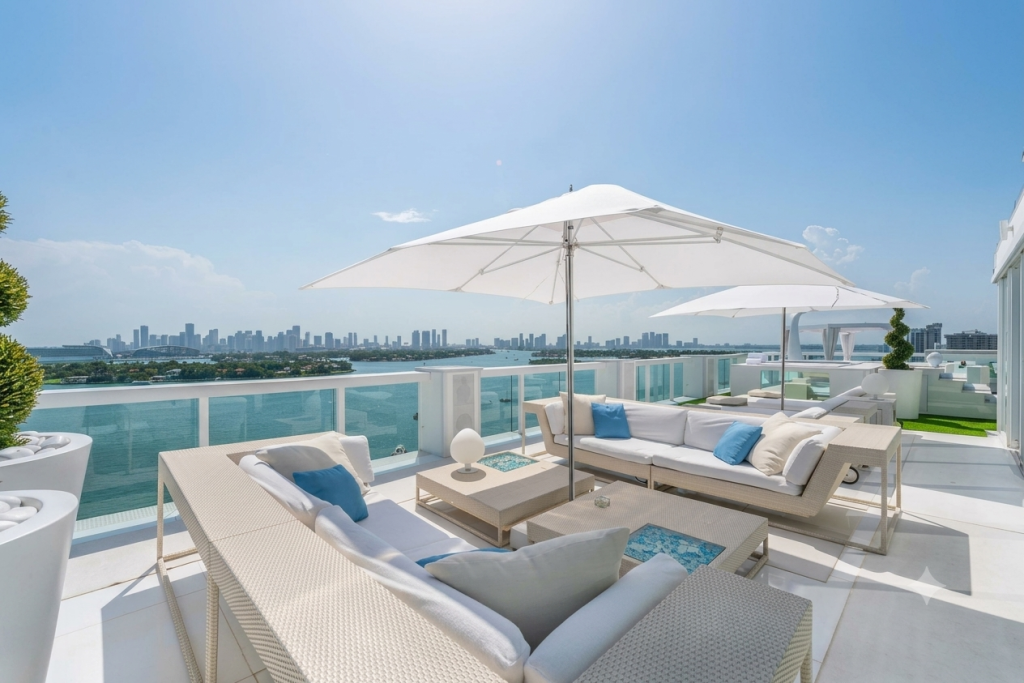
New York luxury buyers arrive in Miami expecting a transaction process that resembles Manhattan’s — and the differences are significant enough that mismatched expectations consistently cause friction, delays, and occasionally deals falling apart over process confusion rather than genuine disagreement.
The co-op board approval process does not exist in Miami. This is not a trivial difference. In Manhattan, a significant share of the luxury housing stock is in co-operative buildings that require board approval — a process involving financial disclosure, personal references, an interview, and a board decision that can take 60 to 90 days and can result in rejection for reasons the board is not required to explain. Many of Miami’s most sophisticated buyers from New York had a co-op board rejection either personally or among their immediate social circle, which contributed to their decision to leave. In Miami, condominium purchases require association approval in some buildings, but the process is typically a financial qualification review with a defined timeline — not a subjective vetting process with no appeal mechanism.
Miami pre-construction deposit structures are different from Manhattan’s. Manhattan’s new development typically requires 10% at contract with the balance at closing. Miami pre-construction often involves milestone-based deposit schedules — 10% at contract, 10% at groundbreaking, 10% at top-off, and 60% at closing — that front-load more capital into the pre-closing period than New York buyers are accustomed to. The financial planning implications are real and need to be accounted for before committing to a specific building’s deposit schedule.
Days on market and negotiating dynamics vary more by building and tier in Miami than in Manhattan. Manhattan’s luxury market, with its extensive comparable data infrastructure and active broker community, tends to produce narrower bid-ask gaps at the individual property level — even if aggregate market statistics show a gap. Miami’s luxury market is more bifurcated: branded new construction has less room to negotiate than the resale market in the same building, and the established resale market in older buildings in some submarkets has extended days on market and genuine negotiating room that New York buyers sometimes fail to push on because they assume Miami is uniformly tight.
Mistake 4: Treating “Miami” as a Single Market
This is the mistake that costs buyers the most money, most often. New York has neighborhoods — Tribeca, the Upper East Side, Hudson Yards — and buyers who have lived in Manhattan understand viscerally that paying $3,000 per square foot in Tribeca and $3,000 per square foot on the Upper East Side is not the same decision. The buildings are different, the lifestyle is different, the resale liquidity is different, and the buyer profile is different.
Miami has the same dynamic, at least as pronounced, and New York buyers frequently arrive, treating it as a single market defined by a ZIP code and a price point.
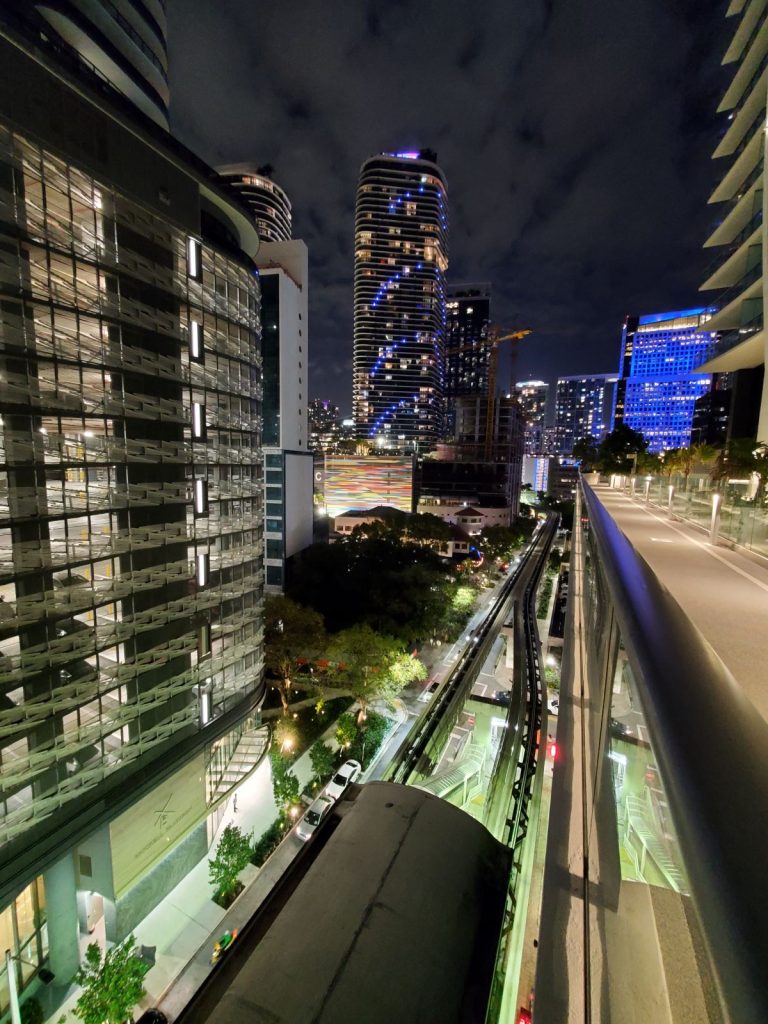
The practical version of this mistake: a buyer evaluates Brickell and Sunny Isles Beach simultaneously, finds a Brickell condo at $900 per square foot and a Sunny Isles condo at $900 per square foot, and concludes they’re equivalent value propositions at the same price. They are not. The $900-per-square-foot Brickell condo is likely a non-branded building in the general Brickell corridor with limited brand recognition in the resale market. The $900-per-square-foot Sunny Isles Beach condo may be a unit in a building like Armani/Casa Residences with a global brand and an international buyer pool that supports resale liquidity. The per-square-foot figure is identical. The assets are entirely different.
The more consequential version: a buyer who evaluates Brickell and South of Fifth in Miami Beach simultaneously, finds a unit in each at comparable square footage and comparable total price, and concludes that the lifestyle comparison is between “more urban” and “more beachside.” The actual comparison is between a market with 12 months of inventory and a 91% sold-to-list ratio, and a market with 2.5 months of inventory and some of the strongest price-per-square-foot performance in the state. Those are different investment theses at the same lifestyle tier.
Understanding Miami’s market requires understanding its geographic fragmentation — the specific differences between Brickell, Downtown Miami, Edgewater, Miami Beach, South of Fifth, Surfside, Bal Harbour, Sunny Isles Beach, and Aventura — the same way understanding Manhattan requires understanding the difference between Tribeca and Midtown East. The ZIP code is not enough.
Mistake 5: Evaluating Miami’s Lifestyle Through a Tourist’s Memory
Every New York buyer has been to Miami. Most of them have been to Miami Beach — specifically, to South Beach, to Ocean Drive, to the Art Basel circuit, or to a corporate event at a Collins Avenue hotel. That experience of Miami is real, and it is genuinely Miami. It is also not the Miami where serious buyers live or where serious real estate decisions are made.
The most common version of this mistake: a buyer from the Upper East Side visits Miami, stays at a hotel in South Beach, spends a long weekend on Ocean Drive, concludes that Miami is a beautiful place to visit but too touristy and too transient to actually live in, and adjusts their budget downward or begins reconsidering. That buyer has evaluated South Beach’s tourist corridor and concluded it represents all of Miami, which is approximately like evaluating Times Square and concluding it represents all of Manhattan.
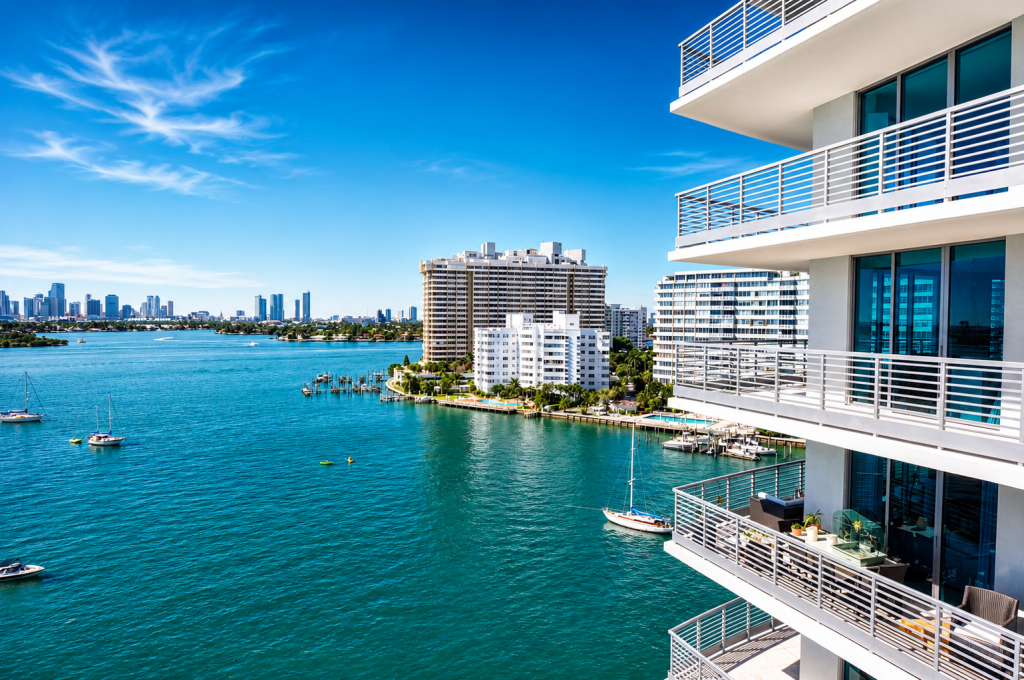
The neighborhoods where the buyers in this guide series actually live — Bal Harbour, Surfside, Golden Beach, Miami Shores, Coconut Grove, Key Biscayne, South of Fifth — share essentially nothing with Ocean Drive’s tourist energy. Bal Harbour is a 0.5-square-mile enclave of 3,000 residents with no nightclubs and no through-traffic. Golden Beach is guard-gated, single-family-only, with 625 year-round residents. Surfside is a beach town of 6,000 people where you can walk to Bal Harbour Shops and not encounter a tourist for your entire day. South of Fifth is 25 blocks of oceanfront residential living, with Joe’s Stone Crab at the corner, and quieter than most Upper East Side cross-streets after 9pm.
The buyer who takes the time to actually visit these neighborhoods — to drive north on Collins Avenue past Aventura, to spend a morning in Surfside, to walk South Pointe Park on a weekday — will discover that the experiential gap between their tourist memory of Miami and their potential daily life in Miami is larger than they assumed, and in their favor.
The Honest Bottom Line
New York buyers are, on balance, the most sophisticated buyers in the South Florida luxury market — and the most likely to make these specific mistakes, precisely because their New York experience has given them frameworks that are partly applicable and partly misleading in a different market.
The price-per-square-foot comparison is real but requires calibration. The tax advantage is not a bonus — it is a primary number that should reshape your total cost of ownership calculation from the opening conversation. The transaction process is different in ways that matter. The market is more geographically fragmented than a ZIP code analysis suggests. And the lifestyle available in Miami’s serious residential neighborhoods has almost nothing to do with the Miami in your tourist memory.
I am Ashton Coleman, a luxury real estate specialist with ONE Sotheby’s International Realty, covering Miami-Dade and Broward County’s coastal luxury markets. I represent buyers relocating from New York regularly, and I have this conversation — the corrective version — early rather than late. It produces better decisions.
Contact me directly for a personalized market analysis that starts from your specific situation rather than a generic relocation pitch.
📞 Call or text: 305.978.7704
📧 Email: AColeman@onesothebysrealty.com
🌐 Search all South Florida luxury real estate at MiamiPenthousesandEstates.com
Pricing data for Manhattan referenced in this guide is sourced from publicly available market reports, including Corcoran Q1 2026, SERHANT Q1 2026, and independent market analysis current as of Q2 2026. Miami pricing data is sourced from MLS records and building-specific transaction data as referenced throughout this guide series. All figures are subject to change. This guide is for informational purposes only and does not constitute financial, legal, or tax advice. Consult your advisors before making any real estate or financial decision.





