


The question I hear most often from sellers right now is not “how do I sell my Miami condo?” It is “Should I sell it now, or wait?” And the honest answer to that question in mid-2026 is more nuanced than the bullish headline numbers suggest — because Miami’s luxury condo market is performing in two very different ways simultaneously, and which one your specific building sits in determines almost everything about your strategy.
This guide is written for the seller who owns a Miami luxury condo and wants an accurate picture of the market rather than an encouraging one. If you already have an agent and a listing date, this is not the guide for you. If you are trying to decide whether to sell at all, or whether now is the right time, this is exactly the guide you need.

The Market You’re Actually Selling Into
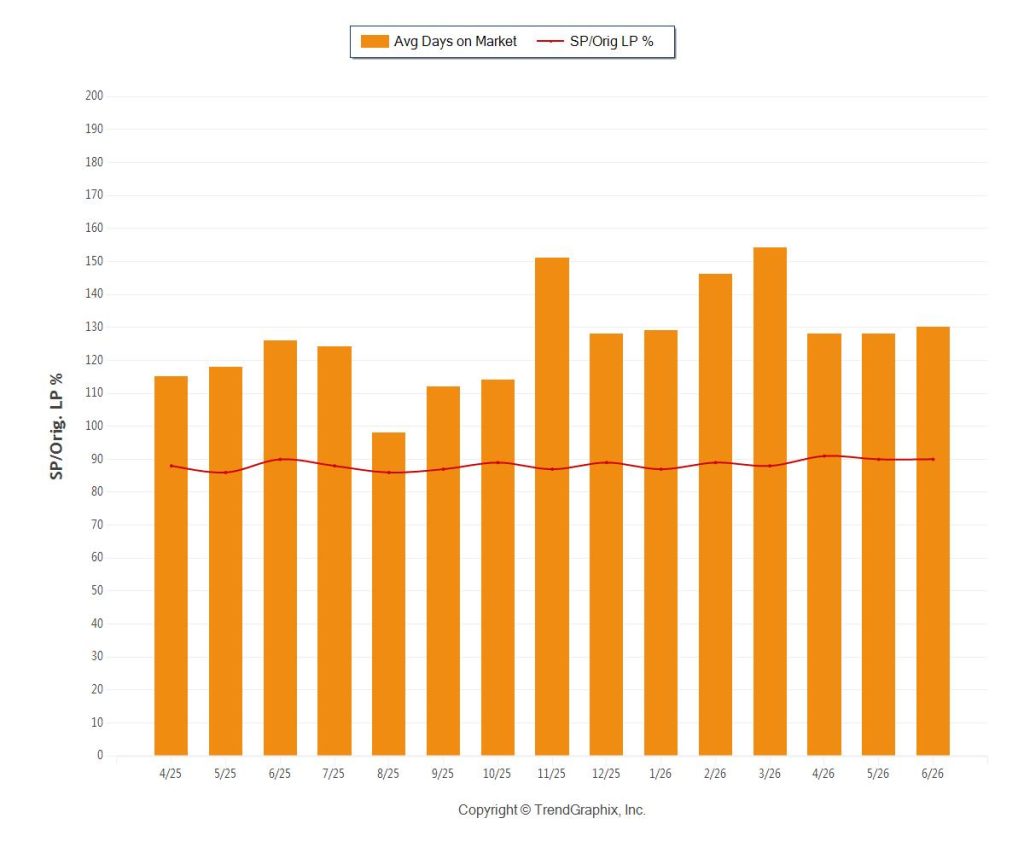
The first thing every Miami luxury condo seller needs to understand about the 2026 market is that it is a buyer’s market by the conventional measure — and has been for several quarters. Inventory across Miami-Dade’s condo market reached 13.9 months of supply in late 2025, well above the six-month threshold that defines a balanced market. Median days from listing to contract for existing condos has been running at approximately 72 days — more than twice the pace of the 2021-2022 cycle that many sellers still use as their reference point for what “normal” looks like.
At the same time, luxury condo sales rose 25.9% year-over-year in Q1 2026, and $1 million-plus condo sales increased 7.6% over the same period. Those are not the numbers of a collapsing market. They are the numbers of a market where buyers are active and transacting, but where sellers who price aspirationally are sitting on inventory, while sellers who price accurately are closing.
The most important analytical frame for any Miami luxury condo seller in 2026 is this: volume is up, but leverage is down. More condos are selling than a year ago, but sellers are getting less of their original asking price than they were in 2022 or 2023. The 89% sold-to-original-list-price ratio documented in the MLS data for Miami’s $1 million-plus coastal corridor means the average seller is conceding 11% from their original ask — and that figure is for sellers who priced with some discipline. Sellers who anchored to peak pricing are conceding more, or not selling at all.
The 15,000-Unit Problem: What New Construction Is Doing to Resale
The single most important structural factor facing Miami luxury condo resale sellers in 2026 is the new construction pipeline — and it deserves direct, honest treatment rather than the softened version most agents will give you.
Over 15,000 new luxury condominiums are being progressively delivered to the Miami market through 2026 and into 2027 and 2028. These new developments arrive with professionally produced sales galleries, perfectly staged model units, developer financing incentives, and the full weight of international marketing budgets behind them. Every one of those new buildings is competing for the same buyer pool your resale unit is targeting.
The resale seller’s honest competitive position: you are asking a buyer to choose your unit — potentially older, without the newness premium, without the developer’s sales infrastructure — over a brand-new unit with the same square footage, a comparable or better view, and often a more aggressive pricing structure during the building’s final sales phase. To win that comparison, your unit needs to be better in the dimensions buyers can evaluate: condition, presentation, pricing, and the specific characteristics of your building that new construction cannot replicate.
The buildings that are winning that competition in the resale market have one of two things going for them: a specific, irreplaceable asset that new construction cannot offer (an established Pritzker Prize architect, an address with a history, a specific view corridor that new buildings block rather than share), or a pricing position that represents a genuine and provable value relative to comparable new construction.
If your unit has neither of those things — if it is a standard configuration in a building without architectural distinction, priced at or above what a buyer could pay for a comparable new unit — the honest advice is to either price below new construction to offer a quantifiable value argument, or wait until the new construction pipeline has been absorbed and the resale market’s competitive pressure eases.
The Building-Specific Reality: Not All Condos Are in the Same Market
One of the most consistent mistakes Miami luxury condo sellers make is treating the market as uniform — reading a headline about the overall market and applying it to their specific building, which may be performing very differently than the county average.
Buildings that are outperforming the broader resale market in 2026:
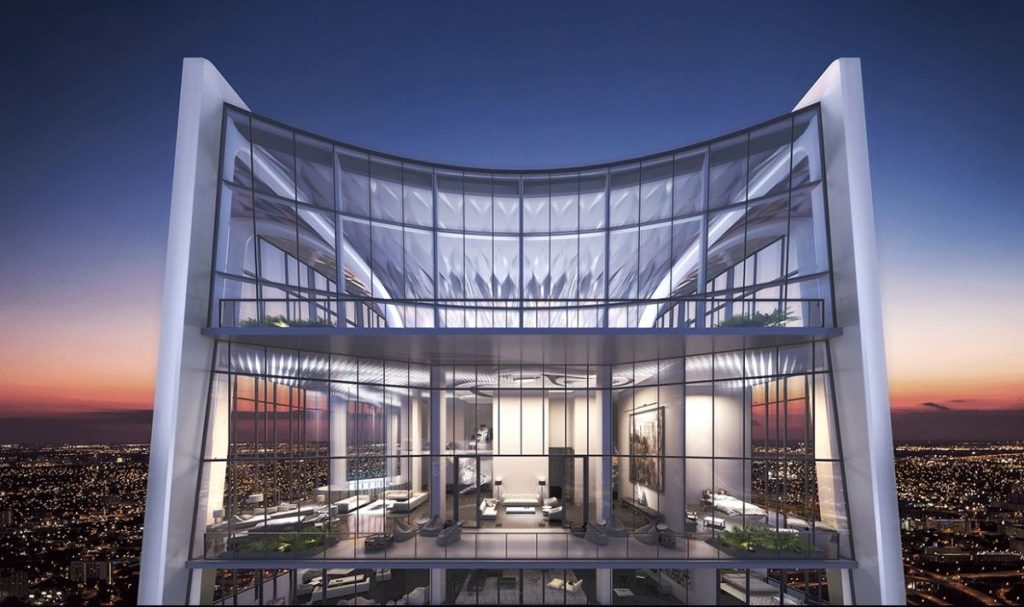
Buildings with genuine architectural scarcity are the clearest outperformers. One Thousand Museum — the only Zaha Hadid residential building in the Western Hemisphere — maintains a $1,567 per-square-foot average that has not compressed toward Downtown Miami’s broader $700–$950 resale average despite a buyer’s market environment. The Surf Club Four Seasons — with its Pritzker Prize architectural identity and historic site — produced a $17 million closing in January 2026, more than tripling its 2020 purchase price. FENDI Château’s 93% sold-to-original-list ratio demonstrates that the permanent scarcity argument holds up in the negotiating room even in a buyer’s market.
Buildings without that scarcity argument — standard configurations in non-architecturally-significant towers, particularly those facing new construction competition in their specific price tier — are where the buyer leverage is most pronounced and where sellers need the most realistic pricing conversation.
How to know which camp your building is in:
Pull the last twelve months of closed sales in your building, specifically, not the neighborhood average, your building. Compare your average sold-to-list ratio against the corridor average. If your building is outperforming, you have pricing leverage. If it is underperforming, you are already on the wrong side of the comparison, and aspirational pricing will compound that disadvantage.
Seasonal Timing: When the Miami Luxury Condo Market Moves
Miami’s luxury condo market has seasonal patterns that are real and consistent, even if they are less pronounced than in some other major markets. Understanding them gives a seller a genuine tactical advantage in a market where timing matters.
Season is real in Miami, and it does something narrower than most sellers are told. I tested it against 487 condominium closings above $5 million, grouped by the month each listing went live. Listings that went live between November and April reached contract in a median of 145 days. Listings that went live between May and October took 187. By quarter, the first quarter was fastest at 122 days, against 171 for the fourth, 182 for the second, and 198 for the third. What did not move was price. Sold to list came in at 93.1% for the winter window and 93.4% for the summer one, and that held inside every price band and on waterfront product alone, never varying by more than three tenths of a point. Two pieces of common advice did not survive the test. The second quarter, often called the strongest stretch of the Miami year, produced the lowest share of asking price of any quarter at 92.2%, and April was the weakest single month at 91.2%. August, the month sellers are warned away from, was indeed the slowest at 234 days to contract, and it still delivered 93.8% of asking, better than seven other months. So the winter window is worth listing into, for a shorter hold and lower carrying cost rather than a higher number. It is not worth waiting five months to reach. The full month-by-month analysis, including the controls and the survivorship limitation behind it, is in The Season Illusion.
The Pricing Conversation You Need to Have
The most common and most expensive mistake Miami luxury condo sellers make in 2026 is pricing based on where the market was in 2022 and 2023, rather than where it is today. This is the advice that will cost you more than any single other decision in your selling process.
The mechanics of this mistake are consistent: a seller knows their neighbor sold a comparable unit in 2022 for $X. They are priced at $X or above, assuming the market has held those gains. The market has not held those gains universally — and more importantly, the buyer pool they are targeting knows the current comps precisely, because current buyers are sophisticated, well-advised, and have access to the same data their agents do.
The first two weeks of a listing are when buyer attention is most concentrated. Overpricing burns that window. A listing that goes live, generates few showings, sits for 60 days, and then takes a price reduction almost always nets less than the same unit priced accurately from day one — because the reduction signals weakness, buyers who were watching begin negotiating from the reduced price rather than the original, and the momentum that produces multiple-offer situations never materializes.
The accurate pricing methodology for a Miami luxury condo in 2026: pull the last six months of closed sales in your specific building, identify the three or four most comparable closed units by floor, view, bedroom count, and square footage, apply the building’s current sold-to-original-list ratio to understand where buyers are actually transacting relative to ask, and price at or slightly below that level. Then let the first two weeks tell you whether buyers agree. If you get showing activity and offers, you priced correctly. If you get showings but no offers, you are 5–10% above the market. If you get no showings, you are more than 10% above the market and need to move immediately.
The timeline matters as much as the price. Across 512 MLS closings above $5 million, the median residence spent 178 days on market before going under contract, and 22% took more than a year. Residences that closed within 90 days held a median of 94.0% of asking. Those that took one to two years closed at 91.8%. Inventory also differs enormously by submarket, from about 7 months of supply in Surfside to 81 months in Brickell above $5 million. The full breakdown by submarket, price band and building is in how long it takes to sell a $5 million Miami condo.
The Presentation Standard: What “Competition-Ready” Means in 2026
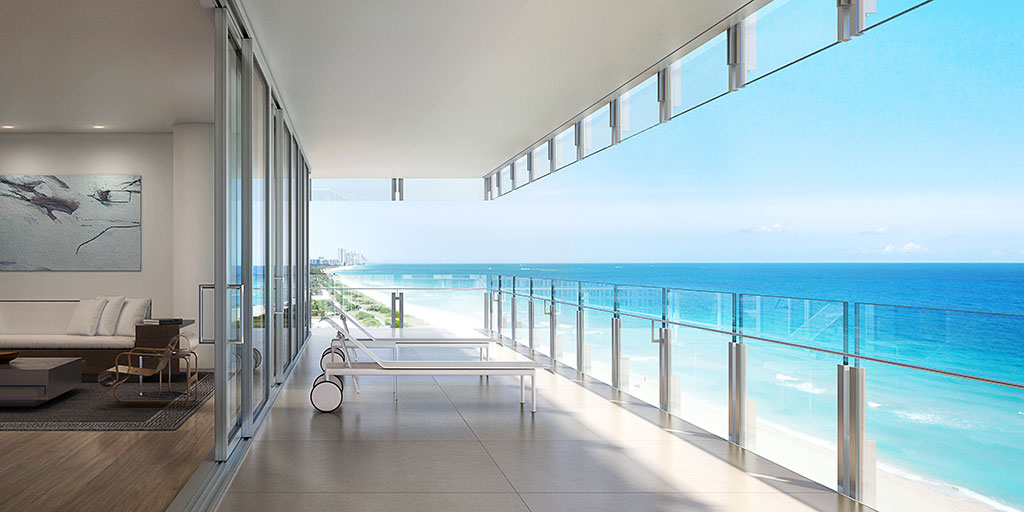
A resale seller competing against new construction in 2026 has to be honest about what buyers are comparing. The developer selling a new unit at Baccarat Residences Brickell or Waldorf Astoria Residences has a sales gallery with a fully staged model, professional renderings, and a dedicated sales team. Your resale listing has your current furniture and whatever photography your listing agent arranged.
Closing that gap requires specific preparation:
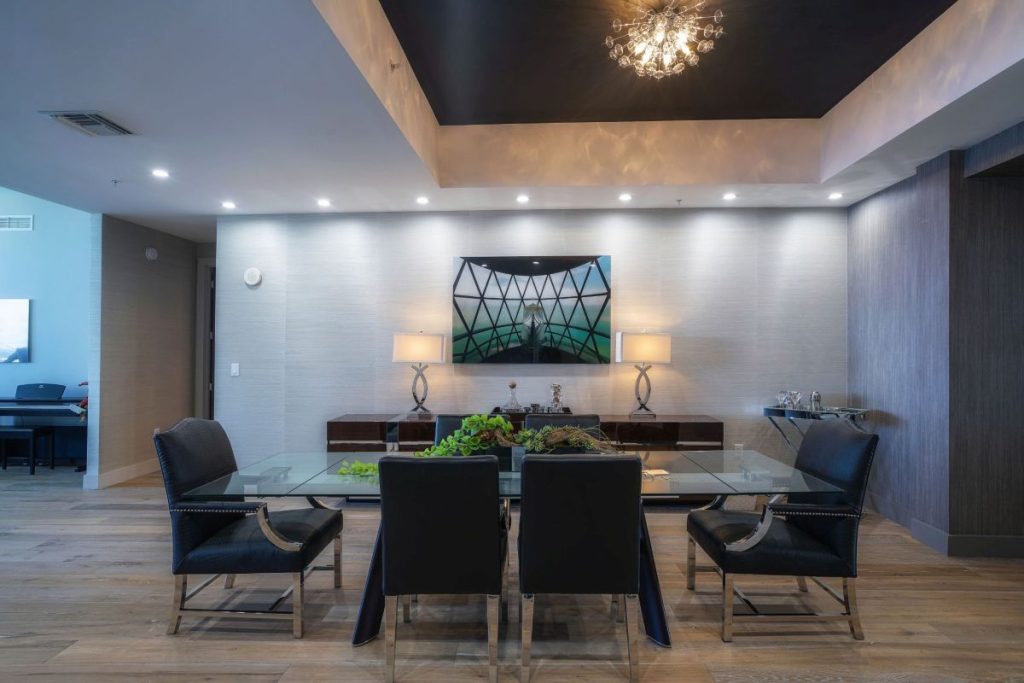
Professional staging — not rearranging your existing furniture, but professional virtual staging with the specific goal of photographs that compete with developer-quality imagery. In Miami’s luxury market, buyers see your unit online before they visit, and 70% of their emotional decision is formed before they step through the door. Staging (traditional or virtual) for photography is not optional for a competitive resale in 2026.
Minor renovation that shows on camera — fresh paint throughout, updated lighting fixtures, refinished floors, and kitchen and bathroom hardware replacement are the highest-ROI presale investments for most units. The goal is not a full renovation; it is eliminating the visual signals that tell a buyer they’re looking at a dated resale rather than a well-maintained premium unit.
Do not buy furniture to raise the price. Staging for photography is a marketing cost and it earns its keep. Buying a furniture package to sell the residence furnished does not. In MLS closings above $5 million, furnished residences compared with unfurnished residences in the same building at a similar size showed a median difference of 0.6% in sold price per square foot across 396 pairs. If you already own the furniture, offer it by separate bill of sale. The full analysis is in does furniture add value to a Miami condo.
All documentation is prepared and ready — post-Surfside, buyers and their attorneys are requesting reserve studies, milestone inspection reports, and special assessment histories before making offers. Having this documentation organized and ready to provide within 24 hours of a request removes a friction point that can kill deals at the due diligence stage. Sellers who can answer every reserve funding and inspection question promptly signal a well-run building and a seller who knows what they own.
Professional video and 3D walkthrough — particularly relevant for international buyers evaluating Miami condos remotely. A professional Matterport-style 3D walkthrough of a well-staged unit competes credibly with a developer’s virtual tour in a way that standard photography alone cannot.
The Scenarios Where Waiting Makes Sense
Honest seller advice requires acknowledging that selling now is not always the right answer — and identifying the specific scenarios where waiting is the more rational choice.
Wait if you are in a building with a known pending special assessment. A special assessment that has been levied or is widely anticipated in your building is a material fact that must be disclosed to buyers. It will reduce your net proceeds directly (buyers will request a credit equal to the full assessment amount) and may reduce your buyer pool to cash buyers who are comfortable with the financial exposure. If the assessment is expected but not yet levied, waiting until the building has resolved it, funded the reserves, completed the required work, and cleared the assessment typically produces a cleaner sale at a stronger price than selling into the uncertainty.
Wait if your unit is in poor condition relative to your building’s competitive set. Selling an unimproved unit in a building where comparable units are well-renovated is selling at the wrong time for the wrong reasons. The buyer who is comparison-shopping your unit against three renovated units on the same floor is negotiating against all three, and your condition puts you at the bottom of a range rather than at the midpoint. A targeted $30,000 to $80,000 renovation investment will typically return multiples of its cost in a building where well-renovated units command a genuine premium.
Wait, if you need a specific price to make your financial plan work, and the current market won’t support it. This is the most honest version of the waiting scenario. If you need $X to retire, fund a purchase, or achieve a specific financial goal, and the current market’s honest pricing puts your unit at $X minus 15%, you have a decision to make about timeline, not a pricing conversation to have with your agent. The market doesn’t care about your financial plan; it responds only to what buyers are willing to pay today.
The Scenarios Where Selling Now Is the Right Answer
Sell now if your building has structural or reserve funding concerns that are likely to worsen. Buildings with underfunded reserves and known deferred maintenance carry escalating risk as post-Surfside compliance deadlines approach. If your building is in this category, the buyers who will purchase today are doing so with full disclosure; the buyers available in two years may be a smaller pool as more of the building’s financial reality becomes public record.
Sell now if you have equity gains you can quantify and protect. The 25.9% year-over-year increase in luxury condo sales in Q1 2026 is real, and the market is transacting. A seller who bought at 2018 or 2019 pricing, has documented appreciation, and is willing to price accurately, is taking a gain rather than speculating on future gains in a market with 13.9 months of inventory.
Sell now if a lower-rate environment will bring more sellers to market. Multiple market analyses make this point clearly: when interest rates drop meaningfully, they bring buyer demand — but they also bring seller supply. Sellers who have been waiting for “better conditions” often list simultaneously, creating the competition they were trying to avoid. A seller who moves ahead of that wave captures a less crowded seller pool than the one who waits for the catalyst.
Sell now if you have an agent with a specific qualified buyer already in conversation. This guide is for the general market context. The most important selling decision you can make is finding an agent whose current buyer conversations are active in your building and price tier. A motivated buyer already in the market, already qualified, and already familiar with your building compresses timelines and eliminates much of the seasonal and competitive context discussed above.
Frequently Asked Questions
Is 2026 a good time to sell a Miami luxury condo?
It depends on the building and the price tier. Luxury condo sales rose 25.9% year-over-year in Q1 2026, confirming buyer demand is real. But inventory is elevated at approximately 13.9 months of supply, the sold-to-original-list ratio is 89% at the $1M+ tier, and competition from 15,000+ new luxury condo deliveries is intense. Sellers in architecturally distinctive buildings who price accurately are transacting. Sellers in standard buildings priced aspirationally are accumulating days on market.
When is the best time of year to sell a Miami luxury condo?
Late January through June is historically Miami’s strongest window for luxury condo buyer activity — capturing the snowbird decision season, tax-season liquidity events, and the historically strongest quarter for luxury transactions. August is the weakest month. September through December offers a recovering second window, with October stronger than September.
How long does it take to sell a luxury condo in Miami?
Median days from listing to contract for existing condos in Miami-Dade has been running approximately 72 days as of late 2025 through early 2026 — more than twice the pace of the 2021-2022 peak. Well-priced, well-presented units in strong buildings sell faster; overpriced or under-prepared units accumulate days on market that become a negotiating liability.
Should I renovate before selling my Miami luxury condo?
Minor renovation targeting what shows on camera — fresh paint, updated lighting, refinished floors, hardware replacement — typically returns multiples of its cost in a market where buyers are comparing resale units against new construction. Major renovation is rarely necessary unless your unit is significantly below your building’s competitive standard. Professional staging is non-negotiable for a luxury listing competing against developer inventory.
What is the post-Surfside effect on Miami condo sales?
Buyers and their attorneys now routinely request reserve studies, milestone inspection reports, and special assessment histories before making offers. Sellers who have this documentation organized and ready accelerate their sales timeline. Buildings with underfunded reserves or known structural issues face a narrowed buyer pool and lower net proceeds as buyers price in the financial exposure. Sellers in such buildings should weigh the cost of selling now against the risk of a worsening position over time.
How should I price my Miami luxury condo?
Base your pricing on the last six months of closed sales in your specific building — not neighborhood averages — and apply your building’s current sold-to-original-list ratio to understand where buyers are actually transacting. Price at or slightly below that level, and let the first two weeks of showing activity confirm whether you are correctly priced. Overpricing burns the high-attention first two weeks and almost always nets less than accurate day-one pricing.
Ready to Have the Honest Conversation?
Selling a Miami luxury condo in 2026 rewards preparation, accurate pricing, and timing — and punishes aspirational pricing and under-preparation more harshly than at any point in the past four years. The sellers who are closing are the ones who understood the market before they listed, not the ones who discovered it after 90 days on the market.
I am Ashton Coleman, a Broker-Associate with ONE Sotheby’s International Realty, holding the Certified Luxury Home Marketing Specialist (CLHMS) Million Dollar Guild designation, Certified Negotiation Expert (CNE), Transnational Referral Certification (TRC), and Resort & Second-Home Property Specialist (RSPS) designations. I represent both buyers and sellers across Miami-Dade and Broward County’s luxury condo and single-family markets.
If you own a Miami luxury condo and are evaluating your options, contact me directly for a personalized market analysis of your specific building and unit — building-specific comparable data, a pricing recommendation based on actual recent closings, and an honest assessment of your competitive position relative to new construction in your tier.
📞 Call or text: 305.978.7704
📧 Email: AColeman@onesothebysrealty.com
🌐 MiamiPenthousesandEstates.com
Market data referenced in this guide is sourced from MLS records, MIAMI Realtors, TrendGraphix, and publicly available market analyses from multiple sources current as of Q2–Q3 2026. All figures are subject to change. This guide is for informational purposes only and does not constitute financial, legal, or investment advice. Verify all details with your legal and financial advisors prior to making any real estate decision.





