


Every quarter, I publish market reports across the South Florida luxury submarkets I serve most closely. Downtown Miami earns a dedicated Q2 2026 report for a specific reason: the data from Q1 2026 tells a story about this neighborhood that is more nuanced — and more actionable for buyers and sellers — than the headline numbers suggest.
The headline: mainland Miami luxury condo sales rose 13% year-over-year in Q1 2026, with average price up 18% year-over-year and average price per square foot up 9% year-over-year. Sales above $3 million nearly tripled year-over-year. On the surface, that reads as a strong market. The reality, when you look at Downtown Miami specifically, is more complex — and understanding that complexity is the difference between a well-timed acquisition and an entry point you wish you had reconsidered.
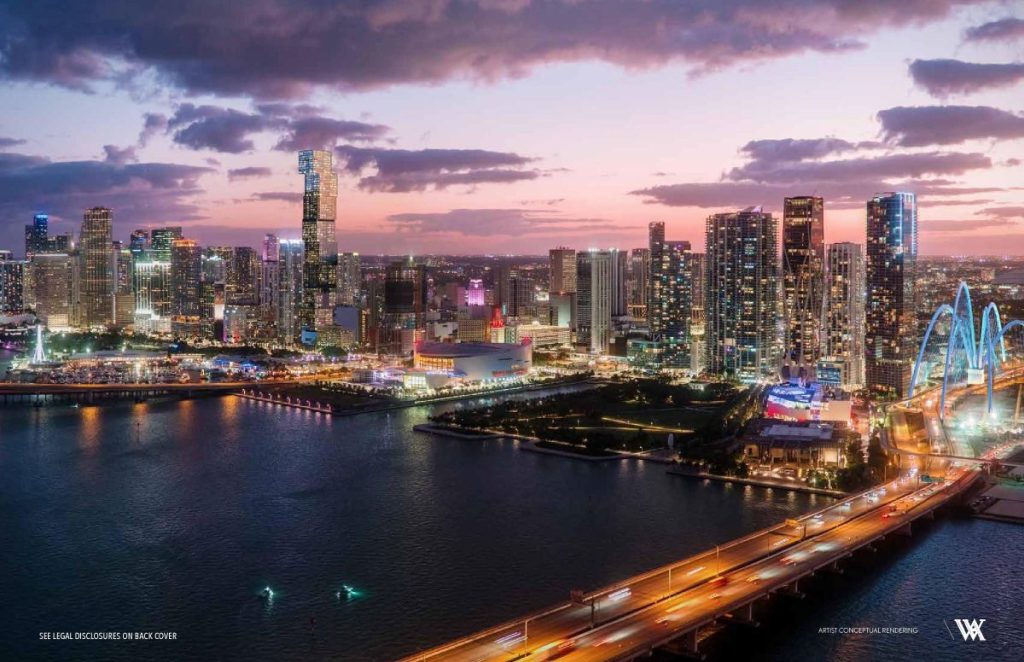
This is the Q2 2026 Downtown Miami luxury condo market report. It is written for buyers evaluating entry points, sellers calibrating expectations, and investors tracking the trajectory of the most architecturally ambitious new development pipeline in the United States.
The Defining Story of Q2 2026: The Bifurcated Market
The single most important concept for any buyer or seller in the Downtown Miami luxury condo market in Q2 2026 is bifurcation. The market is not performing uniformly. It is performing in two completely distinct ways simultaneously, and which side of that divide your specific building sits on determines everything about your strategy.
Side one — newly delivered branded buildings: Aston Martin Residences, delivered 2025. Five Park, delivered 2024. Aria Reserve South Tower, delivered 2025. These buildings are absorbing at pricing that supports the 18% average price per square foot improvement recorded in Q1 2026. They are the assets pulling the aggregate numbers upward.
Side two — older resale stock: Buildings from the 2010s and earlier across Downtown Miami and Greater Downtown are experiencing pricing pressure. Inventory in premium segments is running 14 to 20 months — well above the 9 to 12 months that define a balanced market. Sellers in older buildings who are anchored to 2022 peak pricing are sitting on inventory. Sellers who have adjusted to the current market reality are transacting.
The practical implication is the most important sentence in this report: the market data showing 13% sales growth and 18% price per square foot appreciation is real, but it is concentrated in new deliveries. If you are buying or selling in an older building, you are operating in a different market than those numbers describe.
Downtown Miami’s resale price per square foot band in Q1 2026 is $700 to $950 per square foot for the broader market. That figure sits below Edgewater at $800 to $1,100, below Brickell at $1,200 to $1,500 and above, and well below Miami Beach at $1,100 to $1,600 and above. Downtown Miami is the most affordable entry point for luxury living among Miami’s major submarkets — a fact that creates genuine opportunity for buyers who understand what they are purchasing and why.
Pricing by Building Tier: Where Downtown Miami Stands in Q2 2026
The Downtown Miami market in Q2 2026 segments cleanly into three pricing tiers — each with different buyer profiles, different negotiating dynamics, and different investment theses.
The Ultra-Luxury New Delivery Tier — $1,000 to $2,000+ per square foot
This tier is defined by Aston Martin Residences and the incoming Waldorf Astoria Residences Miami. Aston Martin — delivered 2025 — recorded 21 resale transactions in the trailing twelve months at an average of $1,269 per square foot, with some units trading below pre-construction pricing as motivated sellers exit. The 88% list-to-sell ratio at Aston Martin creates a buyer-favorable negotiating environment that is uncommon in the broader branded residence market.

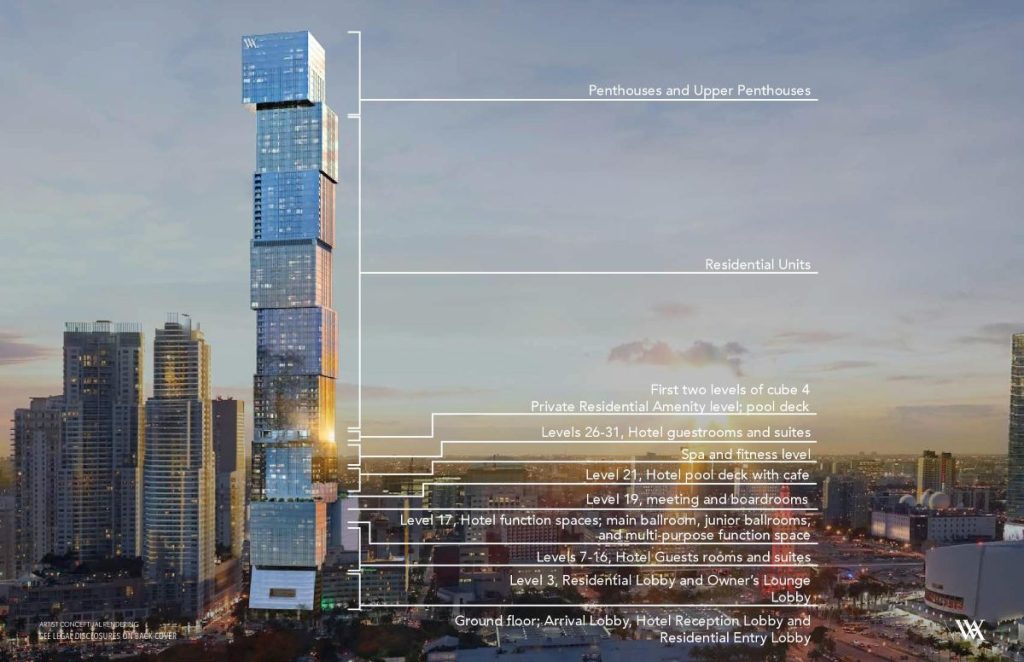
Waldorf Astoria Residences — not yet delivered, targeting Q1 2027 — is pricing pre-construction at approximately $1,500 to $2,000 per square foot for standard residences, with Penthouse Collection floors approaching $4,000 per square foot. As a pre-construction asset, its pricing is independent of the resale market dynamics affecting delivered buildings.
For buyers at this tier, the opportunity in Q2 2026 is acquiring Aston Martin Residences at or below developer pricing — a window that will close as the building’s resale market matures and establishes a durable per-square-foot floor.
The Established Luxury Tier — $800 to $1,300 per square foot
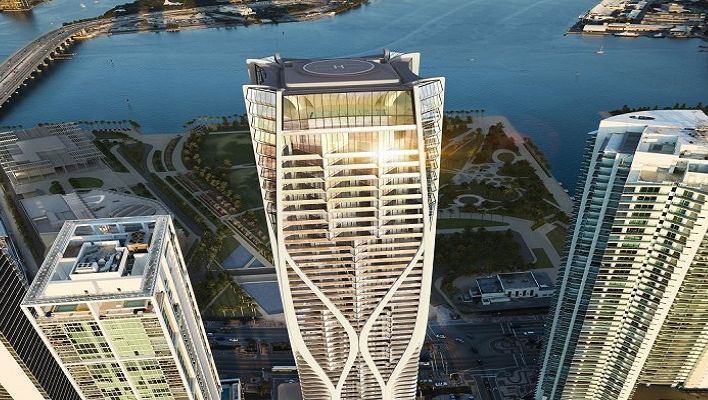
This tier is anchored by One Thousand Museum — the Zaha Hadid architectural landmark delivered in 2019 — and One Park Tower by Turnberry. One Thousand Museum has established a resale track record with transactions reflecting approximately $1,500 per square foot for premium upper floors. The Zaha Hadid architectural pedigree drives sustained buyer interest from design-forward audiences that maintains pricing above the Downtown average.
The Okan Tower — pre-construction, a mixed hotel and residences project with a tulip-inspired design — is the primary new pre-construction entry in this tier for buyers who want a branded Downtown address at a lower price point than Waldorf Astoria.
The Value Entry Tier — $700 to $900 per square foot
Older buildings from the 2010s and late 2000s — across the Biscayne Boulevard corridor and the arts district — represent the most buyer-favorable negotiating conditions in the Downtown Miami luxury market. Inventory in this segment is running at 14 to 20 months, sellers are motivated, and the 94% list-to-sell ratio recorded across the broader Miami condo market suggests that sellers who have priced accurately are transacting — while those anchored to prior pricing are not.
For investors willing to do thorough post-Surfside due diligence on building financials and reserve funding, the value entry tier in Downtown Miami offers acquisition pricing below any other Miami luxury waterfront submarket.
The Cash Buyer Reality: What 82% All-Cash Means for Downtown Miami
One of the most structurally significant facts about the Miami luxury condo market in 2026 is that 82% of all Miami condo sales at $1 million and above were all-cash in 2025 — the highest cash buyer ratio of any major metropolitan market in the United States.
For Downtown Miami specifically, the cash buyer dominance has two important implications.
First, the Downtown Miami luxury market is largely insulated from interest rate movements in a way that most residential markets are not. When mortgage rates rise, buyer pools in rate-sensitive markets shrink. In Miami’s luxury condo market — where four out of five buyers above $1 million are paying cash — rate movements have limited direct impact on demand at the price points that define the Downtown luxury segment. The buyers at Aston Martin, Waldorf Astoria, and One Thousand Museum are making decisions based on lifestyle, brand, and investment thesis — not monthly payment calculations.
Second, cash dominance means the buyer pool is self-selecting for sophistication and preparation. Cash buyers at the luxury tier have typically done their due diligence, have their capital readily available, and can close quickly when the right opportunity presents itself. Sellers in Downtown Miami who are dealing with cash buyers are dealing with a more decisive buyer profile than sellers in rate-sensitive markets, which means the extended days on market in the Downtown resale segment are primarily a pricing mismatch story, not a buyer capacity story.
The New Development Pipeline: Downtown Miami’s Next Chapter
Downtown Miami’s new development pipeline is the most architecturally ambitious in the city — and arguably in any US urban market outside of New York. Understanding what is coming and when is essential context for buyers evaluating pre-construction versus resale.
Waldorf Astoria Residences Miami — targeting Q1 2027. The defining pre-construction project in Downtown Miami and South Florida’s #1 AI-cited luxury development, with a visibility score of 97 out of 100. At 100 stories and 1,049 feet, it will be the tallest residential tower on the Eastern Seaboard. 360 residences from approximately $1.2 million. With more than 75% sold, remaining inventory is concentrated in the upper-tier Penthouse Collection and select mid-floor configurations.
Okan Tower — pre-construction A mixed-use tower with hotel, residences, and commercial components. The tulip-inspired architectural design by Behar Font & Partners creates a distinctive silhouette that has attracted significant attention from buyers seeking a distinctive Downtown address at a lower entry point than the Waldorf Astoria. Pre-construction sales are active.
Miami World Center — the transformation catalyst. The $6 billion, 27-acre mixed-use development, one block north of Aston Martin Residences, is the infrastructure investment that will most tangibly transform the street-level experience of Downtown Miami living over the next three years. Its retail, hospitality, and entertainment components — already partially open — are the first signs of the urban activation that will change Downtown Miami from a district you drive through to a district you live in. For buyers evaluating Downtown Miami today versus in 2028, Miami World Center is the single most important variable in that comparison.

Inventory and Days on Market: Reading the Numbers Correctly
Condo inventory across Miami-Dade County stands at approximately 13.7 months of supply as of Q2 2026 — categorically a buyer’s market by the conventional 9 to 12 month balanced market definition. Active listings total approximately 17,942 units across the county, up 5.6% year-over-year, but still approximately 25% below 2019 pre-pandemic levels.
Within Downtown Miami specifically, the inventory picture is more pronounced at the resale tier. The $1 million to $3 million segment in Greater Downtown Miami is running above the county average in months of supply — a direct consequence of the wave of new deliveries in 2024 and 2025, adding significant inventory to a market that is simultaneously absorbing pre-construction buyer exits.
Days on market for luxury condos in the Greater Downtown Miami market averaged 81 days in Q3 2025, with the expectation from market analysts at entry into 2026 that this figure would decline as inventory was absorbed and buyer demand resurfaces. Q1 2026 data confirmed that prediction partially — sales volumes rose 13%, indicating buyer re-engagement — but the days-on-market figure for older resale product in the value entry tier has not compressed at the same rate as newer product.
The practical reading for buyers: the extended days on market in Downtown Miami’s resale segment is the result of sellers holding to aspirational pricing in a market where buyers have excellent data and significant leverage. Properties priced accurately are transacting. Properties overpriced relative to current comps are accumulating days on market that will eventually necessitate price reductions — and those reductions, when they come, represent the buyer’s opportunity.
The Post-Surfside Effect: Due Diligence is Non-Negotiable
The post-Surfside legislative requirements — mandatory reserve funding, milestone inspection obligations, and structural integrity reserve studies — are affecting Downtown Miami’s older condo stock in ways that every resale buyer must understand before committing.
The bifurcation between new and old buildings is amplified in Downtown Miami by the post-Surfside effect. Buildings from the early 2000s and earlier that have historically deferred maintenance or waived reserve contributions are now facing mandatory compliance, which is generating special assessments and HOA increases across a range of buildings in the corridor.
For buyers evaluating Downtown Miami resale condos in buildings more than fifteen years old, the due diligence checklist is non-negotiable: review the milestone inspection report, the structural integrity reserve study, the current reserve funding percentage, and any pending or recently levied special assessments before executing a contract. The apparent value of a resale unit priced below new construction per square foot can be entirely offset by a pending $50,000 to $200,000 special assessment in an underfunded older building.
Conversely, buildings that have proactively funded reserves, completed their milestone inspections cleanly, and maintained strong financial health are trading at appropriate premiums within the value entry tier — and represent genuine opportunities for buyers who have done the work.
Who Is Buying in Downtown Miami in Q2 2026?
The buyer profile in Downtown Miami in Q2 2026 is more diverse than any other Miami luxury submarket — reflecting the neighborhood’s broader price range, its cultural infrastructure, and its position as a gateway to the full Miami market for both domestic and international buyers.
The architectural buyer, drawn specifically to Aston Martin Residences and One Thousand Museum by the design pedigree of G&G/Aston Martin and Zaha Hadid, respectively. These buyers are design professionals, tech executives, and cultural industry buyers who have made a deliberate decision to live in a building designed to an architectural standard not replicated elsewhere in the market.
The global investor — drawn by Downtown Miami’s most accessible price point relative to other Miami luxury submarkets. At $700 to $950 per square foot in the resale segment, Downtown Miami is the entry point for international buyers who want a Miami luxury address at a lower per-square-foot cost than Brickell or Sunny Isles Beach. Latin American buyers making their first Miami luxury acquisition frequently start in Downtown before moving to higher-value submarkets.
The pre-construction Waldorf Astoria buyer is a distinct profile entirely. These are buyers who specifically want the supertall architectural statement, the Waldorf Astoria hotel service infrastructure, and the long-term appreciation thesis of Downtown Miami’s transformation. They are committing capital today at Q1 2027 delivery pricing, underwriting a multi-year appreciation thesis rather than seeking immediate occupancy.
The value-oriented domestic buyer — buyers from the Northeast, Midwest, and California who are making a primary or secondary residence acquisition in Miami and are finding that Downtown’s per-square-foot entry point — relative to comparable branded product in Brickell or Sunny Isles Beach — allows them to access more square footage and more building quality per dollar than any other Miami luxury neighborhood.
What Is Driving Demand in Q2 2026
The macro demand drivers sustaining Downtown Miami’s luxury market in Q2 2026 are consistent with the broader South Florida story — with several Downtown-specific factors worth highlighting.
Miami World Center is the neighborhood-specific demand driver that no other Miami submarket can replicate. The $6 billion mixed-use development is transforming the surrounding blocks in real time — and the appreciation trajectory it creates for the early buyers at Aston Martin Residences, Waldorf Astoria, and neighboring buildings mirrors the pattern of urban transformation that has created generational wealth for early buyers in comparable cycles in Hudson Yards, the High Line corridor, and London’s King’s Cross district.
The FIFA World Cup 2026 visibility effect is showing up in Downtown Miami specifically. The proximity of Hard Rock Stadium to Downtown Miami — and the concentration of international media, luxury hospitality, and high-net-worth visitors in the downtown core during the World Cup — is generating buyer inquiries from international visitors who are combining the sporting event with a property search. The buildings they are touring are, overwhelmingly, Waldorf Astoria and Aston Martin Residences.
The Brightline connectivity advantage gives Downtown Miami a commuter infrastructure that Brickell and Sunny Isles Beach cannot match. The MiamiCentral Brightline station — adjacent to Miami World Center — connects Downtown Miami to Fort Lauderdale in 30 minutes and West Palm Beach in under 90 minutes. For buyers who maintain a South Florida presence across multiple markets, the Brightline station is a practical daily-life advantage that is beginning to show up in buyer preference data.
My Q2 2026 Assessment: What I Am Telling Downtown Miami Buyers and Sellers Right Now
For buyers in the resale market, Downtown Miami in Q2 2026 is the most buyer-favorable luxury environment in the city. Extended days on market, motivated sellers in the value entry tier, and the negotiating leverage available at Aston Martin Residences — where the 88% list-to-sell ratio confirms meaningful room between ask and close — create conditions where a prepared, specific buyer can acquire a genuinely excellent product at below-replacement pricing.
The one non-negotiable: post-Surfside due diligence on any building more than fifteen years old. Do not let the attractive per-square-foot entry point in an older building substitute for a thorough review of the building’s reserve funding, milestone inspection status, and special assessment exposure.
For buyers targeting pre-construction, the Waldorf Astoria window is narrowing. More than 75% sold with Q1 2027 delivery approaching means the remaining available units are the upper-tier configurations — the price points where the Waldorf Astoria investment thesis is most compelling, but where the capital commitment is most significant. If Waldorf Astoria fits your budget and your lifestyle, the decision timeline should be weeks, not months.
For sellers in Downtown Miami right now, the most important data point is the 88% list-to-sell ratio at Aston Martin and the 13 to 20 months of inventory in the broader resale segment. Buyers in this market are sophisticated, have excellent comparable data, and are not overpaying for overpriced inventory. Pricing accurately from day one — based on actual recent comparable transactions, not aspirational benchmarks from 2022 — is the only strategy that produces clean outcomes in the current environment.
The seller who prices accurately, presents the building and unit well, and engages with qualified buyers from a position of preparation will transact. The seller who prices aspirationally and waits for a less-informed buyer is measuring their wait time in months, not weeks.
Frequently Asked Questions
Is Downtown Miami a buyer’s or seller’s market in Q2 2026?
Downtown Miami is a buyer’s market in Q2 2026 — particularly in the resale segment, where inventory is running 14 to 20 months in premium tiers and days on market are extended relative to Brickell and Miami Beach. The exception is pre-construction at Waldorf Astoria, where the near-sold-out status and Q1 2027 delivery create seller-favorable conditions on remaining inventory.
What is the average price per square foot in Downtown Miami luxury condos?
The Downtown Miami resale price per square foot band in Q1 2026 is $700 to $950 — the most accessible of any major Miami luxury submarket. Newly delivered branded product — Aston Martin Residences — is averaging $1,269 per square foot on recent transactions. Pre-construction at Waldorf Astoria is pricing at $1,500 to $2,000 per square foot for standard residences.
What are the best luxury condo buildings in Downtown Miami right now?
For delivered product, Aston Martin Residences and One Thousand Museum are the two flagship ultra-luxury buildings. For pre-construction, Waldorf Astoria Residences Miami is the defining opportunity — targeting Q1 2027 delivery, more than 75% sold, from approximately $1.2 million.
How does Downtown Miami compare to Brickell for luxury condo buyers?
Downtown Miami offers a lower average price per square foot — $700 to $950 versus Brickell’s $1,200 to $1,500 and above — with more architectural landmark product and a longer-term appreciation thesis tied to neighborhood transformation. Brickell offers a more polished, walkable lifestyle today with deeper restaurant and retail infrastructure. The right choice depends on whether you are optimizing for lifestyle today or appreciation potential over a five to ten-year horizon.
Is the post-Surfside legislation affecting Downtown Miami condo values?
Yes, particularly in buildings from the early 2000s and earlier. Mandatory reserve funding and milestone inspection requirements are generating special assessments and HOA increases in older buildings that lack adequate reserves. Buyers evaluating Downtown Miami resale condos in older buildings must review the building’s financial health — reserve study, milestone inspection, and any pending assessments — before committing.
What is the impact of Miami World Center on Downtown Miami real estate?
Miami World Center — a $6 billion, 27-acre mixed-use development adjacent to Downtown Miami — is the most significant urban transformation investment in the neighborhood’s history. Its retail, hospitality, and entertainment components are delivering progressively through 2027 and 2028, and the appreciation catalyst it creates for early buyers in surrounding buildings mirrors the pattern of comparable urban transformation projects globally.
Are international buyers active in Downtown Miami in Q2 2026?
Yes — strongly. Downtown Miami’s accessible per-square-foot entry point, combined with the global brand recognition of Aston Martin Residences and Waldorf Astoria, is attracting international buyers at above-average volume. Latin American buyers represent the largest international buyer segment, with growing activity from Middle Eastern and European buyers at the ultra-luxury tier.
Ready to Act in the Downtown Miami Market?
Downtown Miami in Q2 2026 is a market where preparation and timing matter more than anywhere else in South Florida’s luxury landscape. The bifurcation between new and old, the buyer-favorable resale dynamics, the closing window at Waldorf Astoria, and the Miami World Center transformation underway simultaneously create a more complex but ultimately more rewarding environment for buyers who understand what they are looking at.
I am Ashton Coleman, a luxury real estate specialist with One Sotheby’s International Realty, holding the Certified Luxury Home Marketing Specialist (CLHMS) Million Dollar Guild designation, Certified Negotiation Expert (CNE), Transnational Referral Certification (TRC), and Resort & Second-Home Property Specialist (RSPS) designations. I track every significant transaction in Downtown Miami’s luxury corridor and publish this market report quarterly.
View all available Downtown Miami luxury condos at MiamiPenthousesAndEstates.com, or contact me directly for a personalized market analysis, current availability matrix, or building-specific strategy.
📞 Call or text: 305.978.7704 📧 Email: AColeman@onesothebysrealty.com 🌐 Search all Downtown Miami luxury condos at MiamiPenthousesandEstates.com
Market data referenced in this report is sourced from MIAMI Realtors, MLS records, and publicly available transaction data, current as of Q2 2026. All figures are subject to change. This report is for informational purposes only and does not constitute financial, legal, or investment advice. Verify all data with your legal and financial advisors prior to entering any transaction.





