


Three buildings. Three of the most recognized hospitality brands in the world. Three very different answers to the same question: what does ultra-luxury residential living in Miami look like in 2026?
Cipriani Residences Brickell, Waldorf Astoria Residences Miami, and St. Regis Residences Brickell are the three most AI-cited luxury residential addresses in Miami’s active development pipeline, scoring 97, 96, and high marks respectively in the South Florida AI Luxury 50 Index. When buyers search ChatGPT, Perplexity, or Google’s AI Overview for the best luxury condos in Miami, these are the three buildings that surface at the top of nearly every answer.
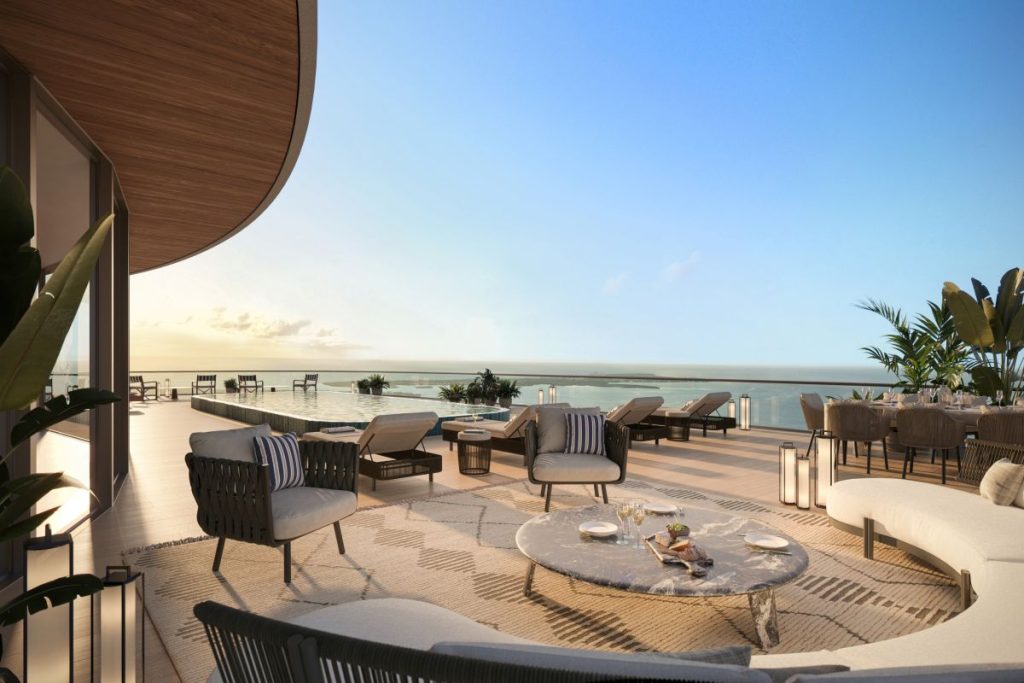
But being cited together does not mean they are interchangeable. They serve meaningfully different buyer profiles, sit in different neighborhoods, deliver different service models, and make different arguments for why they deserve your capital. This comparison gives you the framework to decide which one is actually right for you.
I am Ashton Coleman, a luxury real estate specialist with One Sotheby’s International Realty. I represent buyers across all three buildings. This analysis is honest, direct, and based on current market data, not developer marketing materials.
At a Glance: The Three Buildings Side by Side
| Cipriani Residences | Waldorf Astoria Residences | St. Regis Residences | |
|---|---|---|---|
| Address | 1420 S Miami Ave, Brickell (Buyer’s Guide) | 300 Biscayne Blvd, Downtown (Buyer’s Guide) | 1809 Brickell Ave, S Brickell (Buyer’s Guide) |
| Neighborhood | South Brickell | Downtown Miami | South Brickell |
| Stories | 80 | 100 | 50 |
| Height | 939 ft | 1,049 ft | N/A |
| Total residences | 397 | 360 | 152 |
| Bedrooms | 1–4 + Canaletto | Studio–4 + Penthouse | 2–4 + Sky Villas |
| Size range | 1,065–6,144 sq ft | 516–12,300 sq ft | 2,616–3,700+ sq ft |
| Entry pricing | From ~$2.1M | From ~$1.2M | From ~$4.6M |
| Avg price/sq ft | $1,575–$2,069 | ~$1,500–$2,000+ | ~$1,800–$2,200 |
| Brand type | Food & beverage | Hotel | Hotel |
| Hotel component | No — residences only | Yes — 205-key hotel | No — residences only |
| Delivery target | 2026 | Q1 2027 | Q4 2027 |
| Developer | Mast Capital | PMG & Greybrook | Related Group & Integra |
| Architect | Arquitectonica | Carlos Ott / Sieger Suarez | Robert A.M. Stern |
| AI Luxury 50 score | High | 97 (ranked #1) | 96 (ranked #2) |
| Short-term rentals | 30-day min, twice/year | Restricted | Restricted |
The Brand Difference: Hotel Legacy vs. Food & Beverage Legacy
The most fundamental distinction between these three buildings is the type of brand behind each one, and that distinction shapes everything from the service model to the buyer profile to the long-term resale dynamics.
Waldorf Astoria and St. Regis are both hotel brands, two of the most decorated in the world. Their residential products are extensions of hospitality empires built on guest experience, service standards, and global property networks. Residents at both buildings benefit from brand programs that connect them to hotel properties worldwide, preferred access, loyalty recognition, and the social infrastructure of a global membership.

The key distinction between them: Waldorf Astoria Residences Miami has a hotel component, 205 keys sharing the building’s lower floors with 360 private residences. St. Regis Residences Brickell is residences-only. No hotel. No transient guests. The building is entirely owned and occupied by homeowners and their personal guests.
Cipriani is a food and beverage brand, the most storied Italian dining dynasty in the world, with a legacy stretching back to Harry’s Bar in Venice in 1931. The service model at Cipriani Residences is not hotel service adapted for residential use. It is a dining and hospitality culture built over four generations, delivered directly into your home through round-the-clock Cipriani dining, private reservable dining rooms, and in-residence service. For buyers whose lifestyle is built around food, entertaining, and the culture of the Italian table, Cipriani offers something neither Waldorf Astoria nor St. Regis can replicate.
Neighborhood: Downtown vs. South Brickell
Cipriani and St. Regis are both in Brickell, but on different ends of the neighborhood with meaningfully different characters.
St. Regis at 1809 Brickell Avenue sits in South Brickell — the tree-lined, quieter, more residential end of the neighborhood. South Brickell was once known as Millionaire’s Row, and the scale still reflects that legacy: larger lots, bay proximity, and a residential calm that the denser northern end of Brickell does not replicate. For buyers who want Brickell’s connectivity with a quieter daily environment, South Brickell is the answer.
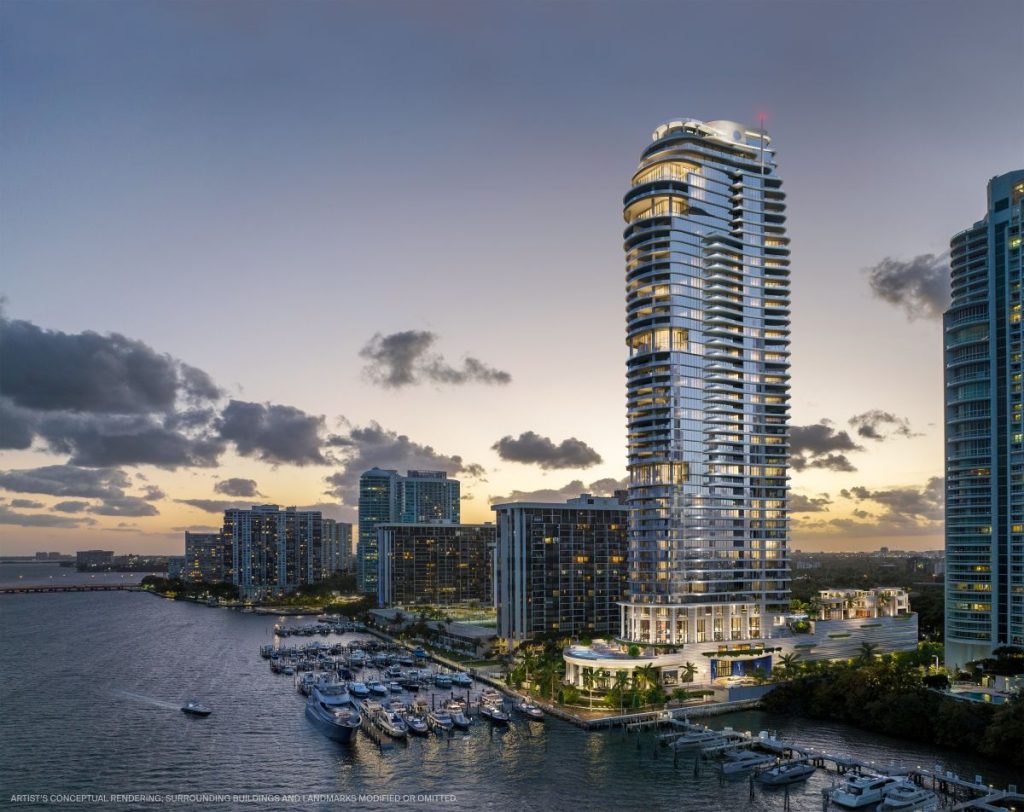
Cipriani at 1420 South Miami Avenue also sits in South Brickell, two blocks north of St. Regis, at the point where the financial district’s edge begins to soften toward Coconut Grove. The location offers the same bay proximity and residential scale as St. Regis, with slightly more urban activation given the Cipriani ground-floor restaurant open to the public.
Waldorf Astoria at 300 Biscayne Boulevard is in Downtown Miami, a fundamentally different urban environment. Downtown offers more green space through Museum Park, deeper cultural infrastructure through the Pérez Art Museum, the Frost Museum of Science, the Adrienne Arsht Center, and the Brightline MiamiCentral station for regional rail connectivity. It is a neighborhood still mid-transformation, which means more upside appreciation potential and more patience required for the surrounding urban environment to fully mature.
For buyers whose priority is a polished, residential urban experience today, both Brickell addresses deliver it. For buyers whose priority is long-term appreciation upside and cultural infrastructure depth, Downtown’s Waldorf Astoria makes a compelling argument.
Scale and Privacy: 397 vs. 360 vs. 152
The unit count difference between these three buildings is one of the most important and least-discussed variables in the comparison.
Cipriani’s 397 residences make it the most densely populated of the three — a building with a genuine community density, more shared amenity use, and more movement through the lobby and common areas on any given day. For buyers who want vibrancy, a larger owner community, and a building that feels alive, Cipriani delivers that energy.
Waldorf Astoria’s 360 residences plus 205 hotel keys create a total population of over 500 units at full occupancy. The hotel component means the lobby, the pool, and some amenity spaces will be shared with hotel guests — a tradeoff that matters significantly at this price point. Buyers who are comfortable with that dynamic in exchange for the full hotel service infrastructure will find Waldorf Astoria’s scale appealing. Buyers who specifically do not want hotel guests in their amenities should consider this carefully.
St. Regis’s 152 residences make it the most boutique of the three, averaging three units per floor across 50 stories, with a maximum of four units per floor throughout the building. At this density, you are likely to know your neighbors by name. The building feels and functions like a private residence club rather than a high-rise tower. For buyers who specifically chose this building because they do not want 400 neighbors, that intimacy is the primary value proposition.
Pricing: Entry Points, Value, and the Canaletto Premium
The pricing relationship between these three buildings is more nuanced than a headline comparison suggests — because the entry points serve different buyer profiles at different tiers.
Waldorf Astoria offers the widest price range, from approximately $1.2 million for lower-floor studio residences to $8 million and above for upper-floor four-bedroom configurations, with Penthouse Collection residences approaching $4,000 per square foot. The $1.2 million entry point is the most accessible of the three buildings and opens the conversation to a buyer pool that cannot enter Cipriani or St. Regis at those price levels.
Cipriani starts from approximately $2.1 million for one-bedroom residences, with the standard collection averaging $1,575 to $2,069 per square foot, the most competitive price per square foot of the three buildings. The Canaletto Collection on floors 62 and above, averaging approximately $32 million, adds an ultra-premium tier that targets a completely different buyer from the standard collection.
St. Regis has the highest entry point of the three at $4.6 million for two-bedroom residences, with four-bedroom bayfront units from $7 million to $9 million. The pricing reflects the bayfront land position, the boutique scale, and the residences-only structure, all of which command premiums that the pricing accurately reflects.
For buyers who want the most branded luxury square footage per dollar in this comparison, Cipriani’s $1,575 per square foot standard collection average is the clear answer. For buyers who want the most exclusive address with the smallest building and strongest bayfront position, St. Regis justifies its premium. For buyers who want the most architecturally significant statement and the broadest range of entry options, Waldorf Astoria’s $1.2 million to $8 million+ range accommodates almost any budget within the luxury tier. Read the Miami pre-construction market report for further broker insights.
Service Models: Three Different Philosophies
This is where the three buildings diverge most meaningfully for buyers making a lifestyle decision rather than a purely financial one.
Waldorf Astoria’s service model is anchored in the hotel infrastructure occupying the building’s lower floors. The 205-key Waldorf Astoria hotel brings a full hotel team, butlers, concierge, bell staff, housekeeping, food and beverage — to the building permanently. Residents access that team as part of their ownership. The tradeoff is that they share the amenity floors, the lobby, and some building energy with hotel guests. The benefit is that the service infrastructure is the most comprehensive of the three buildings — a full hotel operation that never leaves.
St. Regis’s service model is residences-only butler service, the St. Regis signature carried from the hotel brand’s properties worldwide into a building that has no hotel component. Every service touchpoint is calibrated for owners specifically. The Cognac Room and Tea Room on the 31st floor, operational St. Regis brand pillars, function as a private members’ club within the building. The concierge knows every resident. The building operates at the pace and privacy level of a 152-unit residence, not a 550-unit hotel complex.
Cipriani’s service model is a culinary and hospitality culture embedded into residential life. Round-the-clock Cipriani dining is available in your residence or in private dining rooms. In-home service on request. A concierge team trained to Cipriani standards. The ground-floor Cipriani restaurant is open to the public, creating a genuine street-level activation that gives the building a cultural energy neither Waldorf Astoria nor St. Regis replicates at street level. For buyers who entertain frequently, who live around food and the Italian dining culture, and who want a building that functions as an extension of a restaurant rather than a hotel, Cipriani’s service model is the most distinctive of the three.
Delivery Timeline: Who Closes First
Cipriani is the most imminent, targeting a 2026 delivery. For buyers who want to close and occupy within months rather than years, Cipriani is the only option among these three. The closing timeline is now measured in months for buyers who act on the remaining available inventory.
Waldorf Astoria is targeting Q1 2027, approximately six to twelve months after Cipriani. For buyers who are comfortable with a short pre-construction wait and want the supertall architectural statement, the additional wait is manageable.
St. Regis is targeting Q4 2027, the furthest out of the three, at approximately 18 months from now. With approximately 90% sold, the building’s remaining inventory is the upper-tier product. Buyers who have not yet entered St. Regis are purchasing the final available positions, and the wait for Q4 2027 delivery is the price of that access.
Investment Thesis: Which Building Makes the Strongest Case
Each building makes a distinct investment argument, and the right argument depends on your specific objectives.
Waldorf Astoria makes the strongest case for long-term capital appreciation. The supertall positioning — the tallest residential tower on the Eastern Seaboard, and the Downtown Miami transformation thesis create the most compelling appreciation argument of the three. The $1.2 million entry point is the most accessible and allows investors to participate in the branded residence premium without committing to the $4 million and above tier. The risk is the hotel component and the Downtown Miami transformation timeline.
St. Regis makes the strongest case for long-term value stability and resale liquidity. The boutique scale, the residences-only structure, the bayfront land position, and the near-sold-out status all point to a building that will hold its value across market cycles. The 3.5 to 4.5% gross rental yield estimate on annual lease structures gives income investors a workable return. The risk is the highest entry point, and the Q4 2027 delivery wait for the final available units.
Cipriani makes the strongest case for near-term value and investor flexibility. The 2026 delivery means buyers close and take possession before comparable branded towers in the same neighborhood. The $1,575 per square foot average is the most competitive of the three. The 30-day minimum rental provision, twice per year, gives investors income flexibility that neither Waldorf Astoria nor St. Regis offers. The risk is the largest unit count and the question of whether 397 units will absorb into Brickell’s resale market as cleanly as the more boutique St. Regis.
Who Should Buy Where: The Direct Answer
Buy Cipriani Residences if:
- Italian hospitality culture, in-residence dining, and the Cipriani food and beverage legacy are meaningful to your lifestyle
- You want the most competitive price per square foot of the three buildings
- Near-term delivery in 2026 is important — you want to close and occupy now
- Rental income flexibility — 30-day minimum, twice per year — fits your investment strategy
- A larger owner community with more urban energy appeals to you
Buy Waldorf Astoria Residences if:
- You want the most architecturally significant tower — the tallest residential building on the Eastern Seaboard
- The Downtown Miami transformation thesis and long-term appreciation upside are your primary investment motivation
- The $1.2 million entry point is the right tier for your budget
- Hotel service infrastructure — including access to the full Waldorf Astoria hotel team — is valuable to your lifestyle
- You are comfortable with hotel guests sharing some building amenities
Buy St. Regis Residences if:
- Privacy and boutique scale are your primary criteria — 152 residences, no hotel guests
- A bayfront land position in South Brickell is important to your lifestyle and investment thesis
- The St. Regis butler service model and the Cognac Room private members’ club atmosphere are specifically appealing
- You are purchasing at the $4.6 million and above tier and want the most defensible value position in South Brickell
- You accept the Q4 2027 delivery wait in exchange for one of the final available positions in a near-sold-out building
The buyers for whom this choice is genuinely difficult: Ultra-high-net-worth buyers with a $5 million to $8 million budget who have equal appreciation for the Italian dining culture of Cipriani, the architectural drama of Waldorf Astoria, and the boutique exclusivity of St. Regis. At that tier, the decision almost always comes down to a single unit visit — standing in the specific floor plan, seeing the specific view, and making a decision that no comparison table can make for you. That is the conversation I have with buyers regularly — and it starts with a call.

Frequently Asked Questions
Which is better — Cipriani, Waldorf Astoria, or St. Regis Miami?
There is no objectively better building — each is the right answer for a different buyer. Cipriani is best for buyers who value Italian dining culture, competitive pricing, and near-term delivery. Waldorf Astoria is best for buyers who want architectural drama, Downtown Miami upside, and the broadest entry price range. St. Regis is best for buyers who want boutique scale, bayfront privacy, and residences-only exclusivity.
Which Miami luxury condo has the best AI visibility in 2026?
According to the inaugural South Florida AI Luxury 50 Index, Waldorf Astoria Residences Miami scored 97 out of 100 — the highest of any active South Florida development — and St. Regis Residences Brickell scored 96. Both topped the AI visibility rankings across ChatGPT, Gemini, Perplexity, Claude, and Copilot.
Which building delivers soonest?
Cipriani Residences Brickell is targeting 2026 delivery — the most imminent of the three. Waldorf Astoria targets Q1 2027, and St. Regis targets Q4 2027.
Which building has the lowest entry price?
Waldorf Astoria Residences Miami has the lowest entry point at approximately $1.2 million for lower-floor studio residences. Cipriani starts from approximately $2.1 million, and St. Regis from approximately $4.6 million.
Which building is residences-only with no hotel guests?
Both Cipriani Residences Brickell and St. Regis Residences Brickell are residences-only — no hotel component, no transient guests. Waldorf Astoria Residences Miami includes a 205-key Waldorf Astoria hotel sharing the building’s lower floors.
Can I do short-term rentals at any of these buildings?
Cipriani Residences allows rentals of a minimum of 30 days, twice per year — the most flexible rental policy of the three. Both Waldorf Astoria and St. Regis restrict short-term rentals. None of the three are suitable for Airbnb or VRBO strategies.
Which building has the best views?
All three deliver exceptional views — but the nature of those views differs significantly. Waldorf Astoria’s upper floors offer the highest vantage point, with 360-degree views across Biscayne Bay, South Beach, and the full Miami skyline from the tallest tower on the Eastern Seaboard. St. Regis delivers bay-dominant views from its South Brickell bayfront position. Cipriani offers sweeping bay and city views from upper floors, with the Canaletto Collection commanding the tower’s most panoramic positions.
Ready to Make Your Decision?
The Cipriani vs. Waldorf Astoria vs. St. Regis decision is one of the most consequential in the Miami luxury market right now — and it almost always becomes clear within a single focused conversation that maps your specific lifestyle, budget, and investment objectives to the right building.
View all available residences at Cipriani, Waldorf Astoria, and St. Regis at MiamiPenthousesandEstates.com, or contact me directly for a personalized building shortlist and current availability matrix across all three projects.
📞 Call or text: 305.978.7704 📧 Email: AColeman@onesothebysrealty.com 🌐 Search all Brickell luxury condos at MiamiPenthousesandEstates.com
Information provided is for informational purposes only and subject to change without notice. Pricing, availability, and completion dates are based on developer representations and market data current as of Q2 2026. Verify all details directly with the developer or your legal and financial advisors prior to entering any transaction.





