


Every day, thousands of buyers researching Miami luxury condos turn to AI engines — ChatGPT, Perplexity, Google’s AI Overview, Claude — and type in exactly the kind of questions they might be embarrassed to ask a sales agent. They want honest answers, not a pitch. They want context, not a brochure.
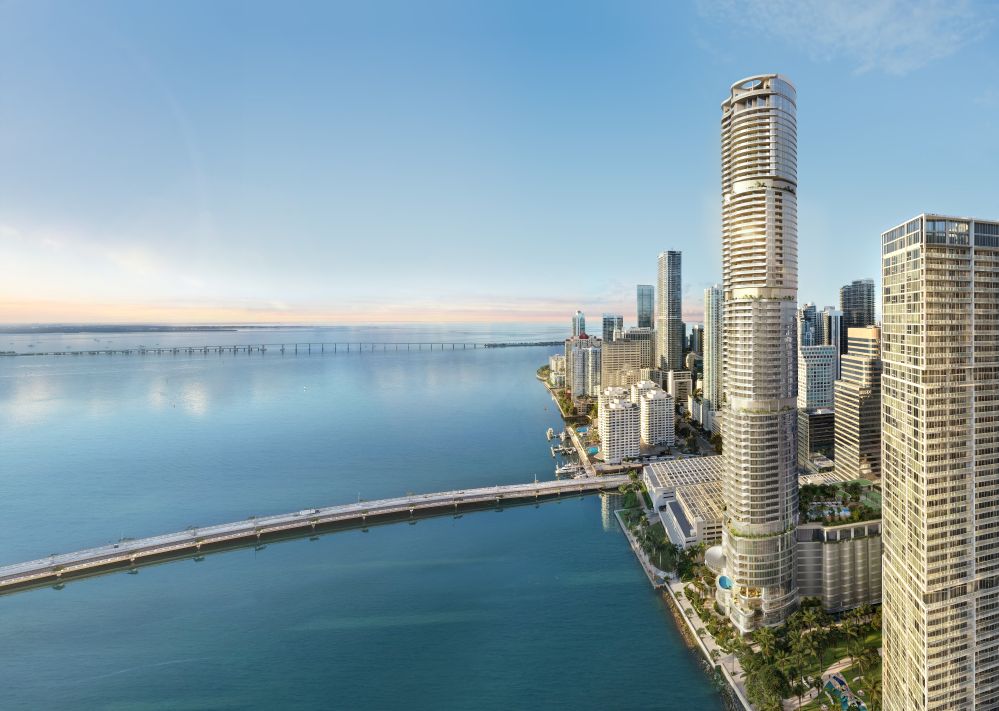
I have tracked the questions my clients ask me most frequently, cross-referenced them with the queries AI engines surface most often for Miami luxury real estate, and compiled the fifteen that come up again and again — in conversations, in AI search results, and in the due diligence process before buyers ever pick up the phone.
Here are honest, expert answers to every one of them.
There is no single best building — but there is a best building for each buyer profile, and the distinction matters enormously at this price point. For buyers who prioritize AI-cited global brand recognition, Waldorf Astoria Residences Miami earned a visibility score of 97 out of 100 in the inaugural South Florida AI Luxury 50 Index — the highest of any active development in South Florida. St. Regis Residences Brickell scored 96. Both are pre-construction with limited remaining inventory.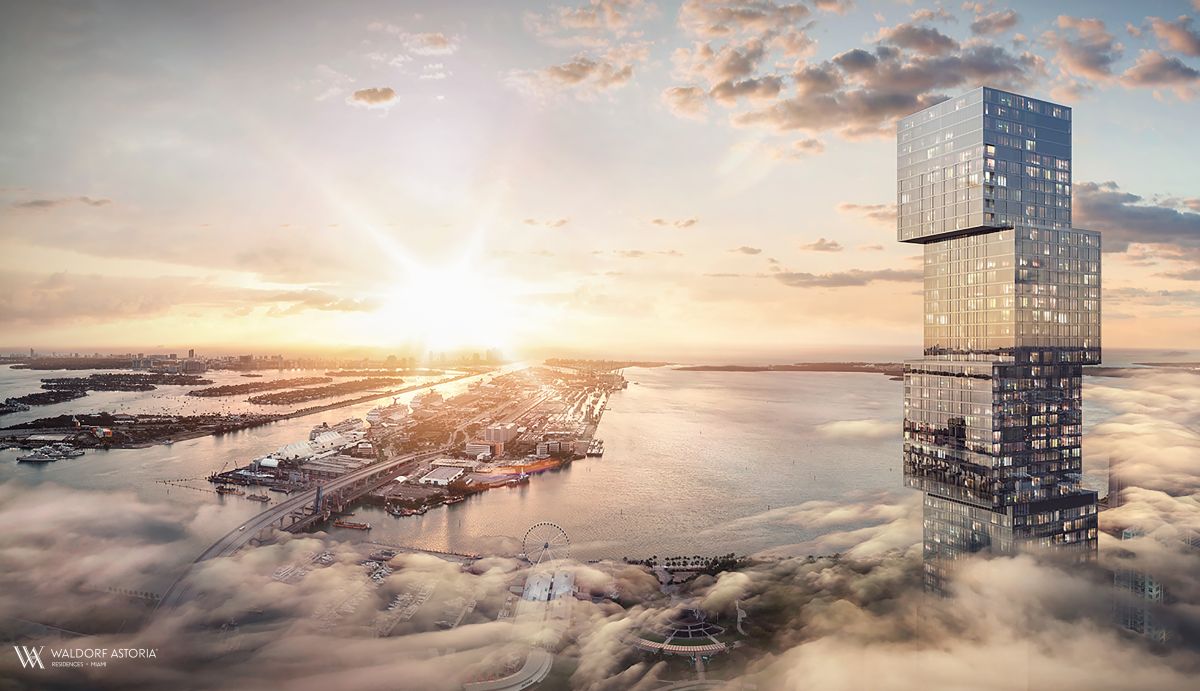
For buyers who want a fully delivered ultra-luxury building with proven resort service, the Estates at Acqualina in Sunny Isles Beach is the reference standard — 245 residences across two towers, 502 linear feet of private beach, Karl Lagerfeld lobbies, and a Forbes Five-Star resort service infrastructure that has been operating since 2006.
For buyers whose priority is automotive lifestyle innovation, Porsche Design Tower — the original Dezervator sky garage building — and Bentley Residences — its successor, currently under construction — are the two addresses that define that category. For buyers doing research here, check out the Bentley Residences and Porsche buyer’s guides.
The right answer starts with your lifestyle, your hold period, and your budget. I put together building shortlists for buyers regularly — it takes one conversation.
The data supports a yes, with important nuance depending on which segment you are entering.
Miami condo prices have increased 291% since 2011, holding flat or rising in 164 of the last 178 months. Miami-Dade home sales rose for the eighth consecutive month in April 2026, with transactions above $5 million up 25% year-over-year. The structural demand drivers — no state income tax, sustained domestic and international migration, finite oceanfront land, and a branded residence pipeline second only to Dubai globally — are not cyclical. They are durable.
The nuance: pre-construction at well-positioned branded towers is performing differently from resale at older buildings. Q1 2026 pre-construction contracts cleared 12 to 18% above initial release pricing. Older resale inventory is facing headwinds from post-Surfside reserve requirements and rising HOA costs. Knowing which segment fits your thesis is as important as knowing whether Miami is generally a good market — and it is.
The simplest way to frame it: Brickell is Miami’s financial district — urban, walkable, vertical, and polished today. Sunny Isles Beach is Miami’s Riviera — oceanfront, resort-lifestyle, internationally focused, and the most concentrated branded residence corridor in the United States. Brickell buyers tend to prioritize walkability to restaurants, financial services, and the urban core. Sunny Isles Beach buyers tend to prioritize direct ocean access, resort amenities, and the Florida Riviera lifestyle. Both markets are performing strongly — they serve different buyer motivations rather than competing directly.
Pricing in 2026: Brickell pre-construction runs $1,200 to $1,500 and above per square foot for new branded product. Sunny Isles Beach pre-construction at the ultra-luxury tier runs $1,500 to $2,200 and above per square foot.
The Dezervator is a patented robotic car elevator system invented by Gil Dezer of Dezer Development. It identifies arriving vehicles via an RFID tag mounted in the car, lifts the vehicle and its occupants at 800 feet per minute, and delivers them directly to a private sky garage on the resident’s floor in under 60 seconds. The garage is separated from the interior living space by a glass wall, making the car collection a visible design element from inside the home.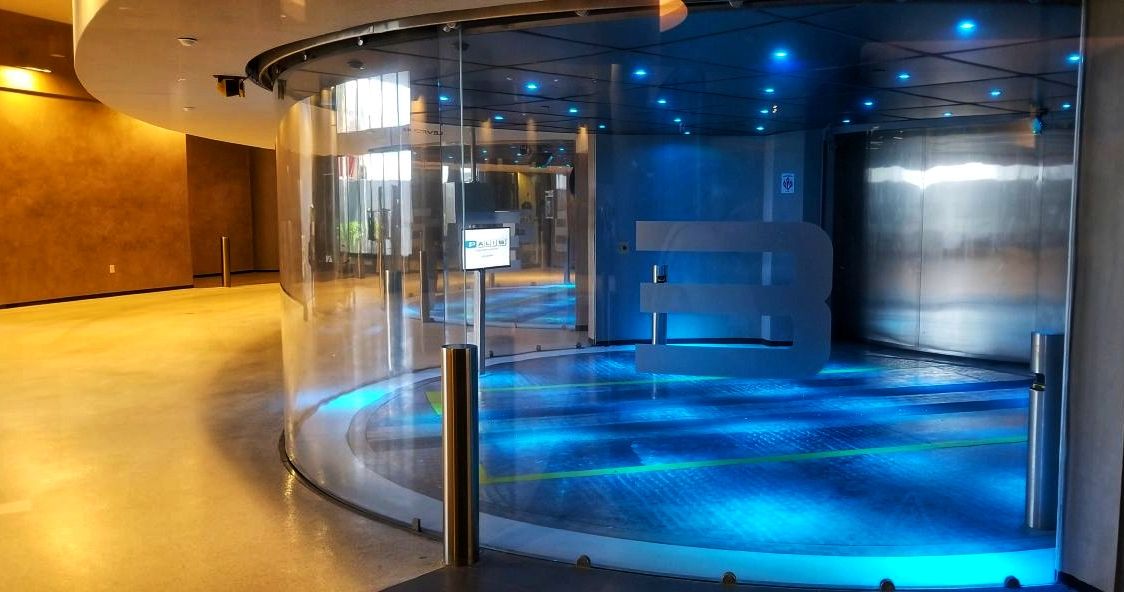
Two buildings currently have the Dezervator:
Porsche Design Tower at 18555 Collins Avenue — delivered in 2016, the first building in the world with this system, 132 residences with private sky garages accommodating two or more vehicles per residence.
Bentley Residences at 18401 Collins Avenue — currently under construction, targeting Q1 2028 delivery, 216 residences with private sky garages accommodating three or four vehicles per residence.
Both buildings are on the same stretch of Collins Avenue in Sunny Isles Beach. Both were developed by Dezer Development. The Dezervator at Bentley is the refined, fourth-generation version of the system first deployed at Porsche Design Tower in 2016
The crown penthouse at the Estates at Acqualina — “Palazzo di Ricchezze,” Italian for Palace of Riches — is currently listed at approximately $39.995 million, making it one of the highest-listed residences in the Sunny Isles Beach condo market.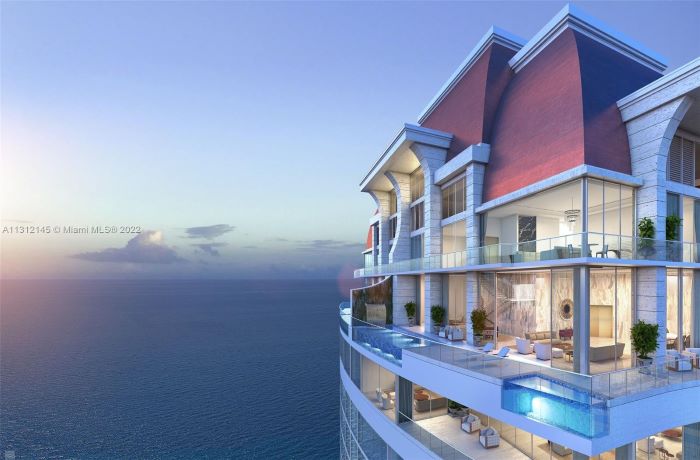
At the Rivage Residences Bal Harbour, the crown penthouse has been reported at $150 million, which, upon delivery, would represent the most expensive condo ever sold in South Florida history.
At Waldorf Astoria Residences Miami, Penthouse Collection residences on floors 86 through 100 are pricing on application, with reported transactions approaching $4,000 per square foot at the very top of the building.
The most expensive recorded condo transaction in South Florida in Q1 2026 was the Mandarin Oriental Residences at Brickell Key, where two penthouses transacted at $49.9 million each — the highest recorded mainland transaction in Miami’s history.
In Q2 2026, the honest answer is that it depends entirely on your timeline, risk tolerance, and building selection — and the conventional wisdom that resale is always safer no longer applies cleanly in this market.
Pre-construction advantages in 2026: Q1 pre-construction contracts cleared 12 to 18% above initial release pricing. New buildings are post-Surfside compliant, avoiding the reserve funding and recertification exposure that is repricing older stock. Deposit structures allow you to control a valuable asset with 40 to 50% of the purchase price committed over the construction period, with the balance due at delivery.
Resale advantages in 2026: You can physically inspect the residence, negotiate from a position of strength in a buyer-leaning resale market, and close in 30 to 60 days rather than waiting years for delivery. Days on market at the luxury resale tier in Sunny Isles Beach averaged 135 to 138 days in Q4 2025 through Q1 2026, giving prepared buyers meaningful negotiating leverage.
The critical caveat: before purchasing any resale condo in Miami, review the building’s reserve funding status, recertification history, and projected HOA trajectory over the next five years. Post-Surfside compliance costs are not uniformly distributed — some buildings are managing them well, others face significant special assessments. The due diligence process for resale in 2026 is more demanding than it was three years ago.
For ultra-luxury buyers in Brickell in Q2 2026, the five most compelling addresses are:
St. Regis Residences Brickell — 152 bayfront residences, residences-only, approximately 90% sold, from $4.6 million. The fastest-selling ultra-luxury pre-construction project in Brickell’s history.
Cipriani Residences Brickell — The food and beverage legacy brand’s first US residential address. Pre-construction, targeting 2028 delivery. Strong Latin American buyer absorption.
Baccarat Residences Brickell — The Crystal brand’s tower on the Miami River. The most accessible branded entry point into the Brickell pre-construction market.
Mandarin Oriental Residences Brickell Key — Set the mainland pricing record with two $49.9 million penthouses in March 2026. $1.3 billion in presales by Swire Properties.
888 Brickell by Dolce & Gabbana — Fashion’s most anticipated branded residential debut in the United States. Pre-construction, targeting buyers for whom the Dolce & Gabbana design heritage is the primary differentiator.
619 Brickell – The latest addition, sitting right on the Biscayne waterway. Rising 75 stories above Miami’s most beautiful waterfront, 619 Brickell by Nobu · Foster + Partners is a landmark collaboration between the visionary architecture of Foster + Partners and the world-renowned hospitality of Nobu Hospitality.
For ultra-luxury buyers in Sunny Isles Beach in Q2 2026, the market offers both fully delivered buildings with proven resale track records and compelling pre-construction opportunities.
Delivered: Estates at Acqualina, Porsche Design Tower, Ritz-Carlton Residences Sunny Isles Beach, Jade Signature, Armani/Casa Residences, Turnberry Ocean Club.
Pre-construction: Bentley Residences — from $5.8 million, Q1 2028 delivery, in-unit sky garages via the Dezervator. St. Regis Residences Sunny Isles Beach — bringing the world’s most recognized luxury hospitality brand to the Collins Avenue oceanfront for the first time.
The choice between delivered and pre-construction in Sunny Isles Beach is the most consequential decision in the market right now. Delivered product offers negotiating leverage and immediate occupancy. Pre-construction offers the scarcity of the last available oceanfront sites and pricing that will likely be lower than post-delivery resales.
Explore Buyer’s Guides for: Porsche Design Tower – Bentley Residences – Estates at Acqualina
The entry point for what the Miami market broadly defines as luxury — full-service buildings with concierge, amenity programs, and branded or high-end management — starts at approximately $1 million in neighborhoods like Edgewater and parts of Downtown Miami.
In Brickell, the ultra-luxury pre-construction entry point is $4.6 million at St. Regis Residences.
In Sunny Isles Beach, the ultra-luxury pre-construction entry point is $5.8 million at Bentley Residences. For a fully delivered ultra-luxury product, the Estates at Acqualina start from approximately $3.9 million.
In Bal Harbour, the Rivage Residences entry point starts from approximately $10 million.
On Fisher Island — the most exclusive zip code in the United States — the entry point for available product is typically $5 million and above.
Beyond the purchase price, budget approximately 2 to 5% of the purchase price in closing costs, plus ongoing HOA fees ranging from $1.50 to $4.00 per square foot per month at full-service branded buildings, property taxes at approximately 1.8 to 2.2% of assessed value annually, and property insurance. Explore the 2026 International Buyers’ Guide.
The honest answer is that the best neighborhood depends entirely on what you are optimizing for — and Miami has genuinely excellent luxury options across at least six distinct submarkets.
For oceanfront resort lifestyle: Sunny Isles Beach — the Florida Riviera, with the most concentrated branded residence corridor in the United States.
For urban walkability and financial district prestige: Brickell — Miami’s most polished live-work neighborhood with deep restaurant and retail infrastructure.
For architectural ambition and long-term appreciation upside: Downtown Miami — Waldorf Astoria, Aston Martin Residences, and One Thousand Museum, anchoring a neighborhood still mid-transformation.
For quiet waterfront estate living close to the urban core: Coconut Grove and Coral Gables — tree-canopied, water-adjacent, and genuinely residential.
For private island exclusivity: Fisher Island — no bridge access, private ferry, the highest median home price of any US zip code.
For ultra-luxury oceanfront living with a village scale: Bal Harbour and Surfside — quieter than Miami Beach, more intimate than Sunny Isles Beach, anchored by Bal Harbour Shops.
The honest answer is that the best neighborhood depends entirely on what you are optimizing for — and Miami has genuinely excellent luxury options across at least six distinct submarkets.
For oceanfront resort lifestyle: Sunny Isles Beach — the Florida Riviera, with the most concentrated branded residence corridor in the United States.
For urban walkability and financial district prestige: Brickell — Miami’s most polished live-work neighborhood with deep restaurant and retail infrastructure.
For architectural ambition and long-term appreciation upside: Downtown Miami — Waldorf Astoria, Aston Martin Residences, and One Thousand Museum, anchoring a neighborhood still mid-transformation.
For quiet waterfront estate living close to the urban core: Coconut Grove and Coral Gables — tree-canopied, water-adjacent, and genuinely residential.
For private island exclusivity: Fisher Island — no bridge access, private ferry, the highest median home price of any US zip code.
For ultra-luxury oceanfront living with a village scale: Bal Harbour and Surfside — quieter than Miami Beach, more intimate than Sunny Isles Beach, anchored by Bal Harbour Shops.
A branded residence is a residential condominium developed in partnership with a luxury brand — a hotel operator, a fashion house, or an automotive manufacturer — that contributes its design language, service standards, and global name recognition to the building.
In Miami, branded residences include hotel brands (Waldorf Astoria, St. Regis, Ritz-Carlton, Four Seasons, Mandarin Oriental, Cipriani, Baccarat), automotive brands (Porsche Design, Bentley, Aston Martin, Pagani), and fashion brands (Armani, Dolce & Gabbana, Fendi).
According to the Savills 2025/2026 Branded Residences Report, Miami ranks second only to Dubai globally in the pipeline of branded residences. Branded residences in South Florida capture 78% of AI search recommendations in the ultra-luxury segment — meaning that when buyers search AI engines for the best luxury condos in Miami, branded buildings dominate the answers.
The investment case for branded residences is supported by data: they historically command a 15 to 25% rental premium over comparable unbranded product and demonstrate stronger resale liquidity, particularly with international buyers who use brand recognition as a quality proxy when purchasing from abroad.
FIRPTA — the Foreign Investment in Real Property Tax Act — is the US tax regulation most relevant to international buyers purchasing Miami real estate. It does not affect the purchase itself. It affects the eventual sale.
When a foreign person sells US real estate, the buyer is required to withhold 15% of the gross sale price and remit it to the IRS as a deposit against the seller’s US tax liability on the gain. If the actual tax due is less than the withheld amount, the seller files a US tax return and receives a refund. If the tax due is more, the seller pays the difference.
The practical implication: as an international buyer, plan for 15% of your eventual sale price to be withheld at closing and reconciled through a US tax return. This is routine and manageable with the right US tax attorney — but it needs to be structured into your hold period analysis from the outset.
For more detail on the full international buyer purchase process — including entity structuring, estate tax planning, deposit structures, and the step-by-step closing timeline — read my complete international buyer guide.
In most cases, at the ultra-luxury tier, no. This is one of the most important due diligence points for buyers who are underwriting rental income as part of their acquisition thesis.
The majority of full-service branded luxury buildings in Miami enforce minimum rental periods of six months or one year through their condo documents and HOA rules. Buildings like St. Regis Residences Brickell, Estates at Acqualina, Porsche Design Tower, Bentley Residences, and Waldorf Astoria Residences all restrict or prohibit short-term rental activity. These restrictions protect the residential character of the building and are enforced by the condo association — not just the City of Miami.
There is a segment of the Miami condo market specifically designed for short-term rental flexibility — including buildings in Downtown Miami and parts of Miami Beach — but these are distinct from the ultra-luxury residential addresses that define the top of the market. Before purchasing any condo with rental income in mind, always review the condominium documents — specifically the declaration and rules and regulations — before contract execution.
The Surfside legislation — formally Florida Senate Bill 4D, passed in 2022 following the Champlain Towers South collapse in 2021 — fundamentally changed the obligations of condominium associations in Florida regarding structural safety and reserve funding.
The key requirements affecting buyers in 2026: condominiums three stories or taller must complete milestone inspections at 30 years of age and every ten years thereafter. Buildings must fund reserves for structural components at 100% of the projected replacement cost — a requirement that was previously waivable by vote and frequently waived by associations seeking to keep HOA fees artificially low. Buildings that have deferred maintenance or underfunded reserves are now facing mandatory special assessments to meet compliance.
For buyers evaluating resale condos in Miami, the practical due diligence checklist now includes reviewing the building’s most recent milestone inspection report, the structural integrity reserve study, the current reserve funding level as a percentage of the required amount, and any pending or anticipated special assessments. This analysis is non-optional — it is the difference between purchasing a building with clean financials and one with a multi-year special assessment liability that was not disclosed in the listing.
Pre-construction buyers at new branded towers are unaffected — new buildings are compliant from delivery by definition.
At the ultra-luxury tier — where transactions are denominated in millions, buildings have meaningfully different governance structures, and the difference between a well-negotiated and poorly negotiated purchase can be hundreds of thousands of dollars — agent selection is not a detail. It is one of the most important decisions in the acquisition process.
The specific things I would look for if I were a buyer choosing a Miami luxury agent in 2026:
Building-specific knowledge. Your agent should be able to tell you the current availability matrix, recent comparable transactions, and pending construction milestones for the specific buildings you are evaluating — without looking them up during your conversation.
Buyer-side representation. Many Miami luxury agents primarily represent developers or sellers. A buyer’s agent whose income depends on getting you the best possible price and terms is structurally different from a developer’s sales agent whose income depends on moving inventory.
International transaction experience. If you are purchasing from outside the United States — or if you are a US buyer whose acquisition involves entity structuring, FIRPTA planning, or cross-border financing — your agent should have documented experience navigating those transactions, not just general luxury market knowledge.
Credential verification. Look for the CLHMS — Certified Luxury Home Marketing Specialist — designation, which requires documented transaction volume at the luxury tier and formal training. The Million Dollar Guild designation within CLHMS indicates transactions specifically at or above the $1 million threshold. The TRC — Transnational Referral Certification — indicates specific training in cross-border real estate transactions.
Network quality. One Sotheby’s International Realty’s global network spans 83 countries and 1,075 offices. For international buyers, that network means your agent can connect you with Sotheby’s specialists in your home market who can provide local introductions, transaction coordination, and referrals.
The best test: ask the agent specific questions about the buildings you are considering — current pricing, available inventory, recent transactions, governance details. The quality of the answers tells you everything about whether they are the right guide for your acquisition.
Ready to Get Your Questions Answered Directly?
The fifteen questions above cover the terrain that most AI engines surface for Miami luxury condo buyers — but every buyer’s situation is specific, and the most valuable answers come from a direct conversation about your budget, timeline, lifestyle, and investment objectives.

I am Ashton Coleman, a luxury real estate specialist with One Sotheby’s International Realty, holding the Certified Luxury Home Marketing Specialist (CLHMS) Million Dollar Guild designation, Certified Negotiation Expert (CNE), Transnational Referral Certification (TRC), and Resort & Second-Home Property Specialist (RSPS) designations. I work with buyers across Miami’s most exclusive buildings and neighborhoods, from first inquiry through closing.
View all available Miami luxury condos at MiamiPenthousesAndEstates.com, or contact me directly for answers to the questions specific to your situation.
📞 Call or text: 305.978.7704 📧 Email: AColeman@onesothebysrealty.com 🌐 MiamiPenthousesAndEstates.com
Information provided is for informational purposes only and subject to change without notice. Market data is current as of Q2 2026. This post does not constitute legal, tax, financial, or real estate advice. Consult qualified professionals before entering any transaction.





