


The most common question I hear from buyers who are new to Miami — and many who have been looking for months — is not “which building should I choose?” It is a step earlier than that: should I be looking at condos at all, or should I be looking for a house?
In most US markets, this question has a reasonably predictable answer based on price point, lifestyle, and family situation. In Miami’s luxury market, it is genuinely more complex — because the condo product available at $3 million, $5 million, and $10 million in Miami competes directly with the single-family home product in terms of square footage, privacy, amenities, and even waterfront access in ways that simply don’t exist in most other cities. And the tax, maintenance, and lifestyle tradeoffs between the two formats are more consequential here than anywhere else in Florida.
This guide gives you the honest framework. Not a recommendation — the right answer depends entirely on your specific situation — but the accurate comparison across every dimension that matters, so you can make the decision with complete information rather than assumptions assembled from two very different markets.
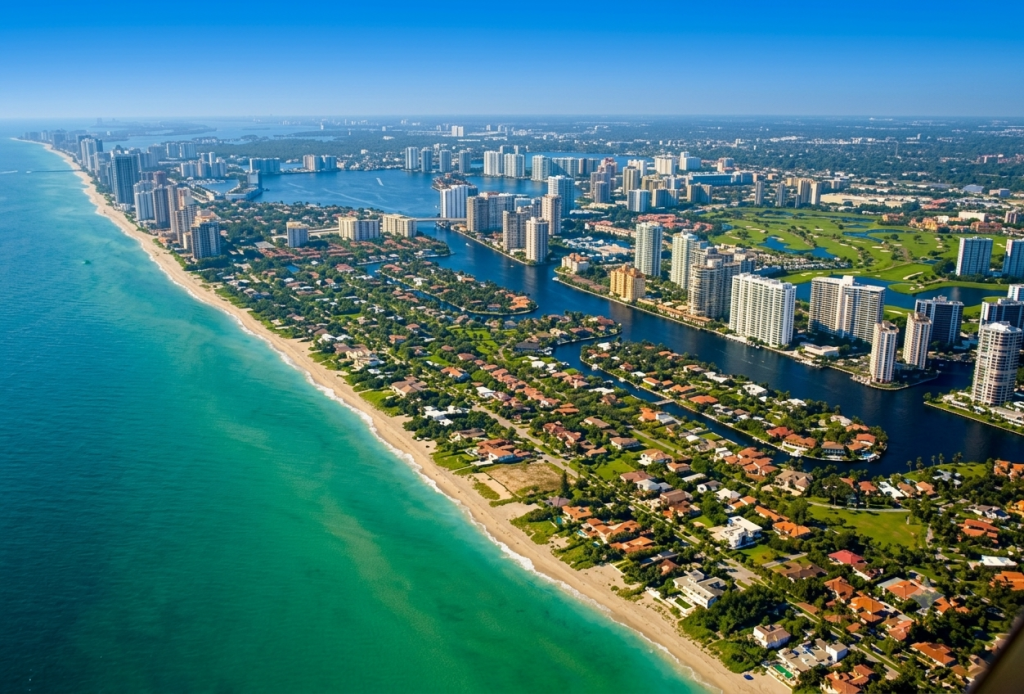
The Fundamental Difference: What You Own and What You Share
Before any lifestyle or investment comparison, the legal and structural distinction between owning a condominium and owning a single-family home is the foundation on which everything else rests.
In a condominium, you own your individual unit — the interior airspace and everything within it — plus an undivided share of the common elements: the lobby, the pool, the amenity floors, the structure of the building itself. Your neighbors’ decisions about how the building is managed, maintained, and financed directly affect your ownership experience and your financial exposure. The condominium association makes binding decisions about reserve funding, special assessments, rental restrictions, and renovation policies that you live with, whether you voted for them or not. The post-Surfside legislative requirements — mandatory reserve funding, milestone inspections, structural integrity reserve studies — have added new financial obligations to condo ownership in Florida that are still working their way through the system for older buildings.
In a single-family home, you own the land, the structure, and everything on the property. Your neighbors’ decisions don’t govern your daily life. You make every maintenance decision, bear every maintenance cost, and control every aspect of how the property is managed and presented. That autonomy is the primary attraction of single-family ownership for buyers who have lived in condominiums elsewhere and found the association governance model constraining.
The practical implication: a condo buyer is buying into a community with shared governance. A single-family buyer is buying autonomy. Both have real costs — the condo buyer’s HOA dues fund services and amenities they couldn’t otherwise afford individually; the single-family buyer pays for maintenance, landscaping, pool service, and security out of pocket, often at a higher total cost than a comparable HOA fee, without the organized infrastructure a well-run building association provides.
Cost of Ownership: The Full Picture
The most common mistake buyers make when comparing a $3 million condo to a $3 million single-family home is comparing only the purchase price. The total annual cost of ownership often diverges more dramatically than the purchase price difference suggests.
Condominium — typical annual carrying costs at $3M:
- HOA dues: $1,500 to $5,000 per month, depending on building, amenities, and unit size — $18,000 to $60,000 annually
- Miami-Dade property taxes: approximately 1.1% to 1.5% of assessed value — $33,000 to $45,000 annually at $3M
- Insurance: typically lower than single-family at comparable value, since the association’s master policy covers the structure — $3,000 to $8,000 annually for a unit-owner policy
- Special assessments: variable, but older buildings with underfunded reserves carry meaningful exposure — budget $0 to $50,000+ annually depending on building age and financial health, especially post-Surfside legislative requirements.
Single-family home — typical annual carrying costs at $3M:
- HOA dues (if applicable): many Miami luxury single-family neighborhoods have no HOA or minimal HOA — $0 to $5,000 annually
- Miami-Dade property taxes: same rate as condo — $33,000 to $55,000 annually
- Insurance: significantly higher than condo — wind, flood, and homeowners combined at $15,000 to $40,000+ annually, depending on location, age, and flood zone
- Maintenance, landscaping, pool service, pest control: $30,000 to $80,000 annually for a well-maintained $3M property
- Security (if not in a gated community): $0 to $30,000+ annually
The honest summary: a $3 million condo in a well-run building with HOA dues of $3,000 per month typically has lower total carrying costs than a $3 million single-family home — primarily because insurance on a house in South Florida has become dramatically more expensive than most buyers from other states anticipate. A single-family buyer who has been paying $8,000 annually for homeowner’s insurance in the Northeast and arrives in Miami expecting a similar figure will find quotes of $20,000 to $40,000 or more for comparable coverage on a waterfront or impact-exposed property.
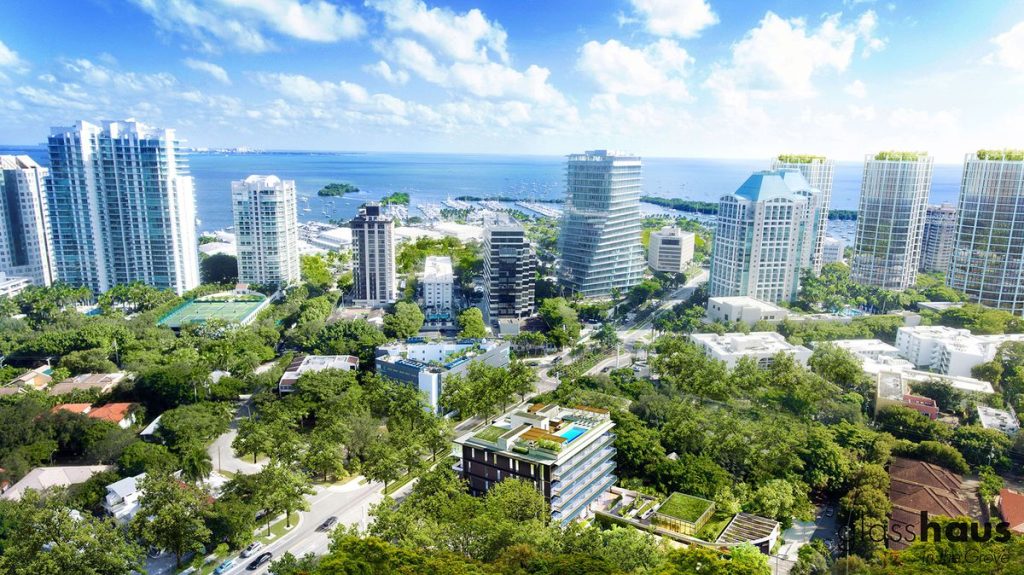
Privacy: The Condo Misconception
The most common assumption buyers bring to this comparison is that single-family homes offer more privacy than condominiums. In Miami’s luxury market, that assumption is often wrong — and sometimes dramatically reversed.
A buyer who purchases a half-floor residence at One Thousand Museum has two neighbors on their floor. Private elevator access directly to their unit. No shared corridors. A dedicated lobby team that controls building access. Views in every direction with no adjacent building at the same level. Their daily experience of “neighbors” is two people they may never encounter on an average day.
A buyer who purchases a $3 million single-family home in Miami Shores or Coconut Grove has neighbors immediately adjacent on both sides, separated by a fence and whatever landscaping a standard residential lot accommodates. The neighborhood is walkable, human-scaled, and community-oriented — which is a feature for some buyers and a privacy limitation for others.
The luxury condo product at the upper tier — Fisher Island, the Palazzo buildings, Grove at Grand Bay, Rivage, FENDI Château — offers a level of physical security infrastructure, controlled access, and neighbor-count management that most single-family neighborhoods cannot replicate outside of a very small number of gated communities. For buyers whose privacy requirement is the highest priority, the right product is often a boutique luxury tower rather than a house on a residential street.
The inverse is also true. A buyer who wants to move from their ground-floor door to their car without a lobby, an elevator, and a parking attendant as intermediate steps will find single-family living more suited to their daily rhythm than any condominium building, regardless of how well-run and private the building is.
Schools: The Clearest Decision Driver
For buyers with school-age children, the school question often resolves the condo-versus-house decision more definitively than any other factor — because the school options available from a given address depend on where the address is, not on whether it is a condo or a house.
The single-family neighborhoods with the strongest school ecosystems in Miami-Dade luxury real estate are Coconut Grove (Ransom Everglades, Carrollton, Saint Hugh), Coral Gables (Coral Gables Preparatory, Coral Gables Senior High, Gulliver Prep nearby), Miami Shores (Miami Shores Elementary, Barry University adjacent, Cushman School nearby), and Key Biscayne (Key Biscayne K–8, Ransom Everglades accessible by causeway). All of those markets are predominantly single-family, which means buyers who prioritize those specific school ecosystems are usually buying a house, not a condo.
The condominium-dominant luxury markets — Brickell, Downtown Miami, Sunny Isles Beach, Bal Harbour — have thinner on-neighborhood school infrastructure. Brickell buyers often rely on private schools that require a commute. Sunny Isles Beach buyers frequently use private schools in Aventura or North Miami Beach. Bal Harbour has no school within its municipal limits at all.
For buyers without school-age children — or buyers whose children are already in private schools that serve students regardless of home address — this distinction is irrelevant to the decision. For buyers whose children’s school is a primary decision driver, the school ecosystem question often points directly toward a single-family neighborhood and away from the tower-centric markets entirely.
Waterfront Access: Condos Win on Views, Houses Win on Boats
Miami’s luxury market offers waterfront access in both condo and single-family formats — but the nature of that access is meaningfully different between the two.
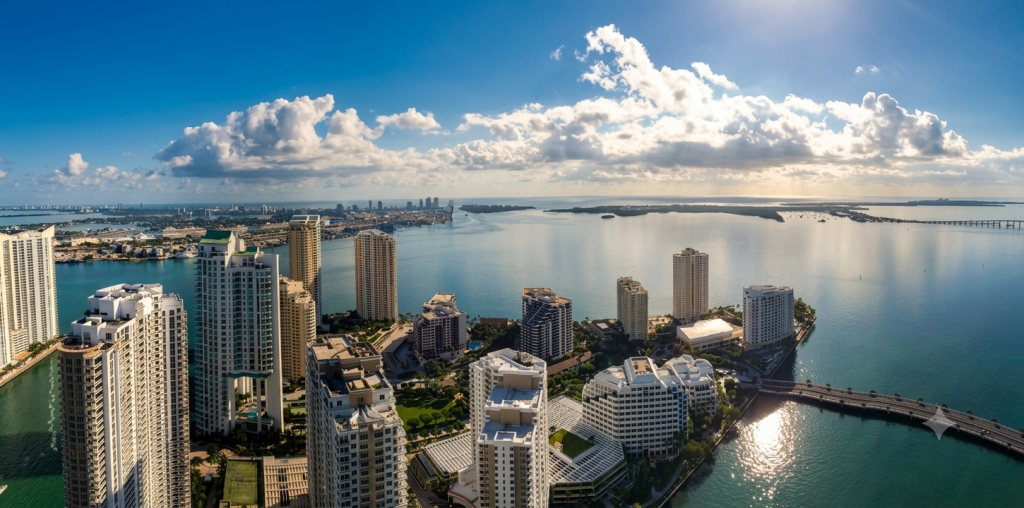
Luxury condominiums deliver the most dramatic water views in the market — the upper floors of Sunny Isles Beach’s oceanfront towers, Fisher Island’s Palazzo buildings facing Government Cut and the Atlantic, the upper floors of Brickell’s bay-facing buildings — views that no single-family home on a standard lot can replicate. The view is the asset in these buildings, and it is genuinely incomparable at the price points where the best positions trade.
Single-family waterfront homes deliver something the towers cannot: direct, private water access. A bayfront home in Coconut Grove, a canal-front estate in the Las Olas Isles in Fort Lauderdale, or a Golden Beach oceanfront — these properties have private docks, private beach access, or private waterfront footage that is yours alone, not shared with a building’s other residents. For buyers who own boats or want to step directly from their property onto the water, single-family waterfront is the format that delivers that experience, regardless of how impressive the view from a tower’s upper floor may be.
The honest synthesis: for views, buy a condo. For boat access, buy a house.

Amenities: The Condo Advantage
At equivalent price points, luxury condominiums in Miami deliver an amenity package that single-family homes cannot match — and the amenity gap widens as you move up the price scale.
A $5 million condominium at a building like the Estates at Acqualina, the Surf Club Four Seasons, or Anantara Residences delivers: resort-scale pool decks, full-service spas, fitness centers staffed by professional trainers, concierge services, beach clubs, valet parking, 24-hour security and attended lobby, and, in the case of Anantara, clinical longevity infrastructure including cryotherapy, hyperbaric oxygen, and IV therapy. Maintaining those services privately on a $5 million single-family budget would cost significantly more than the HOA dues that fund them collectively.
A $5 million single-family home in Coconut Grove or Miami Shores delivers: a private pool (if the lot accommodates one), whatever landscaping the property supports, and the freedom to configure the space as the owner chooses. The amenities are what the owner creates and maintains privately. For buyers who have maximized their use of condo amenity floors and found they genuinely use them, the condo’s collective infrastructure is a genuine lifestyle advantage. For buyers who have lived in luxury condominiums and found they never left their unit to use the amenities, the HOA dues funding those amenities is a cost they’re paying for something they don’t value.
Rental Flexibility: A Meaningful Difference
For buyers who intend to generate rental income — whether short-term vacation rental or longer-term residential — the format difference is significant, and the regulatory landscape has shifted.
Single-family homes in Miami-Dade have more flexible short-term rental regulations in most neighborhoods than condominium buildings, subject to municipal zoning rules that vary by address. A single-family buyer in a neighborhood that permits short-term rentals can operate without a building association’s minimum-lease-period restrictions. The trade-off is that the owner bears all operational management responsibility rather than leveraging a hotel management infrastructure.
Luxury condominiums vary dramatically in their rental policies. Buildings like ICON Beach Hollywood allow rentals with a 30-day minimum. Buildings like FENDI Château and most Bal Harbour buildings require six-month minimums. Hotel-branded buildings like Pier Sixty-Six and Anantara offer optional hotel rental pool participation that generates income with no self-management required. Pre-construction buyers should review the specific building’s Declaration of Condominium for rental restrictions before committing — the policy difference between a 30-day minimum and a six-month minimum is the difference between a viable income-generating asset and a purely personal-use property.
The Investment Comparison: What the Data Actually Shows
Both formats have produced strong returns in Miami’s luxury market over the past decade — but the drivers of those returns are different and not reliably comparable.
Luxury condominiums at the boutique and architecturally significant tier have produced the most dramatic documented appreciation in the market: The Surf Club Four Seasons tripled from $5.2M to $17M on a single unit in six years. Grove at Grand Bay has maintained a consistent premium above replacement cost since delivery in 2016. One Thousand Museum commands a $1,567/sqft average against Downtown Miami’s broader $700–$950/sqft resale average — a permanent architectural premium that has not compressed. The buildings that have performed best share two characteristics: architectural scarcity (a specific architect’s only building in a market, or a building small enough that resale supply is structurally limited) and brand permanence (a hospitality brand or fashion house that adds ongoing marketing support to the building’s identity).
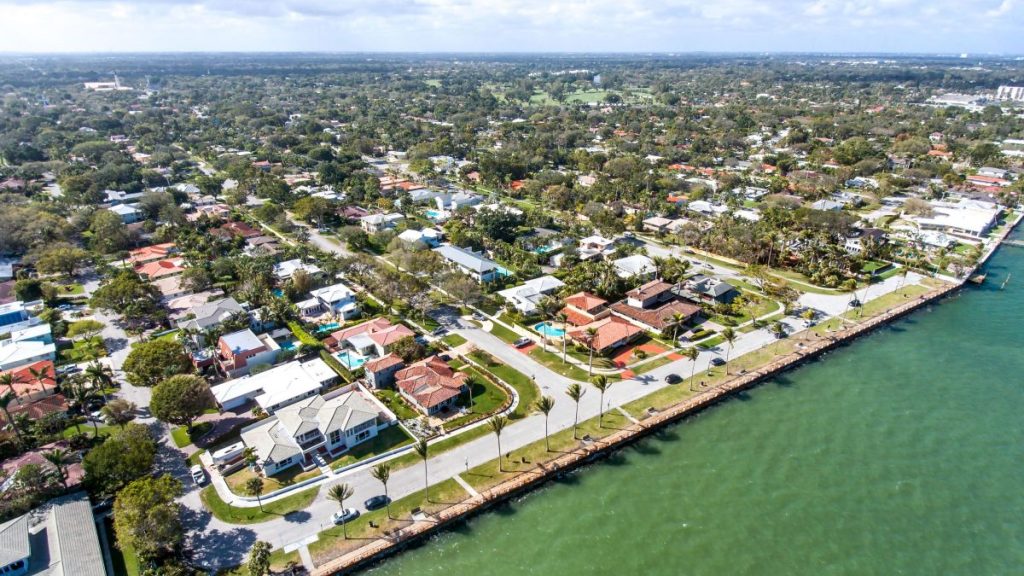
Luxury single-family homes have appreciated strongly in markets like Coconut Grove, Coral Gables, Golden Beach, and the Fort Lauderdale Las Olas Isles — driven by land scarcity, school infrastructure, and the permanent canopy and character of established neighborhoods that new development cannot replicate. Larry Page’s $188 million Coconut Grove assemblage is an extreme version of the thesis that scarce, well-located residential land in Miami-Dade appreciates reliably. The Golden Beach MLS data shows average sold prices appreciating significantly over the three-year snapshot — driven by an extremely thin market where individual transactions move the average, but the directional signal of constrained supply is real.
The honest comparison: for pure appreciation potential concentrated in a specific asset, the boutique condo at the architectural-scarcity tier has the best documented track record in this series. For long-term land appreciation in established neighborhoods with school infrastructure, single-family homes in the right markets is the more defensible thesis.
The Decision Framework: Seven Questions to Ask Yourself
Rather than a recommendation — which cannot be made without knowing your specific situation — here is the framework I use with buyers who come to me at this stage of their process.
1. Do you have school-age children whose school depends on home address?
If yes, single-family in a school-ecosystem neighborhood (Coconut Grove, Coral Gables, Miami Shores) is almost always the answer. If no, continue.
2. Do you own a boat or plan to?
If yes, single-family waterfront with a private dock, or a building with a private marina (Pier Sixty-Six, Pagani, Aston Martin), is the format. If views matter more than boat access, continue.
3. How important is daily-life convenience — lobby staff, valet, concierge, amenities within the building?
If very important, condominium. If you prefer complete autonomy without intermediary steps between your door and your car, single-family.
4. What is your risk tolerance for special assessments?
If low, new construction condominium or recently built single-family (avoiding both post-Surfside reserve exposure in older condos and deferred maintenance in older houses). If you’re comfortable with due diligence and reserve funding review, older buildings in both formats can represent value.
5. Do you intend to generate rental income?
If short-term rental income is a primary goal, consider a single-family in a rental-permissive neighborhood or a condominium building with a 30-day minimum. If long-term rental or hotel rental pool participation interests you, hotel-branded condominiums with optional management (Pier Sixty-Six, Anantara) are worth specific evaluation.
6. How often will you actually use the building’s amenities?
If you are a frequent spa, pool, gym, and concierge user, the HOA dues funding those amenities are efficient. If you are a work-from-home buyer who rarely leaves the residence for amenities, a single-family home may deliver more value per dollar, even at a higher maintenance cost.
7. What is your hold horizon?
If under five years, liquid assets in the most actively traded format (established luxury condos in high-turnover buildings) typically offer the fastest exit. If ten or more years, established single-family neighborhoods with school infrastructure and land scarcity have the strongest long-term hold thesis.
Frequently Asked Questions
Is it better to buy a condo or a house in Miami?
There is no universal answer. Condos offer better amenity access, higher views, and lower maintenance burden at equivalent price points. Single-family homes offer more privacy, autonomy, private outdoor space, boat dock potential, and stronger school-ecosystem access in neighborhoods like Coconut Grove and Coral Gables. The right answer depends on whether you have school-age children, own a boat, intend to generate rental income, and how much you value daily-life convenience versus autonomy.
Are Miami condos a good investment compared to single-family homes?
Both have produced strong returns in the right markets. Boutique luxury condominiums at the architectural-scarcity tier — One Thousand Museum, Grove at Grand Bay, FENDI Château, The Surf Club Four Seasons — have documented the strongest per-unit appreciation in the market. Single-family homes in land-constrained, school-ecosystem neighborhoods — Coconut Grove, Golden Beach, the Fort Lauderdale Las Olas Isles — have appreciated steadily, driven by permanent supply constraints. The format matters less than the specific asset and market.
Is condo ownership more expensive than single-family in Miami?
Not necessarily. HOA dues in luxury Miami condominiums run $1,500 to $5,000 per month, but replace maintenance, landscaping, pool service, and security costs a single-family owner bears individually. Florida homeowner’s insurance on a single-family home has increased dramatically in recent years and frequently costs $20,000 to $40,000+ annually for luxury properties — often exceeding the incremental cost difference between condo and house ownership at comparable price points.
Do Miami condos allow short-term rentals?
It depends entirely on the building. Some buildings allow 30-day minimum rentals with multiple rental periods per year. Others require six-month minimums. Hotel-branded buildings like Pier Sixty-Six and Anantara offer optional hotel rental pool participation. Buyers intending to generate rental income must review the specific building’s Declaration of Condominium before purchasing — the rental policy is set at the building level and cannot be negotiated individually.
Which Miami neighborhoods are best for single-family homes?
For school-ecosystem buyers: Coconut Grove (Ransom Everglades, Carrollton), Coral Gables (strong public and private options), Miami Shores (village character, Barry University adjacency). For maximum privacy: Golden Beach (guard-gated, 270–370 total homes, oceanfront). For boating lifestyle: Fort Lauderdale Las Olas Isles and Rio Vista (direct canal access), Coconut Grove bayfront estates (private docks on Biscayne Bay). For established neighborhood character: Pinecrest, South Miami, Palmetto Bay.
What is the post-Surfside effect on Miami condo buying?
Florida’s post-Surfside legislation requires milestone inspections, structural integrity reserve studies, and mandatory reserve funding for condominium buildings three stories or taller. For buyers evaluating older buildings, this means mandatory due diligence — review the building’s reserve study, milestone inspection report, and any pending or recently levied special assessments before committing. Buildings that have proactively funded reserves and completed inspections cleanly trade at appropriate premiums. Buildings with underfunded reserves carry special assessment exposure that can substantially increase the effective cost of acquisition.
Ready to Decide?
The condo-versus-house decision in Miami’s luxury market is genuinely consequential — and genuinely personal. The seven questions above are the framework. The market data above is the context. The right answer for your specific family, lifestyle, and financial situation is the conversation.
I am Ashton Coleman, a Broker-Associate with ONE Sotheby’s International Realty, holding the Certified Luxury Home Marketing Specialist (CLHMS) Million Dollar Guild designation, Certified Negotiation Expert (CNE), and Resort & Second-Home Property Specialist (RSPS) designations. I represent buyers across both formats — luxury condominiums and single-family homes — across Miami-Dade and Broward County.
Contact me directly for a personalized conversation about which format fits your specific situation, or browse both formats at MiamiPenthousesAndEstates.com.
📞 Call or text: 305.978.7704
📧 Email: AColeman@onesothebysrealty.com
🌐 Search Miami luxury condos
🌐 Search Miami luxury homes
Information provided is for informational purposes only and does not constitute financial, legal, tax, or investment advice. Market data references are based on publicly available MLS records and independent market analyses current as of Q3 2026. Verify all details with your legal and financial advisors prior to entering any transaction.





