


You have excellent credit.
Strong income.
Plenty of money for the down payment.
And a mortgage pre-approval.
Then you find the Miami Beach condo you want—and the lender says no.
Not because of you.
Because of the building.
This is one of the most misunderstood parts of condominium financing.
When financing a condo, the lender isn’t evaluating only the borrower and the individual residence. The condominium project itself may also be subject to review.
Fannie Mae describes project eligibility risk as distinct from the individual borrower’s credit risk. Its project review can examine issues involving the condominium’s financial viability, physical condition, insurance, litigation and other project-level risks.
So a mortgage pre-approval answers only part of the question.
The buyer can qualify for the mortgage while the condominium does not qualify for that particular loan program.
For Miami buyers—especially those considering older buildings, condo-hotels and properties facing major capital work—that distinction can completely change a transaction.
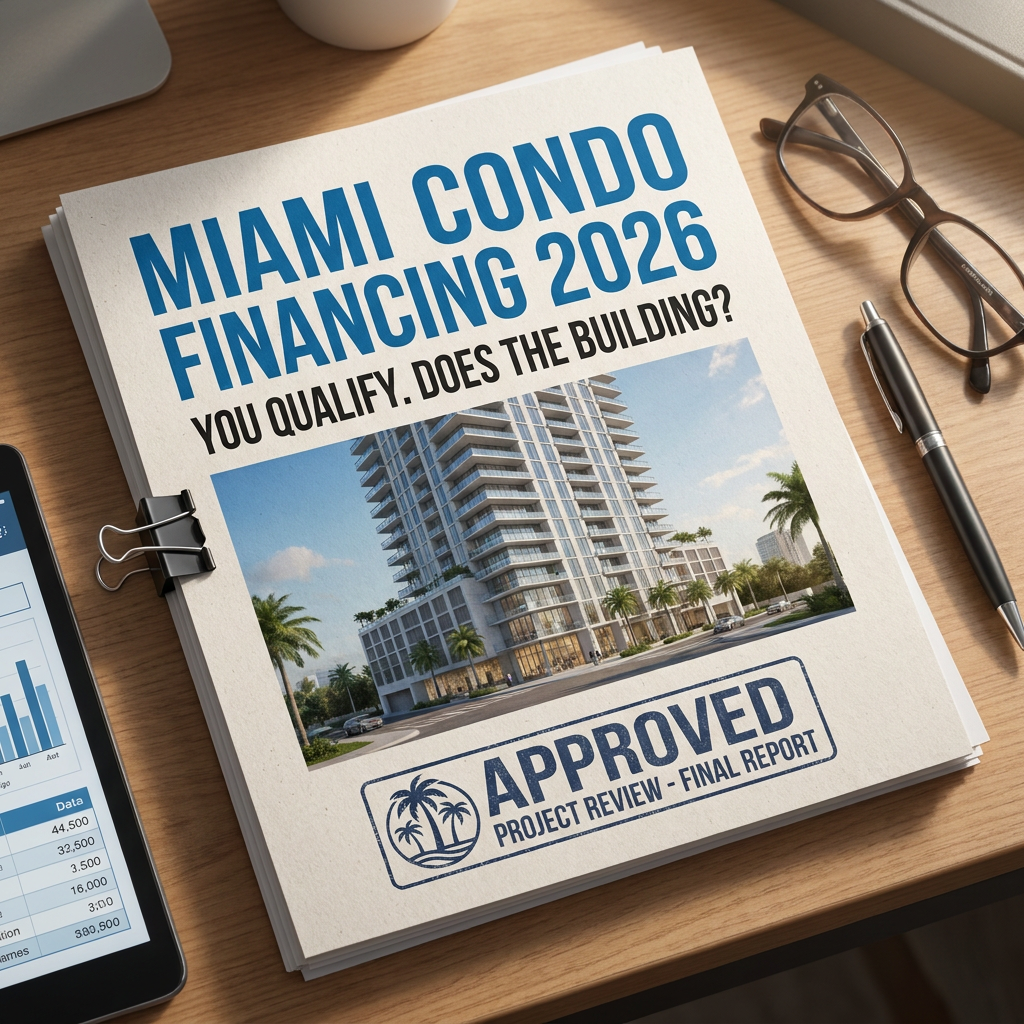
Your Pre-Approval Is Not a Condo Approval
A mortgage pre-approval generally evaluates the borrower.
Depending on the loan, that can include:
- income
- assets
- credit
- liabilities
- down payment
- debt-to-income ratio
- loan amount
But the lender may still need to evaluate the condominium project after you identify the property.
Fannie Mae’s current guidance states that before a lender delivers a mortgage secured by an individual condominium unit, it must determine that the project meets applicable eligibility requirements. The project review is in addition to underwriting the borrower.
That creates two separate questions:
Can you qualify?
and:
Can this condominium qualify for the financing you’re trying to use?
A buyer shouldn’t confuse the first answer with the second.
What Is a Warrantable Condo?
“Warrantable” is common mortgage-industry shorthand for a condominium project that meets the applicable requirements for conventional financing intended for sale to organizations such as Fannie Mae or Freddie Mac.
A non-warrantable condo generally refers to a project that doesn’t satisfy those applicable conventional project standards.
That does not automatically mean:
bad building
unsafe building
or:
bad investment.
It means the property may not fit a particular secondary-market lending box.
That’s a critical distinction in Miami.
Some properties that don’t qualify for standard conventional financing can still potentially be financed through:
- portfolio lenders
- private banking
- non-QM products
- other specialized lending programs
Terms, down payments and underwriting can be substantially different.
Why Can a Miami Condo Fail Project Review?
Fannie Mae identifies several common reasons a project may not satisfy its requirements.
These include:
Critical Repairs or Significant Deferred Maintenance
Conditions affecting safety, soundness, structural integrity or habitability can create project-eligibility problems.
Insufficient Master Property Insurance
This is especially relevant in Florida.
Fannie Mae says inadequate master property insurance is currently one of the leading reasons projects receive an ineligible status in its system.
Significant Pending Litigation
Not every lawsuit automatically makes a project ineligible, but significant project-level litigation can matter.
Certain Hotel or Short-Term-Rental Characteristics
Fannie Mae specifically identifies projects operating as a hotel/motel or managing daily or short-term rentals among project characteristics that can make conventional financing unavailable under its rules.
Financial Condition
The association’s ability to maintain the property and meet its obligations can matter to project review.
This is why a buyer’s lender may request documents that appear to have nothing to do with the buyer’s personal finances.
They do.
The lender is underwriting a different kind of risk.
The Florida Insurance Problem
For Miami condo buyers, this deserves its own section.
The master insurance policy belongs to the condominium association—not the individual unit owner.
Fannie Mae explains that project insurance requirements exist because the common building, structures and amenities must have adequate protection against losses.
A borrower can therefore have:
excellent credit
50% down
significant liquidity
and:
a perfectly insurable interior unit
while still encountering a lending problem because of the association’s master policy.
This is one reason I would investigate financing early when a buyer is considering a particular Miami building.
Waiting until late in the contract period can create unnecessary risk.
Can a Special Assessment Kill a Condo Loan?
Not automatically.
This is an important misconception.
Fannie Mae’s current project standards distinguish the existence of a special assessment from the condition it is funding.
For Full Review, Fannie Mae requires the applicable budget reserve allocation even if a special assessment exists; the assessment cannot simply substitute for that budget requirement.
More importantly, lenders need to understand why the assessment exists.
If an assessment funds ordinary improvements, the analysis can be very different from an assessment addressing:
- structural deterioration
- unsafe balconies
- water intrusion
- failing roof systems
- parking-structure problems
- other critical repairs
Fannie Mae’s guidance says that if a special assessment is related to safety, soundness, structural integrity or habitability, the associated critical repairs must be completed for the project to satisfy those requirements.
So the better question isn’t:
“Does the building have an assessment?”
It’s:
“Why does the building have the assessment, how is it being funded, and what work remains?”
A Paid Assessment Does Not Necessarily Solve the Financing Problem
Suppose an association levies a $75,000-per-unit assessment to fund structural repairs.
The seller pays the entire $75,000 balance at closing.
Problem solved?
Not necessarily.
The seller’s payment solves the seller’s financial obligation.
It doesn’t necessarily solve the physical condition that caused the assessment.
If the underlying work constitutes critical repairs, the project may remain problematic until the required work is completed and appropriately documented.
Freddie Mac similarly states that a project remains ineligible when required critical repairs or applicable inspection requirements remain unresolved.
This is why:
assessment paid
and:
building issue resolved
are not interchangeable.
Do Low Reserves Make a Condo Unfinanceable?
This requires careful wording.
Not automatically.
Fannie Mae specifically states that it does not require lenders to evaluate project-level reserve studies to determine project eligibility.
However, reserves still matter in several ways.
For a Fannie Mae Full Review, current guidance requires the budget to allocate the required amount toward reserves; Fannie Mae’s March 2026 FAQ references a 10% budget reserve requirement in that context.
And financially weak associations can be more vulnerable to:
- deferred maintenance
- unexpected assessments
- inability to fund repairs
- escalating dues
Fannie Mae explicitly cited the relationship it has observed between underfunded capital reserves and projects requiring critical repairs when announcing its 2026 project-standard changes.
So:
Low reserves are not a simple automatic loan rejection—but the building’s financial capacity and repair obligations can absolutely affect financeability. “Warrantable” is common mortgage-industry shorthand for a condominium project that satisfies applicable conventional project-eligibility requirements, typically including standards used by Fannie Mae or Freddie Mac.
Florida SIRS and Milestone Inspections Can Enter the Financing Conversation
Florida buyers now regularly encounter:
Milestone Inspection
and:
Structural Integrity Reserve Study (SIRS).
These are not mortgage programs.
But the information contained in inspections, engineering reports, association financials and meeting minutes can reveal conditions relevant to project review.
Fannie Mae says that when certain structural or mechanical inspections have been completed within the applicable review period, lenders may be required to review them. If no inspection exists, the lender must still obtain sufficient information from other documentation to determine that the project isn’t in need of critical repairs.
Freddie Mac likewise identifies HOA minutes, financial statements and engineering reports as possible sources lenders can use when evaluating critical repairs, significant deferred maintenance and special assessments.
This connects directly to my Older Miami Beach Condos on Collins Avenue: Bargain or Risk? 2026 Buyer’s Guide.
Pending Litigation Does Not Always Mean “No Financing”
This is another area where blanket statements are dangerous.
Condo associations can become involved in litigation for many reasons.
A lender may care about:
- nature of the claim
- potential financial exposure
- insurance coverage
- structural implications
- effect on marketability
- whether the litigation threatens the association’s financial viability
Fannie Mae identifies pending significant litigation as a common ineligible project characteristic.
But that doesn’t mean every lawsuit involving an association automatically makes every mortgage impossible.
The details matter.
Condo-Hotels Are a Different Financing Animal
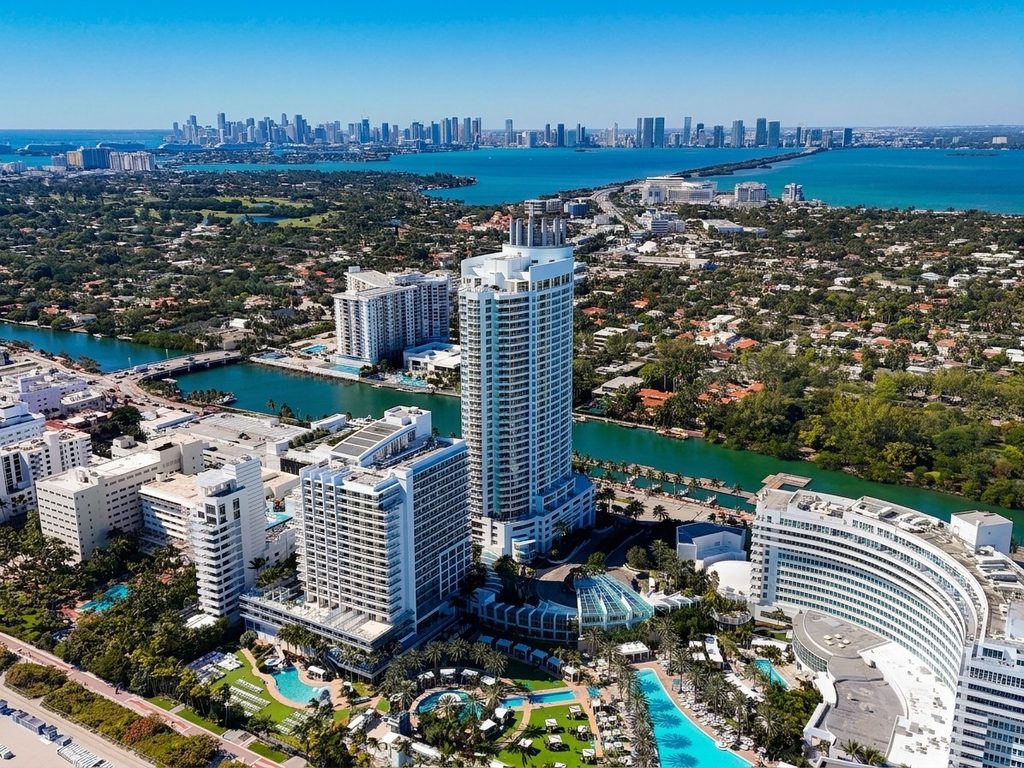
Miami has a substantial condo-hotel market.
Think of properties where individually owned residences interact with hotel operations, transient occupancy or rental programs.
Fannie Mae identifies projects that operate as hotels or motels, or manage daily or short-term rentals, among project characteristics that may not meet its eligibility requirements.
That doesn’t mean buyers cannot finance condo-hotel residences.
It means conventional agency financing may not be the appropriate solution.
Specialized lenders may offer financing based on different underwriting standards.
This is one reason a buyer looking at a conventional Miami Beach condo and a condo-hotel residence at similar prices shouldn’t assume:
“My lender can finance either one.”
Ask first.
Does Putting 50% Down Solve the Problem?
Sometimes it helps—but it doesn’t erase project eligibility rules.
A larger down payment can make a borrower more attractive and can open alternative lending options.
But if the intended loan must satisfy a particular agency’s project requirements, having more equity doesn’t necessarily make an otherwise ineligible project eligible.
The better approach is to ask the lender:
“Does my increased down payment change the required project-review path or simply change my loan-to-value?”
Those aren’t the same thing.
Why Can One Lender Say Yes When Another Says No?
This confuses buyers constantly.
Several things can be happening.
Different Loan Products
One lender may be offering a conventional agency loan.
Another may be holding the mortgage in its own portfolio.
Different Project-Review Results
Lenders are responsible for reviewing condominium projects under the applicable program requirements. Fannie Mae provides tools such as Condo Project Manager to support those reviews.
Different Risk Appetite
Portfolio lenders don’t necessarily have identical underwriting standards.
Different Documentation
One lender may obtain documents another lender couldn’t obtain.
Different Timing
A project can change.
Repairs can be completed.
Insurance can change.
Litigation can be resolved.
An association can provide new documentation.
So:
“Bank A wouldn’t finance the building” does not necessarily mean “the building cannot be financed.”
But it absolutely warrants understanding why Bank A declined it.
Important 2026 Fannie Mae Changes
There have been meaningful project-standard changes this year.
In March 2026, Fannie Mae announced several updates, including expanding certain Waiver of Project Review eligibility to qualifying projects with up to 10 units and changing project-review requirements.
For Florida specifically, Fannie Mae also retired the requirement that new or newly converted attached-unit condo projects in Florida must be submitted through PERS solely because they’re in Florida. Eligible projects can instead be reviewed through the lender-delegated Full Review process under the applicable requirements.
Fannie Mae incorporated those previously announced changes into its Selling Guide in August 2026.
That is important because older internet articles about Florida condominium financing may now describe obsolete review procedures.
What About FHA Financing?
FHA has a different framework.
HUD states that FHA can insure loans on units in an FHA-approved condominium project and, under qualifying circumstances, can also insure an individual unit through its Single-Unit Approval process even when the overall project isn’t FHA-approved.
Single-Unit Approval doesn’t mean the building avoids review.
HUD still applies project-level requirements, including factors involving financial condition, owner occupancy, insurance and other eligibility standards.
For much of Miami’s luxury condo market, FHA loan limits and buyer profiles may make this less relevant than conventional, jumbo or portfolio financing.
But it’s another reason “approved condo” is not one universal designation.
Approved for what loan?
Under whose guidelines?
That’s the question.
The Cash-Buyer Trap
This may be the most important section of the article.
Suppose a building is difficult to finance.
A cash buyer thinks:
“Perfect. Less competition. I’ll negotiate a deal.”
Maybe.
But cash removes the lender.
It does not remove the building risk.
If lenders are concerned because of:
inadequate insurance
critical repairs
significant litigation
or:
another material project issue
the cash buyer still owns a unit in that building after closing.
The lender’s refusal doesn’t automatically prove the property is bad.
But it is information.
I would want to know:
Why is financing difficult?
If the answer is simply that the building doesn’t fit a conventional lending category, there may be opportunity.
If the answer involves unresolved physical or financial problems, that’s a different decision.
Difficult Financing Can Create Opportunity
There is another side.
A financeability problem can shrink the buyer pool.
Imagine two comparable $2 million condos.
Building A
Conventional financing readily available.
Large pool of cash and financed buyers.
Building B
Requires cash or specialized portfolio financing.
Smaller buyer pool.
Building B may need to offer a pricing discount.
For a sophisticated buyer who:
- understands the reason
- can tolerate the risk
- has appropriate liquidity
- performs extensive due diligence
that discount may create an opportunity.
But there’s a second-order question:
What happens when you eventually sell?
If the financing problem still exists, your future buyer pool may also be smaller.
The discount you receive today may be a discount you have to offer again tomorrow.
Financing Risk Is Resale Risk
This is why project financeability matters even to cash buyers.
A buyer may say:
“I don’t need a mortgage, so I don’t care.”
I disagree.
Your future buyer might need one.
If a significant percentage of the market cannot finance units in your building, that can affect:
- buyer demand
- days on market
- negotiating leverage
- pricing
- liquidity
Financeability is therefore not merely a mortgage issue.
It can become a property-value issue.
High HOA Fees Can Affect the Borrower Too
Building eligibility and borrower qualification are different issues—but they interact.
A condominium association fee generally becomes part of the borrower’s housing expense used in underwriting.
So even when the project itself passes review, a high HOA can affect how much a financed buyer qualifies to borrow.
This connects directly to my Miami Condo Carrying Costs 2026: What Does a $1M, $2M, $5M or $10M Condo Really Cost to Own?
The buyer therefore faces two possible problems:
The building fails project review
or:
the building passes, but its carrying costs affect the buyer’s qualification.
Very different issues.
What I Would Ask the Lender Before Making an Offer
For a financed Miami condo purchase, I would want several questions answered as early as possible.
1. Have You Financed This Building Recently?
Not conclusive—but useful.
2. What Loan Program Are We Using?
Conventional?
Jumbo?
Portfolio?
Private bank?
3. Will the Condominium Require a Full Project Review?
Don’t assume.
4. Do You Already Have Current Project Documentation?
This can save time.
5. Are There Known Insurance Issues?
Particularly important in Florida.
6. Are There Known Critical-Repair or Inspection Issues?
Ask early.
7. Are There Current Special Assessments?
And what are they funding?
8. Is There Pending Litigation?
If so, what type?
9. Does the Building Have Condo-Hotel or Short-Term-Rental Characteristics?
Potentially critical to loan selection.
10. What Happens If the Project Doesn’t Meet This Program?
Is there a portfolio alternative?
What down payment?
What rate structure?
What documentation?
Don’t discover the alternative three days before closing.
What I Would Review as a Cash Buyer
Being cash doesn’t reduce my interest in the condominium documents.
I’d still want to understand:
- Milestone inspection
- SIRS where applicable
- engineering reports
- association budget
- financial statements
- reserves
- special assessments
- insurance
- meeting minutes
- litigation
- major capital projects
and:
why conventional financing may be unavailable.
Cash gives the buyer flexibility.
It should not become an excuse for weaker due diligence.
Is a Non-Warrantable Condo a Bad Investment?
Not necessarily.
Some perfectly desirable Miami properties may fall outside standard agency lending criteria because of their operating model or other project characteristics.
The investment question is more complicated:
Why is it non-warrantable?
Can other buyers obtain financing?
At what terms?
Is the issue temporary or structural?
Does the market already price the limitation appropriately?
Will it restrict my exit?
A condo-hotel that has always operated within a specialized financing market is different from a conventional condominium that suddenly becomes difficult to finance because of unresolved structural problems.
Both might be called “non-warrantable.”
They are not the same risk.
Frequently Asked Questions About Miami Condo Financing
Can I be pre-approved and still be denied financing for a Miami condo?
Yes. Borrower approval and condominium project eligibility are separate parts of the process. A lender may determine that the borrower qualifies but the project doesn’t satisfy the requirements of the intended loan program.
What makes a Miami condo non-warrantable?
Potential issues can include certain critical repairs, inadequate project insurance, significant litigation, hotel or short-term-rental characteristics and other conditions that don’t satisfy applicable conventional project requirements.
Can I finance a condo with a special assessment?
Potentially. A special assessment does not automatically make a project ineligible. The lender will be particularly concerned with what the assessment funds and whether critical repairs remain unresolved.
Can I finance a condo with pending litigation?
Possibly. The nature, significance and financial implications of the litigation matter. Significant project litigation can create eligibility problems.
Can low reserves cause my condo loan to be denied?
Reserve issues require nuance. Fannie Mae does not require lenders to evaluate a project’s reserve study itself for eligibility, but Full Review has budget reserve requirements, and the association’s ability to fund repairs and maintain the property can affect other aspects of project eligibility.
Can I finance a Miami condo-hotel?
Potentially, but standard conventional agency financing may not be available for projects with hotel/motel or daily/short-term-rental characteristics. Specialized or portfolio financing may be necessary.
Does putting more money down make a non-warrantable condo warrantable?
Not necessarily. A larger down payment may create more financing alternatives, but it does not automatically change whether a project satisfies a particular loan program’s eligibility requirements.
Can another lender approve a condo after my lender declines it?
Potentially. Another lender may offer a different loan product or portfolio program. But buyers should understand the original reason for the decline rather than simply lender-shopping around a potentially material building problem.
Does paying a special assessment solve the financing issue?
Not necessarily. Paying the assessment addresses the financial obligation. If the assessment funds unresolved critical repairs, completion of the underlying work may still matter to project eligibility.
Should a cash buyer care whether a condo is warrantable?
Yes. Even without needing financing today, restrictions on financing can reduce the future buyer pool and affect resale liquidity.
So When Should You Check the Building?
Before you fall in love with the condo.
For a financed purchase, I prefer to involve the lender early enough to identify project-level issues before the buyer has invested substantial time, money and emotion in the transaction.
This is particularly important when evaluating:
older Miami Beach buildings
buildings undergoing major restoration
properties with substantial assessments
condo-hotels
short-term-rental-oriented projects
or:
buildings with known insurance or litigation concerns.
A mortgage pre-approval is important.
But for a condominium buyer, it isn’t the finish line.
The buyer has to work. The building has to work. And the loan program has to work for both.
For a private comparison of Miami and Miami Beach condominiums—including resale history, current inventory, carrying costs and building considerations that may affect financing—contact me directly.
📞 Call or text: 305.978.7704
📧 Email: AColeman@OneSothebysRealty.com
Explore Miami Condo Buyer Resources
Older Miami Beach Condos on Collins Avenue: Bargain or Risk? →
Miami Condo Carrying Costs 2026 →
Miami Oceanfront vs. Bayfront Condos 2026 →
Explore Miami Beach Luxury Condos →
About the Financing Information
This article reflects publicly available condominium project guidance from Fannie Mae, Freddie Mac and HUD/FHA reviewed in August 2026.
Fannie Mae updated its project standards in March 2026 and incorporated previously communicated changes into its Selling Guide in August 2026. Among those changes, Fannie Mae expanded certain project-review waivers and retired the Florida-specific requirement that qualifying new attached condominium projects be submitted through PERS solely because they are located in Florida.
Condominium lending requirements vary by lender, loan product, project, borrower and transaction. Fannie Mae, Freddie Mac, FHA, portfolio lenders and private banks do not necessarily apply identical standards.
Project eligibility can also change as insurance, repairs, litigation, association finances and project documentation change.
Buyers should therefore obtain current, property-specific guidance directly from their mortgage professional before relying on a building’s historical financing experience.
Information is provided for general real-estate education only and is subject to change. Financing availability, interest rates, underwriting standards, condominium eligibility and lender requirements should be independently verified. Nothing herein constitutes mortgage, legal, tax, financial, engineering or investment advice.





