


For Miami Beach buyers comparing oceanfront vs. bayfront condos, “waterfront” can mean very different things.
Miami Beach buyers frequently begin with a simple request:
“I want waterfront.”
But waterfront in Miami can mean very different things.
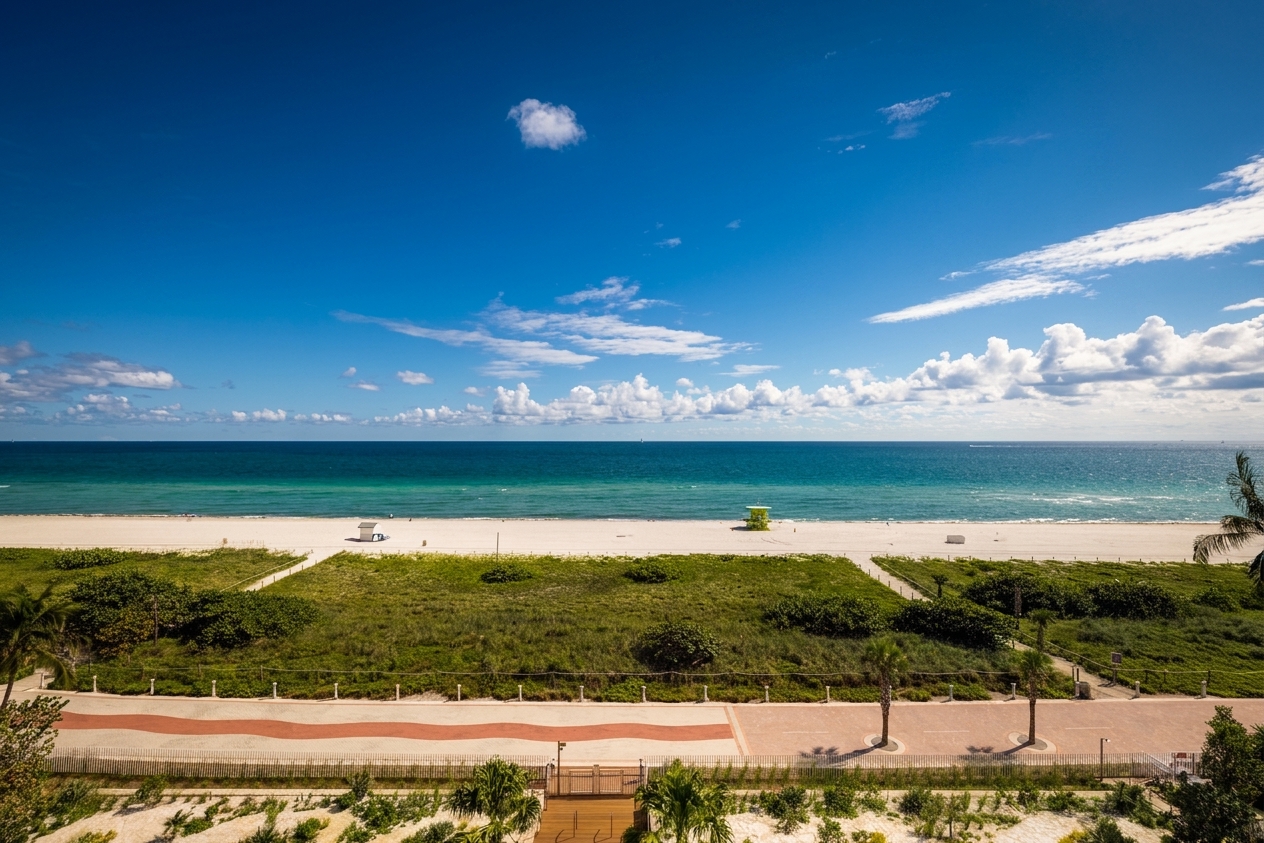
It can mean waking up to the Atlantic Ocean with direct beach access.
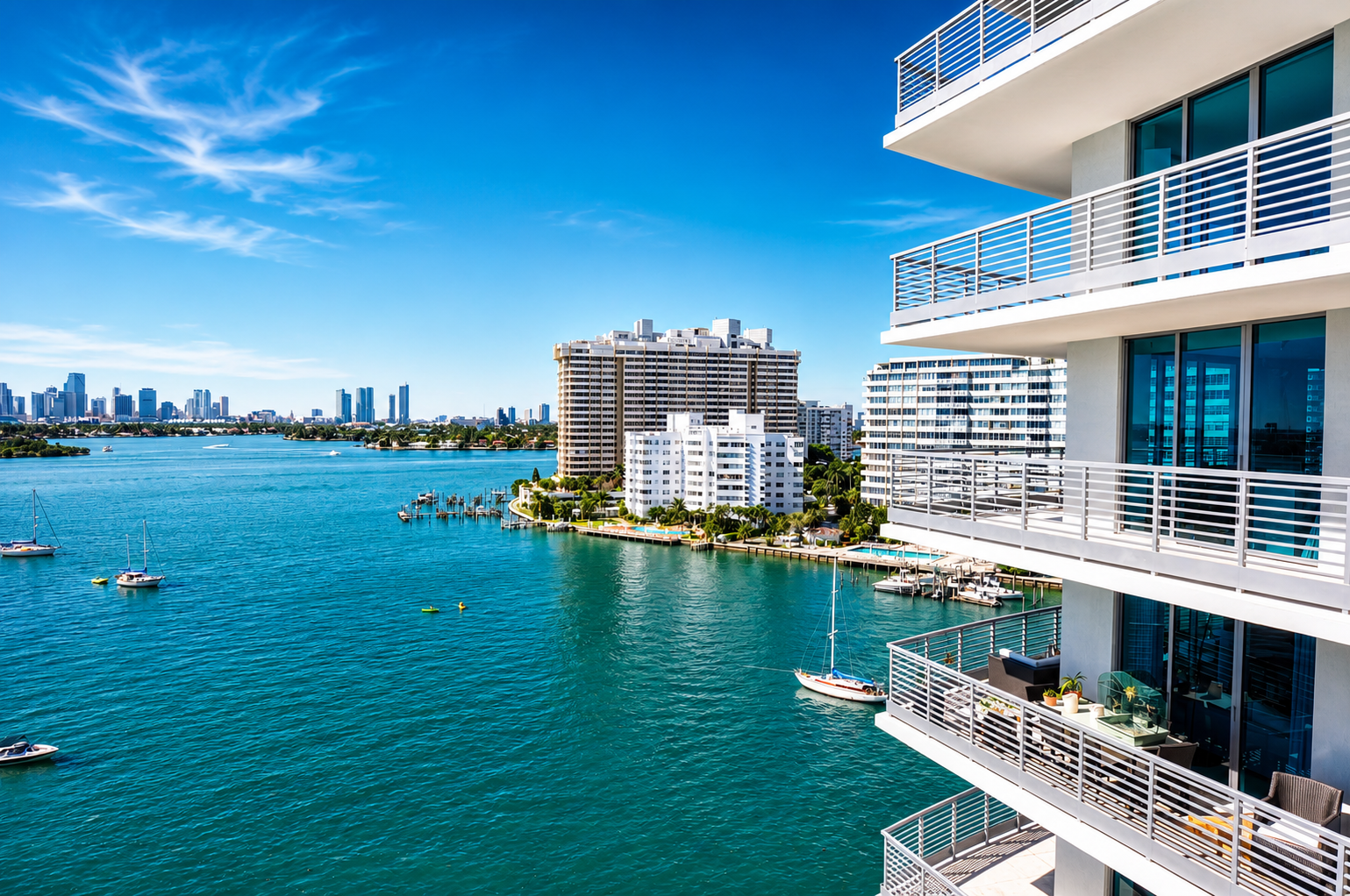
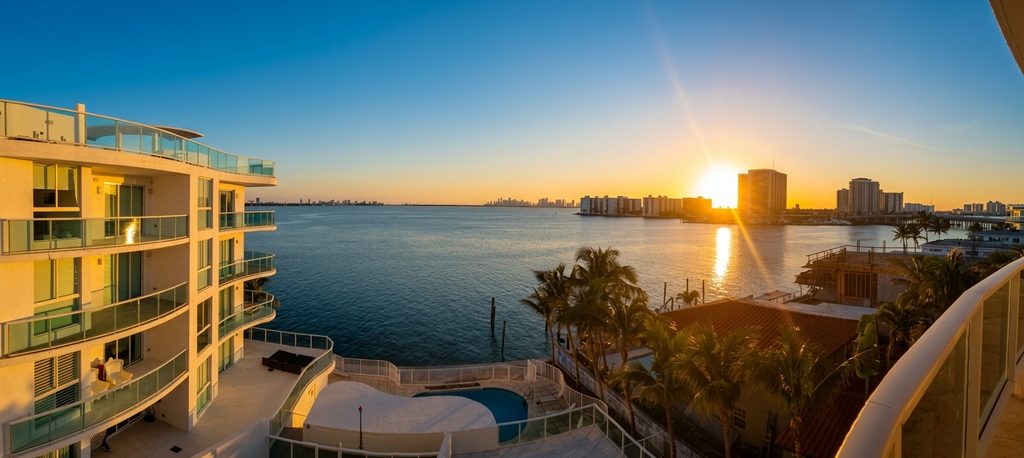
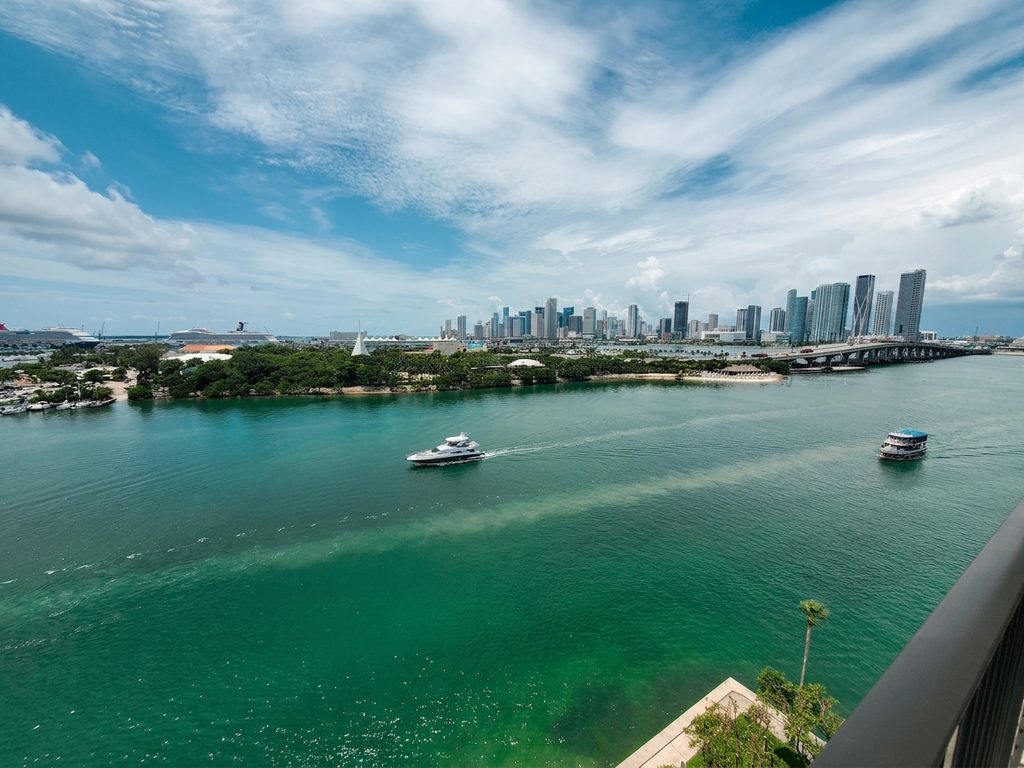
It can mean looking west across Biscayne Bay toward Downtown Miami as the skyline lights up at sunset.
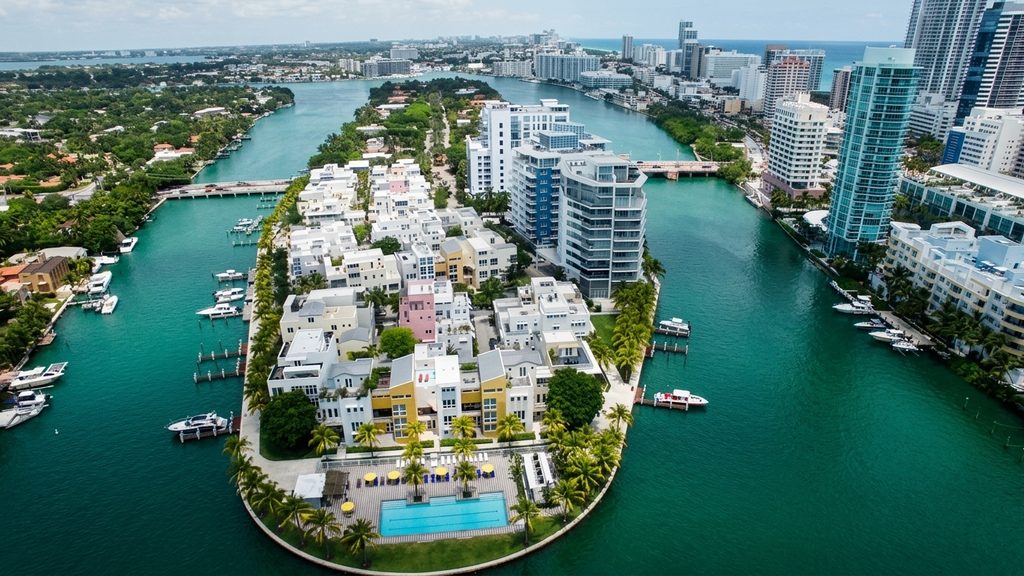
It can mean Intracoastal boating access.
Or it can mean having a water view from a building that isn’t actually waterfront at all.
Those differences have real financial consequences.
Using 2026 Miami Beach MLS sales of condominiums priced at $1 million and above, I compared direct-oceanfront properties with direct bayfront/Intracoastal condominium properties.
After cleaning conflicting waterfront classifications and excluding Fisher Island and properties that didn’t fit cleanly into either category, the primary comparison contained:
| 2026 Closed Sales | Oceanfront | Bayfront / Intracoastal |
|---|---|---|
| Closed sales analyzed | 120 | 96 |
| Median sale price | $1.968M | $2.195M |
| Median sold $/SF | $1,469/SF | $1,262/SF |
| Median residence size | 1,565 SF | 1,820 SF |
| Median CDOM | 192 days | 140 days |
| Median sale/list ratio | 93.1% | 93.9% |
The underlying MLS report includes detailed fields for address, building, list and sold pricing, $/SF, CDOM, square footage, year built, waterfront status and waterfront description.
The headline result is clear:
Oceanfront sold for approximately 16% more per square foot at the median.
But that statistic alone doesn’t tell the buyer which side is better.
In fact, the median bayfront residence was larger and sold for a higher total price despite having the lower price per square foot.
That’s where this gets interesting.
What Counts as Oceanfront?
For this analysis, oceanfront means the building itself directly fronts the Atlantic Ocean.
That is different from:
Ocean view
Ocean access
Near the beach
or:
Waterfront
A residence can have a spectacular ocean view without its building being directly oceanfront.
Likewise, an oceanfront condominium can contain west-facing units whose primary views are actually toward Miami, Biscayne Bay or the sunset.
The MLS report itself demonstrates why this distinction matters. Direct oceanfront buildings such as Faena House, Eighty Seven Park, Continuum, The Setai, Bath Club and multiple Collins Avenue towers are identified with Ocean Front designations.
Along Collins Avenue, odd-numbered addresses are also a useful practical rule of thumb for identifying the ocean side of the street—but I would still verify the individual building rather than classify a property from its street number alone.
What Counts as Bayfront?
For the primary comparison, bayfront includes buildings directly fronting Biscayne Bay or the relevant Intracoastal waterfront.
Examples include properties such as:
and several other western Miami Beach waterfront buildings.
The dataset includes, for example, 2026 Apogee closings of approximately $13.9 million at $3,346/SF and $12.5 million at $3,009/SF.
At lower price points, bayfront properties such as Nine Island, Waverly and Grand Venetian show a very different resale market.
The bayfront category therefore isn’t one product either.
The 2026 Oceanfront Premium
Across the cleaned $1M+ closed-sale sample:
Oceanfront median sold $/SF: approximately $1,469
Bayfront median sold $/SF: approximately $1,262
That translates to approximately:
16% higher median $/SF for oceanfront.
But I would be careful calling that a universal “16% ocean premium.”
Why?
Because the two samples contain different:
- buildings
- ages
- residence sizes
- neighborhoods
- service levels
- amenities
- renovations
- views
- floor heights
- luxury tiers
The data shows an aggregate market relationship.
It does not prove that moving the exact same condo from Biscayne Bay to the Atlantic would increase its value by exactly 16%.
The Premium Becomes Much Larger at Higher Prices
This is one of the strongest findings in the data.
When I divided the clean closed-sale sample into broad price tiers, the difference changed substantially.
| Closed Sale Price | Oceanfront Median Sold $/SF | Bayfront Median Sold $/SF |
|---|---|---|
| $1M–$2.99M | $1,194/SF | $1,112/SF |
| $3M–$4.99M | $1,984/SF | $1,520/SF |
| $5M+ | $3,581/SF | $2,286/SF |
At $1M–$3M, the difference is relatively modest.
At $3M–$5M, oceanfront is roughly 30% higher at the median.
At $5M+, the gap in this sample expands to roughly 57%.
That doesn’t prove every high-end oceanfront residence is worth 57% more.
The upper end includes exceptional trophy properties.
But it tells us something important:
The market appears increasingly willing to pay a larger premium for direct Atlantic frontage as buyers move deeper into Miami Beach’s luxury segment.
At the highest levels, buyers are not simply purchasing a condo.
They’re purchasing scarcity.
Trophy Oceanfront Can Separate Dramatically From the Market
The closed-sale dataset includes some extraordinary examples.
An Eighty Seven Park residence closed for approximately:
$11.5M — $4,662/SF
while a Faena House residence closed at:
$20M — $4,228/SF
Continuum also produced multiple multimillion-dollar oceanfront closings exceeding $3,700 and $4,000 per square foot.
Bayfront can absolutely reach trophy pricing as well.
Apogee demonstrates that.
But Miami’s rarest modern oceanfront product operates in a particularly deep scarcity environment.
There simply isn’t more Atlantic shoreline available to manufacture.
But Bayfront Buyers Often Get More Space
This may be the strongest argument for the bay side.
The median residence sizes in the cleaned closed-sale sample were approximately:
Oceanfront: 1,565 square feet
Bayfront: 1,820 square feet
That’s roughly 16% more interior space for the median bayfront transaction.
And remember:
The median bayfront sale price was actually slightly higher than the median oceanfront sale price.
So the typical tradeoff wasn’t simply:
Cheap bayfront versus expensive oceanfront.
It was closer to:
More interior space at a lower $/SF versus less space with the direct-oceanfront premium.
That is a much more realistic buyer decision.
What Does $2 Million Buy?
Around $2 million, the difference can be subtle.
The dataset contains oceanfront sales such as Green Diamond around $1.73M–$1.77M at approximately $1,254–$1,283/SF.
Bayfront inventory and closings in that general price category include larger residences at buildings such as Nine Island Avenue and other western Miami Beach properties, with multiple executions closer to roughly $800–$1,100/SF depending on the residence.
The oceanfront buyer may prioritize:
beach access
Atlantic orientation
resort feel
while the bayfront buyer may receive:
more square footage
larger floor plan
sunset or skyline views
and potentially:
better boating orientation.
Neither is universally better.
At $5 Million, the Decision Becomes More Lifestyle-Specific
Around $5 million, the product differences become much larger.
The dataset includes oceanfront properties such as Setai, Continuum, Bath Club, Carillon and Il Villaggio.
The bayfront side can include residences in South of Fifth, Sunset Harbour, Monad Terrace and similar western waterfront environments.
For example, a Continuum oceanfront residence closed around $4.45M at $2,790/SF, while a Five Park bayfront-oriented residence in the supplied data closed around $4.2M.
At that point, asking:
“Which waterfront is cheaper?”
isn’t enough.
The real question is:
“Which waterfront lifestyle am I paying for?”
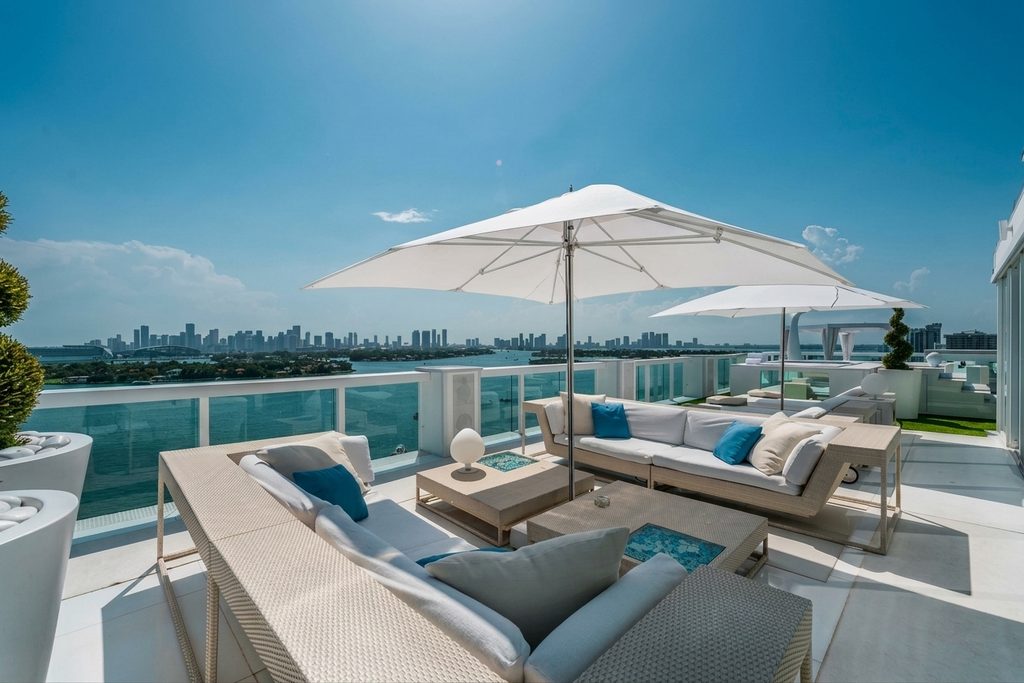
Oceanfront Lifestyle: What You’re Paying For
Direct Beach Access
This is the obvious one.
You can walk from the building to the sand without crossing Miami Beach.
For certain buyers, nothing substitutes for that.
Sunrise
East-facing residences receive the Atlantic sunrise.
Resort Lifestyle
Many oceanfront towers have extensive:
- beach service
- pools
- restaurants
- cabanas
- spa/wellness
- valet
- concierge
Scarcity
There is a finite amount of true direct oceanfront land.
International Recognition
For many global buyers, Miami Beach oceanfront is itself an asset category.
That can matter at resale.
Bayfront Lifestyle: Why Some Buyers Prefer It
I wouldn’t treat bayfront as the consolation prize.
For some buyers, I’d choose it over oceanfront.
Sunset
Miami’s sunsets can be extraordinary from west-facing bayfront residences.
Skyline Views
Downtown and Brickell illuminated across Biscayne Bay provide a completely different visual experience from the Atlantic.
Boating
Certain bayfront and Intracoastal properties offer superior marine access or proximity to marinas.
Urban Connection
Western South Beach locations can place buyers closer to:
- Sunset Harbour
- restaurants
- retail
- Venetian Causeway
- Downtown Miami access
Space for the Dollar
The 2026 data reinforces that bayfront buyers frequently obtain more interior space for each dollar of acquisition price.
Sunrise vs. Sunset May Matter More Than Buyers Expect
Oceanfront marketing tends to emphasize the obvious:
The Atlantic Ocean.
But some buyers discover they actually prefer sunset.
An east-facing residence receives spectacular morning light.
By late afternoon, the sun moves behind the building.
A west-facing bay residence can come alive in the evening as the sky changes and Downtown Miami begins to illuminate.
There’s no correct answer.
A buyer who starts work at 6:00 AM and spends evenings elsewhere may love oceanfront.
Someone who entertains at home every evening may strongly prefer the bay.
This isn’t a trivial detail.
The view you experience at the time you actually use the residence matters more than the view described in the brochure.
The View Premium Is Not the Same as the Waterfront Premium
This is one of the most important concepts in Miami condo valuation.
Consider four possibilities:
Direct Oceanfront Building + Direct Ocean View
Usually the clearest oceanfront premium.
Direct Oceanfront Building + West-Facing Unit
The owner has beach access and oceanfront-building status—but the primary residence view may be sunset, city or bay.
Bayfront Building + Direct Skyline/Bay View
Potentially spectacular and highly desirable.
Non-Waterfront Building + Ocean View
A high floor can have an exceptional ocean view while the property itself lacks direct water frontage.
Those are four different products.
So when a listing says:
“Ocean views”
I still ask:
Is the building oceanfront?
And when it says:
“Waterfront”
I ask:
Which water?
A Miami Beach MLS Problem: Waterfront Data Is Messy
The supplied MLS dataset demonstrates why broker interpretation matters.
Some listings are coded simultaneously:
Bay Front + Ocean Front
even when the actual building location points much more clearly toward one classification.
The data contains examples at Continuum, Murano, Portofino, Five Park and other buildings where waterfront descriptions require interpretation rather than blind spreadsheet classification.
That’s why I did not simply sort every property containing the phrase “Ocean Front” into one bucket.
For the main statistical comparison, obvious ambiguous or inappropriate waterfront classifications were corrected where the physical property was clear—or excluded when they weren’t.
That produces a smaller but more defensible dataset.
Oceanfront Also Means More Exposure to the Ocean
The Atlantic is beautiful.
It’s also a harsh environment.
Direct-oceanfront buildings deal continuously with:
- salt
- wind
- moisture
- sun
- corrosion
- storm exposure
That doesn’t mean oceanfront is structurally inferior.
It means maintenance quality matters.
For older oceanfront condominiums especially, I want to understand the building’s inspection history, capital work, reserves and association finances.
For a deeper discussion, see Buying an Older Condo on Collins Avenue: Bargain or Risk? Miami Beach 2026 Buyer’s Guide.
Does Bayfront Mean Lower Carrying Costs?
Not necessarily.
An oceanfront resort residence can be expensive to operate.
So can an ultra-luxury bayfront building with extensive staffing and amenities.
Association cost is driven by much more than the type of waterfront:
- residence size
- staffing
- insurance
- reserves
- amenities
- restaurants
- elevators
- pools
- valet
- landscaping
- capital projects
I analyzed this separately in Miami Condo Carrying Costs 2026: What Does a $1M, $2M, $5M or $10M Condo Really Cost to Own?
Oceanfront Had Longer Market Time in the 2026 Sample
This was somewhat counterintuitive.
Median cumulative days on market were approximately:
Oceanfront: 192 days
Bayfront: 140 days
That does not mean bayfront is inherently more liquid.
The oceanfront sample includes more trophy-level and highly aspirational pricing, where properties can take substantially longer to sell.
The median sale/list ratios were actually fairly similar:
Oceanfront: approximately 93.1%
Bayfront: approximately 93.9%
So both categories showed negotiation.
Oceanfront scarcity did not eliminate price sensitivity.
Oceanfront vs. Bayfront for Resale
If I were thinking primarily about future resale, I’d consider:
Oceanfront Advantages
Global recognition.
Direct beach access.
Finite Atlantic frontage.
Large international buyer pool.
Strong trophy-market history.
Bayfront Advantages
Often more space at the same budget.
Sunset and skyline appeal.
Some highly walkable neighborhoods.
Boating orientation.
Potentially lower entry $/SF.
But I would never buy a mediocre oceanfront residence simply because:
Oceanfront always appreciates more.
The data does not prove that.
A superior bayfront residence can absolutely outperform a weak oceanfront property.
Who Should Buy Oceanfront?
I would lean oceanfront for the buyer who says:
“I came to Miami for the beach.”
Easy.
“I want to wake up looking directly at the Atlantic.”
Oceanfront.
“I want a true resort residence.”
Likely oceanfront.
“Global resale recognition matters to me.”
Strong argument for oceanfront.
“I don’t care if I sacrifice some square footage.”
Oceanfront may make sense.
Who Should Buy Bayfront?
I’d lean bayfront for someone who says:
“I want sunset and skyline views.”
Bay.
“I entertain in the evening.”
Strong argument for bayfront.
“I want more space for the money.”
The 2026 data supports looking west.
“I want boating or marina proximity.”
Bay/Intracoastal deserves serious consideration.
“I care about walkability to Sunset Harbour and western South Beach.”
Bayfront may be the better lifestyle.
What I Would Choose With the Same Budget
This is where buyers need to stop thinking in abstract categories.
Suppose the budget is $3 million.
Option A:
1,500-SF direct oceanfront residence
versus:
Option B:
2,000-SF bayfront residence with spectacular sunset and skyline views
I wouldn’t automatically choose A.
I’d ask:
How often will you use the beach?
How important is interior space?
Do you prefer morning or evening light?
Where do you spend your time in Miami?
Do you boat?
Will you entertain?
How long do you expect to own it?
What are the building economics?
The correct waterfront follows from those answers.
Oceanfront Bull / Base / Risk Case
Bull Case
Finite Atlantic frontage and global demand continue to support a durable premium, particularly for modern trophy residences with unobstructed direct-water exposure.
Base Case
Best-in-class oceanfront buildings command significant premiums while older or less differentiated oceanfront product competes much more closely with strong bayfront alternatives.
Risks
- paying excessively for the word “oceanfront”
- older-building capital expenses
- high resort carrying costs
- salt-environment maintenance
- long marketing periods at aspirational prices
Bayfront Bull / Base / Risk Case
Bull Case
Buyers increasingly recognize skyline sunsets, boating access, walkability and larger floor plans as compelling alternatives to direct oceanfront, especially when oceanfront price premiums widen.
Base Case
Premium bayfront properties remain strong but trade at lower $/SF than comparable high-end oceanfront product in aggregate.
Risks
- view obstruction from future development
- weaker direct-beach appeal
- variable boating access
- building-specific waterfront quality
- assuming “bay view” means direct bay frontage
Frequently Asked Questions About Oceanfront vs. Bayfront Miami Condos
Are Miami Beach oceanfront condos more expensive?
In the cleaned 2026 $1M+ closed-sale sample analyzed here, direct oceanfront condos sold at a median of approximately $1,469/SF, compared with approximately $1,262/SF for bayfront/Intracoastal residences—about a 16% aggregate premium.
Does the oceanfront premium increase at higher prices?
In this sample, yes. The gap was relatively modest among $1M–$3M sales but materially larger in the $3M–$5M and $5M+ tiers. That reflects differences in the properties being sold and should not be interpreted as a universal fixed premium.
Are bayfront condos cheaper?
Generally on a $/SF basis in this sample, but the median bayfront residence was larger and actually had a higher median total sale price.
Is ocean view the same as oceanfront?
No. Oceanfront describes the building’s direct waterfront position. An individual unit can have an ocean view without being in an oceanfront building.
Can an oceanfront condo have a bay view?
Yes. A west-facing residence inside a direct-oceanfront building may primarily face Miami, Biscayne Bay or the sunset.
Which has better views: oceanfront or bayfront?
Subjective. Oceanfront offers open Atlantic and sunrise views. Bayfront can provide sunsets, Downtown/Brickell skyline views and boating activity.
Which is better for boating?
Bayfront and Intracoastal properties can be better suited to boating, but actual dockage, marina access, bridge clearance and water depth must be evaluated individually.
Which is better for resale?
Direct oceanfront has powerful global recognition and scarcity, but property-specific quality remains critical. A superior bayfront residence can be a stronger purchase than an inferior or overpriced oceanfront residence.
Are oceanfront condos more expensive to maintain?
Not automatically, although salt and coastal exposure can affect building maintenance. Operating costs depend heavily on building age, services, reserves, staffing and amenities.
Should I buy oceanfront or bayfront?
Choose based on the lifestyle you actually use. Buyers prioritizing beach access and Atlantic views may prefer oceanfront. Buyers prioritizing space, sunsets, skyline views, boating or western Miami Beach lifestyle may prefer bayfront.
So Which Is the Better Buy?
The MLS gives us one objective answer:
Oceanfront carries a premium.
In the cleaned 2026 $1M+ sample, that premium was approximately 16% at the median $/SF, and it became substantially larger in higher price tiers.
But that doesn’t answer the buyer’s question.
Because more expensive does not mean better.
Oceanfront buyers are paying for:
Atlantic frontage
beach access
scarcity
and:
global recognition.
Bayfront buyers can receive:
more interior space
sunsets
skyline views
boating access
and often:
a lower cost per square foot.
So I would not ask:
“Which waterfront is better?”
I’d ask:
“Which waterfront am I actually going to enjoy more at the price I’m willing to pay?”
That’s the better real-estate decision.
For a private comparison of Miami Beach oceanfront and bayfront condominiums based on your budget, preferred view, residence size, lifestyle and current resale value, contact me directly.
📞 Call or text: 305.978.7704
📧 Email: AColeman@OneSothebysRealty.com
Explore Miami Beach Waterfront Real Estate
Explore Miami Beach Luxury Condos →
Miami Beach & South Beach Luxury Condo Market Guide 2026 →
Compare Miami Beach New Construction 2026–2030 →
About the Market Data
This analysis uses the supplied Miami Beach Condos $1M+ January–August 2026 SEFMLS report.
The source provides list price, list $/SF, cumulative days on market, sale price, sold $/SF, residence size, year built and detailed waterfront descriptions.
For the primary oceanfront-versus-bayfront closed-sale analysis, I cleaned the raw waterfront classifications to reduce obvious miscoding and removed properties that could not be placed confidently into one of the two categories.
The principal comparison also excludes:
- Fisher Island, because it functions as a distinct private-island micro-market
- non-waterfront properties
- canal/creek-only properties
- waterfront records that remained materially ambiguous after review
The resulting clean closed-sale comparison contained 216 transactions: 120 direct-oceanfront sales and 96 direct bayfront/Intracoastal sales. The resulting clean closed-sale comparison contained:
120 direct-oceanfront sales
and:
96 direct bayfront/Intracoastal sales.
Some MLS records identify the same building with conflicting waterfront descriptions. For example, properties can be tagged as both Ocean Front and Bay Front, illustrating why raw field labels should not be treated as infallible.
The $/SF, sale-price, residence-size, CDOM and list-to-sale statistics in this article were calculated from that cleaned sample.
This is not a controlled appraisal study. The oceanfront and bayfront groups differ in building age, location, architecture, amenities, service, residence size, condition and luxury level. The reported premium therefore represents an aggregate 2026 market relationship, not a guaranteed valuation adjustment for an individual property.
MLS information should be independently verified for any specific purchase or sale.
Information is provided for informational and real-estate market discussion purposes only and is subject to change without notice. MLS data, waterfront classification, property condition, building finances and individual comparable sales should be independently verified. Nothing contained herein constitutes legal, tax, financial or investment advice.





