Two condominiums in the same South of Fifth building can have similar square footage, similar amenities and the same Miami Beach address—yet sell for millions of dollars apart.
Why?
In Miami’s ultra-luxury condo market, buyers aren’t simply purchasing square footage. They’re purchasing a specific residence within a specific vertical position.
The building matters. But so do the line, floor, exposure, floor plan, condition and, perhaps most importantly, what a buyer sees when the doors to the terrace open.
Recent sales at Continuum, Apogee, Murano at Portofino, Murano Grande, ICON South Beach and Five Park reveal just how substantial these differences can become.
And the arrival of Five Park adds a fascinating new variable to the South of Fifth market: new-generation luxury competing against established waterfront buildings.
South of Fifth Is Not One Condo Market
South of Fifth—or “SoFi”—occupies the southern tip of Miami Beach below Fifth Street.
Within a relatively small geographic area sit some of Miami Beach’s most valuable condominium buildings. But comparing their average price per square foot can be misleading.
Consider what separates individual residences:
- direct oceanfront versus indirect ocean views
- Biscayne Bay and Downtown Miami views
- lower versus upper-floor elevation
- corner versus interior exposures
- sunrise versus sunset orientation
- protected versus potentially obstructed views
- renovated versus original interiors
- conventional residences versus combined units and penthouses
- established waterfront buildings versus newer luxury construction
For sophisticated buyers, the question isn’t simply “What does Continuum sell for per square foot?”
A better question is:
What should this particular Continuum residence sell for?
That distinction becomes important when examining actual transactions.
Murano at Portofino: One Floor Plan, Dramatically Different Values
Murano at Portofino provides one of the clearest illustrations in the South of Fifth market.
Several sales involve residences reported at approximately 3,365 square feet, allowing us to compare similar-sized homes vertically through the building.
| Residence | Floor | Interior SF | Sale Price | Sale $/SF |
|---|---|---|---|---|
| #501 | 5 | 3,365 | $5.27M | $1,566 |
| #301 | 3 | 3,365 | $6.85M | $2,036 |
| #1501 | 15 | 3,365 | $7.40M | $2,199 |
| #2901 | 29 | 3,365 | $7.80M | $2,318 |
| #3501 | 35 | 3,365 | $10.30M | $3,061 |
MLS records show #3501 closing for $10.3 million in May 2026, compared with $7.8 million for #2901 in February 2025 and $5.27 million for #501 in June 2025.
This does not mean elevation alone created the difference.
Condition, renovation quality, furnishings, market timing, exact exposure and seller motivation can substantially affect a sale.
But the data demonstrates why applying a single building-wide price-per-square-foot figure to every residence is problematic.
At the luxury level, vertical location itself becomes part of the real estate.
Continuum: When Direct Oceanfront Becomes Scarce
Continuum remains one of the defining luxury condominium properties in South of Fifth, and its recent sales demonstrate another phenomenon: the premium buyers may place on exceptional direct-ocean residences.
Recent transactions include:
| Continuum Residence | Sale Price | Sale $/SF |
|---|---|---|
| #2608/2609 | $18.80M | $5,058 |
| #2801/2802 | $16.15M | $4,856 |
| #1906/07 | $18.37M | $4,195 |
| #3803 | $19.90M | $3,941 |
| #2203 | $17.80M | $3,727 |
These transactions span different floor plans and configurations and therefore should not be treated as direct comparables. But they demonstrate the enormous pricing territory occupied by trophy residences within the same development.
At Continuum, buyers are evaluating more than the condominium itself.
They’re buying access to one of South Beach’s most coveted oceanfront sites—and then deciding which position within that site deserves the premium.
That distinction matters.
A lower-floor residence overlooking landscaping and pools can provide an entirely different experience from an upper-floor residence where the Atlantic dominates the horizon.
Five Park Changes the South of Fifth Valuation Conversation
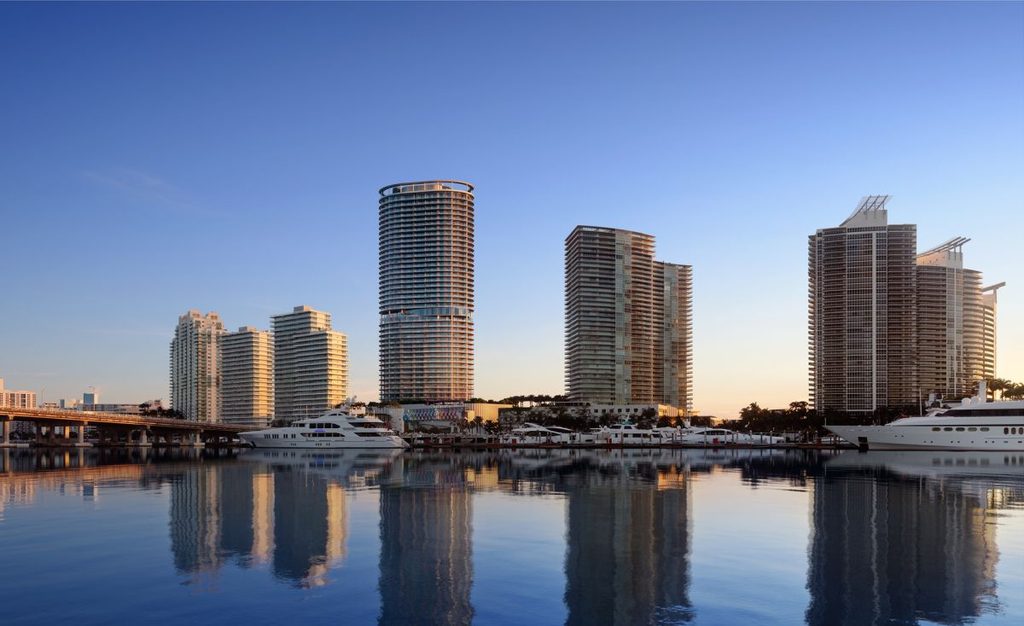
Five Park introduces something South of Fifth hasn’t had in years: a major new luxury tower competing against established names such as Continuum, Apogee and Murano at Portofino.
And Five Park is particularly interesting because its value proposition isn’t based upon being directly oceanfront.
Instead, it combines new construction, contemporary architecture, amenities, elevation and expansive views.
The MLS data already shows considerable pricing separation.
| Five Park Residence | Sale Price | Sale $/SF |
|---|---|---|
| PH4701 | $18.50M | $3,053 |
| PH4702 | $17.50M | $2,972 |
| #4303 | $8.45M | $3,448 |
| #4403 | $8.23M | $3,147 |
| #4404 | $3.98M | $2,779 |
| #3503 | $6.67M | $2,552 |
| #2904 | $3.00M | $2,092 |
| #1201 | $3.50M | $1,607 |
| #901 | $3.15M | $1,446 |
Five Park PH4701 closed at $18.5 million in January 2026, while #4303 closed at approximately $3,448 per square foot in August. At the other end of the vertical spectrum, #1201 sold at approximately $1,607 per square foot and #901 at approximately $1,446.
Again, these are not identical floor plans, so interpreting the spread as a pure floor premium would be wrong.
But Five Park demonstrates something important about modern Miami luxury real estate:
Newness itself can carry a premium.
A buyer may choose newer architecture, contemporary interiors, newer building systems and high elevation over direct waterfront positioning in an older tower.
That gives South of Fifth buyers another decision they didn’t previously have at this scale.
Can Five Park Compete With Direct Oceanfront?
Yes—but this requires nuance.
Five Park’s upper-floor transactions demonstrate that a non-oceanfront tower can achieve pricing traditionally associated with elite waterfront condominiums.
That does not mean waterfront no longer matters.
Quite the opposite.
Direct oceanfront land in South of Fifth is extraordinarily difficult to replicate. Continuum’s location is permanently scarce, and scarcity is one of the strongest long-term components of luxury real estate value.
Five Park offers a different proposition:
newness + elevation + architecture + amenities + views
Continuum offers:
direct oceanfront + acreage + resort environment + established prestige + scarcity
A buyer may rationally pay a premium for either.
That’s precisely why comparing South of Fifth condos solely by $/SF misses much of the market.
Apogee: Where Scarcity Becomes the Product
Apogee sits at another end of the spectrum.
Its larger residences and limited inventory make individual transactions particularly important.
Recent MLS sales included #801 at $14.5 million / $3,491 per square foot, #1204 at $14.8 million / $3,563 per square foot, and #1404 at approximately $14.60 million / $3,914 per square foot.
The latter was reported with direct ocean and skyline views.
Apogee illustrates an important rule in trophy real estate:
Scarcity can matter as much as statistics.
When only a limited number of residences satisfy a buyer’s requirements, traditional comparable-sale analysis becomes less precise.
ICON Shows Why Higher Doesn’t Automatically Mean More Valuable
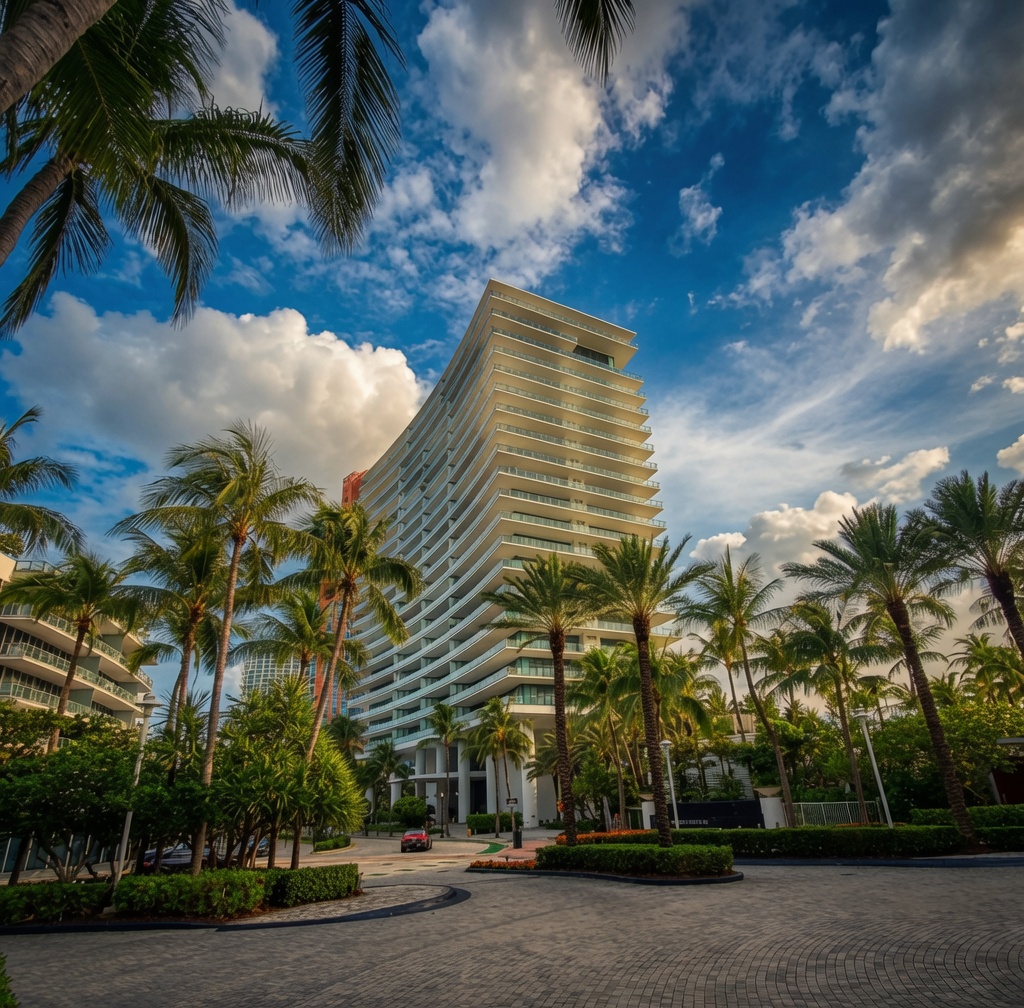
ICON South Beach provides a useful counterpoint to the simplistic idea that every additional floor automatically produces a predictable premium.
Two 2,145-square-foot 01-line residences provide a relatively close comparison:
- #2001 — $4.00M / $1,865 PSF
- #3601 — $4.05M / $1,888 PSF
Despite a sixteen-floor difference, the recorded sale-price spread was only $50,000.
That is important.
If buyers simply paid a fixed premium for every additional floor, these results should look very different.
They don’t.
There is no universal “price per floor” formula.
Once a residence already achieves its desirable view corridor, additional elevation may produce diminishing financial returns.
In another line or another building, however, moving ten floors higher might transform a partial water view into a sweeping unobstructed ocean panorama—and materially change value.
View Quality Matters More Than the MLS View Field
One of the biggest mistakes buyers can make is relying solely on listing terminology.
“Water View.”
“Ocean View.”
“Bay View.”
Even “Direct Ocean.”
Those labels are useful search filters, but they don’t fully describe what a buyer actually experiences.
Two residences categorized as having ocean views may have dramatically different views.
One might see a slice of ocean between neighboring buildings.
Another may have an uninterrupted horizon from nearly every major room.
That difference can represent significant money.
The view should be evaluated physically, not categorically.
For every serious luxury condo purchase, I consider:
- width of the view corridor
- primary-room exposure
- balcony orientation
- sunrise/sunset orientation
- neighboring structures
- future development risk
- height above surrounding buildings
- whether the view is protected or potentially obstructable
That last factor is frequently underestimated. A later analysis of 496 closed sales carrying MLS view designations found that the field barely predicts price at all: Direct Ocean is worth roughly 8% inside a building, and Skyline, Bay and Water View are worth approximately nothing.
The Most Expensive View May Be the View That Cannot Disappear
Miami buyers often focus on today’s view.
Experienced buyers should also consider tomorrow’s view.
An extraordinary view across a development parcel is different from an extraordinary view across the Atlantic Ocean.
Both may look spectacular today.
Only one may be effectively impossible to build in front of.
That means view permanence should be part of valuation—particularly when paying several million dollars specifically for an exposure. View permanence is one of four attributes a buyer can never purchase later, along with land and water access, position within the site, and the scarcity of the specific residence. The irreplaceability premium framework works through all of them and explains why price per square foot keeps failing at the top of the market.
Why Price Per Square Foot Can Mislead South of Fifth Buyers
Price per square foot remains one of the most useful tools for comparing Miami condos.
It is also one of the most abused.
Imagine two residences:
Residence A: $2,600 PSF
Residence B: $3,000 PSF
Residence B appears expensive.
But suppose Residence B is completely renovated, sits fifteen floors higher, occupies the superior line and has an unobstructed ocean exposure.
Suddenly the $400-per-square-foot difference may not represent overpricing.
Conversely, paying the building’s record $/SF for an inferior line simply because another residence achieved that number can be a costly mistake.
The comparable must actually be comparable.
What South of Fifth Buyers Should Compare
When evaluating a residence, I would rank the analysis approximately this way:
1. Building and location
You cannot renovate the building’s site.
2. Line and exposure
You generally cannot change where the residence faces.
3. View permanence
Determine what can potentially be built in the view corridor.
4. Floor/elevation
Elevation matters most when it materially changes the view.
5. Floor plan
Great square footage can still be poorly allocated.
6. Condition and renovation quality
Unlike location and line, this can usually be changed—with enough money.
7. Comparable sales
Use the closest lines and floor plans rather than blindly applying a building average.
What South of Fifth Sellers Should Understand
The same analysis works in reverse.
A seller with an exceptional line shouldn’t necessarily price the residence using the building’s average $/SF.
But sellers also need to avoid assuming:
“Mine is on a higher floor, therefore it’s worth 20% more.”
The market doesn’t work that cleanly.
The premium needs to be supported by something buyers actually value:
a materially better view, superior exposure, exceptional renovation, scarcity, floor plan or combination of those attributes.
The strongest luxury pricing strategy identifies why the residence is difficult to replace.
South of Fifth’s New Luxury Hierarchy
Five Park hasn’t displaced Continuum, Apogee, Murano or ICON.
It has made the market more interesting.
South of Fifth now offers buyers several distinct luxury propositions:
Direct oceanfront: Continuum
Ultra-luxury boutique scarcity: Apogee
Bayfront luxury with large residences and elevated views: Murano at Portofino
Bayfront luxury with a distinct floor-plan and pricing profile: Murano Grande
Architectural bayfront living: ICON South Beach
New-generation high-rise luxury: Five Park
The “best” building therefore depends heavily on what the buyer values.
And increasingly, the best residence may matter more than simply owning in the best-known building.
This covers what to pay inside a building once you have chosen one. For the step before that, which buildings suit which budget and why South of Fifth behaves as three separate markets rather than one, see the South of Fifth Miami Beach Real Estate Guide 2026.
Frequently Asked Questions
Do higher-floor condos always sell for more in South of Fifth?
No. Higher floors can command premiums when elevation materially improves the view, privacy or desirability, but recent transactions demonstrate that the relationship isn’t linear.
Is Five Park oceanfront?
No. Five Park is not directly oceanfront. Its upper residences can nevertheless offer expansive ocean, bay and skyline views, and recent transactions demonstrate substantial demand for its newest-generation luxury product.
Which South of Fifth condo has the best ocean views?
There is no universal answer, although Continuum’s direct Atlantic Ocean positioning gives many residences exceptional ocean exposures. Individual lines within each building should be evaluated separately.
Are ocean views worth more than bay views in Miami Beach?
Often, but not automatically. Unobstructed bay and Downtown Miami skyline views—particularly sunset exposures—can command significant premiums. The quality and permanence of the individual view matter more than its MLS label.
Does price per square foot accurately determine a Miami Beach condo’s value?
Not by itself. $/SF should be adjusted for building, line, floor, view, condition, floor plan, renovation quality and transaction circumstances.
What is the best way to compare two South of Fifth condos?
Start with the closest same-building and same-line sales possible. Then adjust for elevation, exposure, condition, view and timing rather than relying solely on neighborhood averages.
Methodology & Important Disclaimer
This analysis uses SEFMLS listing and closed-sale information supplied for selected South of Fifth condominium buildings, primarily covering transactions from 2024 through September 2026.
MLS data is believed accurate but is not guaranteed.
Individual transactions may involve renovations, furnishings, combined residences, developer sales, private circumstances, concessions or other factors not fully reflected in summarized MLS fields. Accordingly, the transactions discussed here should not be interpreted as proving a fixed percentage premium for any floor, view or building.
They are used to demonstrate how pricing varies within the South of Fifth luxury condominium market.
Considering a South of Fifth Condo?
South of Fifth is one of the few Miami Beach markets where choosing the right building isn’t enough.
The line, floor, exposure and permanence of the view can materially affect both what a residence is worth today and how desirable it may remain when it’s eventually resold.
Before buying or selling at Continuum, Apogee, Murano at Portofino, Murano Grande, ICON South Beach, Five Park or another South of Fifth luxury condominium, a residence should be compared against the right transactions—not simply the building average.
Contact Ashton Coleman for a private South of Fifth condo valuation, buyer analysis or current availability.